
Three places a garden tap can leak
People say garden tap leak when the water could be coming from three different places, and each has a different fix. Working out which one you have, before you call anyone, saves time.
- The tap itself. A drip from the spout, water at the spindle when the tap is open, or a leak at the join between the tap and the wall. This is the simplest case, and it is usually a worn washer, seal or fitting.
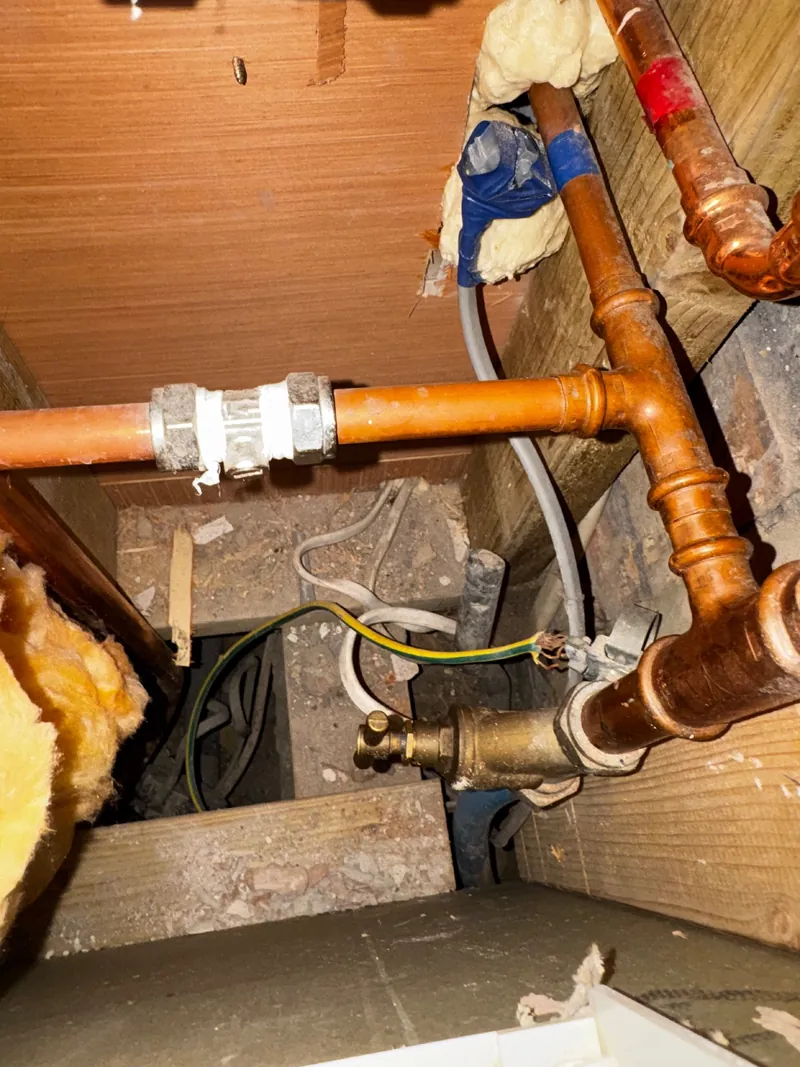
- The pipe behind the tap. The feed runs through the wall to the tap, often with a small valve inside. A split or a weeping joint here can show as damp on the inside wall, a stain on the ceiling or floor near the wall, or a patch of wet brick outside. See outside tap: frozen or leaking, which covers freeze damage and the check valve.
- A buried feed. Some garden taps are not on the house wall. They stand on a post, a standpipe or a shed, fed by a pipe under the lawn or border. A leak here shows as a wet patch, a soft spot or a green patch in dry weather, a long way from the tap.
This page is about telling them apart, and what to do about each. For a wet garden when you do not have an outside tap, see water leak in the garden. For buried supply pipe leaks more generally, see supply pipe leak trace and repair.
What to check first, safely
- Look at the tap with the hose off. Remove any hose, spray gun or attachment, and watch the spout for a minute. A drip with the tap closed points at the tap.
- Open the tap fully and look at the spindle and the join with the wall. Water at the spindle means a seal. Water at the wall means a leak behind the tap.
- Find the isolating valve for the tap. Many outside taps have a small valve inside, near where the pipe goes through the wall. Closing it removes the supply to the tap and shows whether the leak is on the tap side. If you cannot find one, the inside stop valve will do. Where is my stopcock in a house helps you find it.
- Dry the area with a cloth and watch it for 15 minutes. If it stays dry, the tap or its feed was the source. If it gets wet again with the valve closed, the water is coming from somewhere else, or the valve is not holding.
- Look inside the wall line. Check the inside face of the wall near the tap, the ceiling below and the floor. A damp patch inside is often the first sign of a leak behind the tap.
- Take a photo of the tap, the area and the meter reading, with the date.
The meter test, adjusted for an outside tap
If you have a meter, it can tell you whether water is leaving the system. Thames Water’s identifying leaks page, which we read on 25 November 2026, describes the test: turn off everything that uses water, close the inside stop valve, record the meter reading, wait 30 minutes and read it again. If the readings match, there is no leak between the meter and the inside stop valve. If they differ, there is. Our own page on how to do a water meter leak test goes through it step by step.
The catch for a garden tap is where the tap sits on the pipe. If the feed to the tap branches off before the inside stop valve, the test covers it. If it branches off after, closing the stop valve cuts it off and the test will not show a leak on it. In our experience, many outside taps are fed from a branch inside the house, with a small isolating valve. The route is not the same in every home, so we cannot tell you yours without looking.
- If the meter moves with the inside stop valve closed, the leak is on the pipe between the meter and that valve, which can include a buried feed to a garden tap. See leak between meter and house.
- If the meter does not move, and the garden tap area is still wet, the water may not be mains water at all. Rain, a drain or an irrigation line can do it.
- A slow movement does not prove a tap drip. A very small meter movement can be a slow tap, a toilet or a stuck valve, and the test cannot say which.
If you are not metered, the test is harder, and unmetered water bill: how it is calculated explains why an unmetered home often finds a leak through damage, not through the bill.
If it is the tap itself
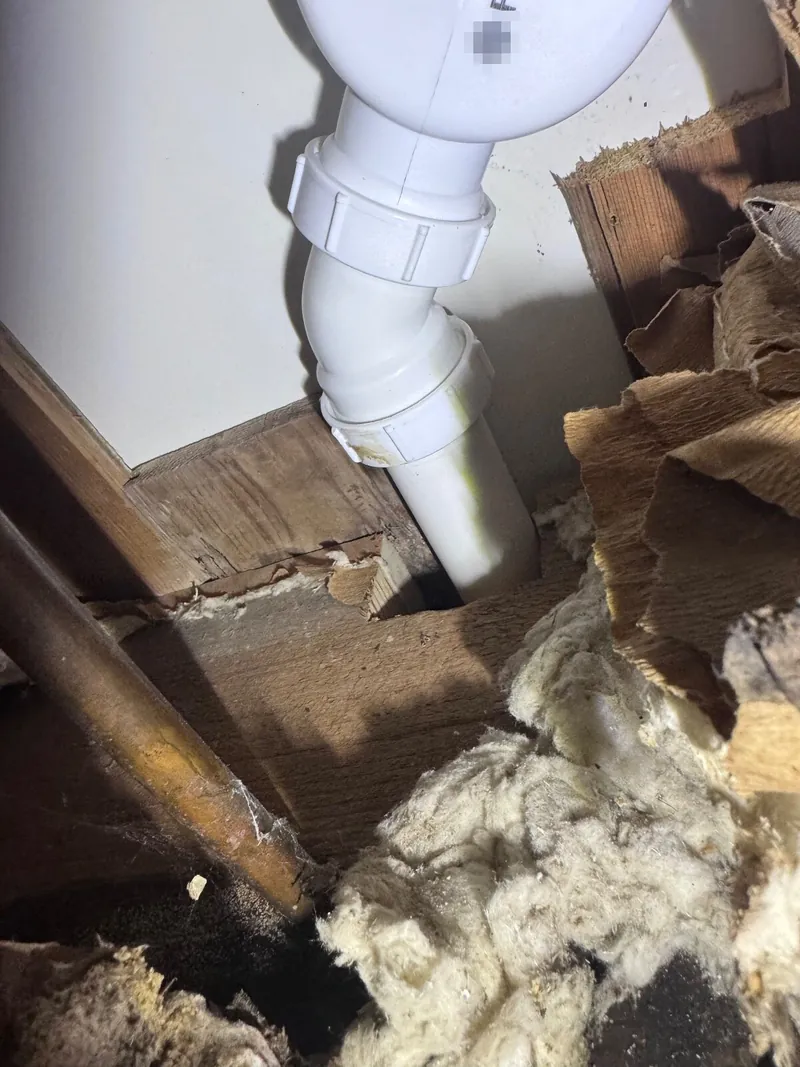
A tap that drips with the spout closed usually has a worn washer or seat, and one that leaks at the spindle has a worn seal. These are small repairs, and a plumber can do them quickly. A tap that is loose in the wall, or that leaks at the wall, may be a failing connection behind, and that is not a tap fault.
- Leave a dripping tap closed, and do not leave a hose attached. A hose left on a tap that is not fully closed can hold the tap open under pressure and make a slow drip worse.
- Do not overtighten a tap on a weeping connection. Over-tightening can crack an old fitting. We have seen it turn a drip into a leak on jobs.
- Check the tap type. Some outside taps have a built-in check valve to stop water flowing back into the supply. The outside tap page explains why that matters. Do not remove one.
- A dripping tap can waste water all day. Our page on dripping tap and running toilet cost per year explains why even small drips are worth fixing, and we give no yearly figure here.
The Water Supply (Water Fittings) Regulations 1999, in the as-made text we read on 25 November 2026, say that every water system needs an adequate backflow protection device for the highest fluid category downstream, and that repairs should be workmanlike. They do not mention outside taps or hose connections by name. If a tap needs replacing, ask the plumber which type is suitable and why.
If it is the pipe behind the tap
This is the case that does damage. A split behind an outside tap after a freeze often does not show until the thaw, and the water runs into the wall cavity or under the floor. Thames Water’s winter advice from January 2026, read on 25 November 2026, says leaks often appear during a thaw and names pipes near outside taps as vulnerable. CCW advises covering outside taps with a tap cover. We read that page on the same day.
- Signs of a leak behind the wall: damp or staining inside the wall near the tap, a smell of damp in a cupboard or under-stairs space on the same wall, a ceiling stain below, bubbling paint or a meter that moves with the stop valve open and the tap closed.
- Close the isolating valve and the inside stop valve as needed to cut the supply, and open the tap to drain the pipe. Do not leave it open for long.
- Photograph the damage and the stain before you dry anything out, for any insurance claim.
- Do not seal the outside with sealant and assume it is fixed. Sealant on the outside wall can hold water in the cavity.
Our page on frozen pipes: what to do before they burst covers the thaw steps, and pipe insulation for lofts, flats and cold spots explains which pipes to insulate. A slow weep inside a wall can be hard to find, and a survey with thermal imaging and moisture mapping locates it without opening the wall. We say what we found and what we did not.
If it is a buried feed to a garden tap
A buried pipe feeding a tap away from the house is a branch of the supply pipe. It carries mains pressure, so a leak can pass a lot of water. In our experience, the usual suspects are a joint, damage from later digging, a pipe laid very shallow, a frost split where the pipe rises to the tap, and a tap or standpipe that has been knocked or moved.
| What you notice | What it can mean |
|---|---|
| A wet or soft patch in dry weather, between the house and the tap | Water escaping from the buried feed, though a drain, irrigation line or rain can also do it |
| The meter moves with everything off, and the wet patch stops when the garden tap line is isolated | The branch is the likely source, but not proof |
| Water at the base of a standpipe or post | A leak at the rise, the joint or the tap fitting |
| Low pressure at the tap, or at the tap and the house together | A leak, a kinked pipe or a partly closed valve. The signs overlap |
| A patch that grows only while the tap is running | The fault may be at the tap, the rise or a hose connection, not in the buried pipe, though a buried pipe is under pressure whenever the supply is on |
These are our own observations, not published rules, and a wet patch is rarely directly over the leak. Water can travel along the pipe trench and surface some distance away. Our page on signs of a leak underground lists more, and water leak under a driveway covers the case where the pipe runs under paving. A pipe that is too close to the surface can be hit by a spade, so do not dig on a guess. See where does my water supply pipe run.
If the garden tap line serves an automatic watering system, note one thing. Regulation 5 of the 1999 Regulations, as made, lists installing a garden watering system, unless it is designed to be operated by hand, as work that needs notice to the water company. Thames Water’s charges scheme also says WaterSure, its support scheme, is not available where the water feeds automatic garden watering, as we read on 24 November 2026. Neither point is about leaks, but they matter if you are changing the system.
Who deals with it, and who pays
Thames Water’s pipe responsibility page, read on 25 November 2026, says the water supply pipe from your boundary into your home is your responsibility, and that this pipe is usually under private land such as a garden or driveway. The page does not mention outside taps by name. We would treat the tap and its feed as part of your pipework, but we cannot say how Thames Water classes them, so ask it if the position matters, for example in a dispute with a neighbour or a landlord.
Thames Water’s page on arranging a leak repair says a leak on your property should be repaired within four weeks of being found or notified, and that if it is not, it may serve a notice and carry out the repair at your cost. It advises checking your home insurance first, because some policies cover supply pipe leaks. It also recommends a WaterSafe approved contractor for hidden or outside leaks. We are independent of Thames Water and we are not on the WaterSafe register, so if that matters to you, check the register at watersafe.org.uk. Pages change, so check the current wording. See who is responsible for a water leak.
Many policies exclude damage that builds up gradually, and a slow weep behind a tap may be treated that way. Wording decides, and we cannot say what any insurer will accept. Escape of water claim checklist explains what to keep. Tenants should tell their landlord in writing. Under section 11 of the Landlord and Tenant Act 1985, a landlord must keep the installations for the supply of water in working order in the tenancies the Act covers.
Stopping it happening again
- Fit a tap cover before winter, as CCW advises, and close the inside valve to the outside tap. Open the outside tap to drain it. See how to prevent frozen pipes.
- Do not leave a hose connected through winter. Water can sit in the hose and the tap.
- Find your stop tap and test it twice a year. See stopcock and isolation valve maintenance.
- Photograph the route of any pipe you have buried before the ground is covered.
- Look at the tap and the wall once a month in the growing season, and after every thaw.
For the wider habits, see prevent escape of water at home.
Finding the leak, and what it costs us
A survey locates the leak before anyone opens a wall or digs a border. We use thermal imaging, moisture mapping and acoustic listening, and tracer gas where those cannot settle it. No method is a guarantee. A very slow leak may give little signal, and plastic pipe carries sound less well than metal in our experience. We report what we found and what we did not, in writing, with photos.
Tracing a supply pipe or a garden branch is charged at a fixed £450, however long the job takes. Tracer gas is included in the price. No VAT charged. The hourly rate is not a job price, and repairs are quoted in writing after detection, never from a price list. The pricing page explains how we quote. Leak detection: what happens on the day describes a visit.
To have it found, report a leak or ring 020 3961 5444. More guides are in the guides hub.
