Leak detection for loss adjusters and managing agents
Locate a hidden leak in a flat or block and put the finding in writing, so the people deciding the claim and the repair can work from it.

The quick version
- What it is
- Non-invasive leak location with a written report and photos for loss adjusters, managing agents, freeholders and insurers.
- What it costs
- £200/hr, typically £400 to £800 in total; from £220/hr out of hours. £100 for the first hour, then £150 an hour, quoted before we start. No VAT charged. Repair quoted separately.
- What you get
- Written report with photos, and a written repair quote if you want the leak fixed.
Signs you may need this
- A stain or drip in a flat with no visible source
- A wet party wall or communal ceiling
- A leak that could be a riser, a shared pipe or a private one
- A claim file that needs the source located before anything is opened
How we find it
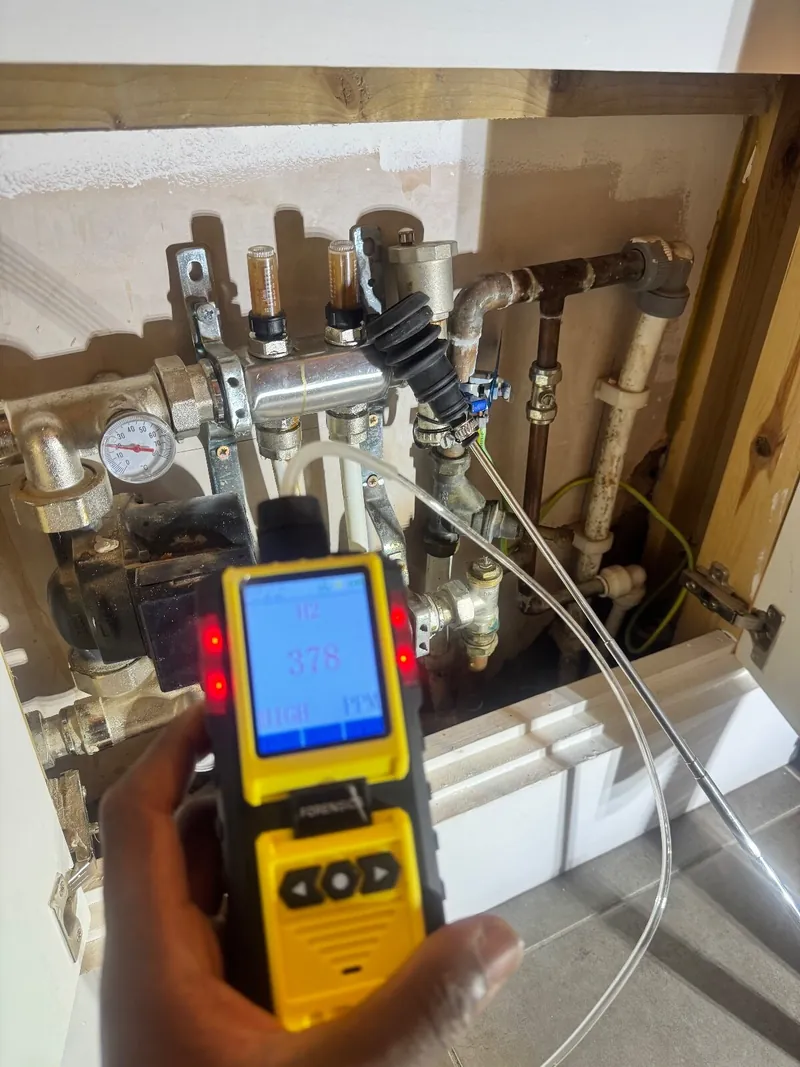
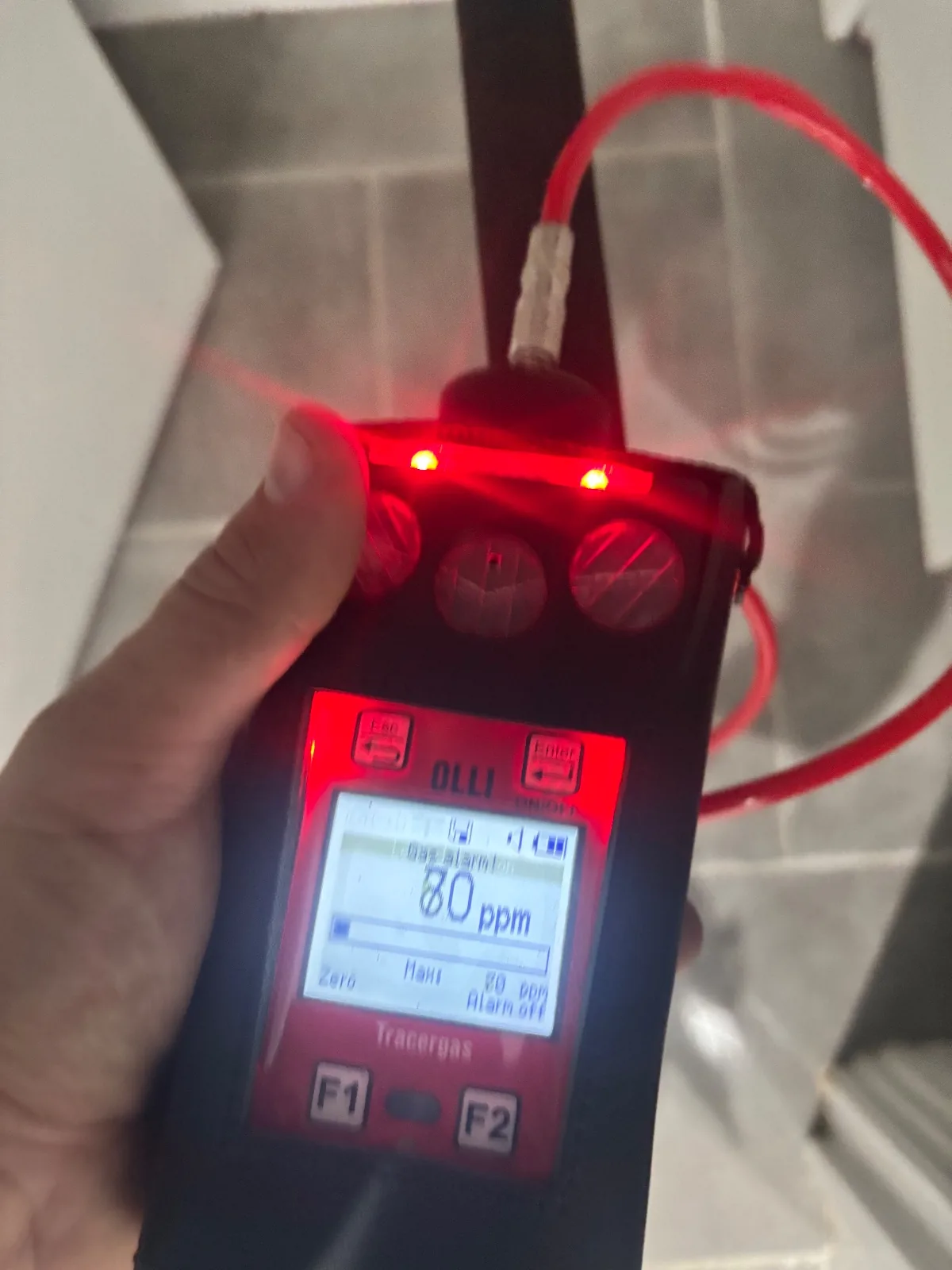
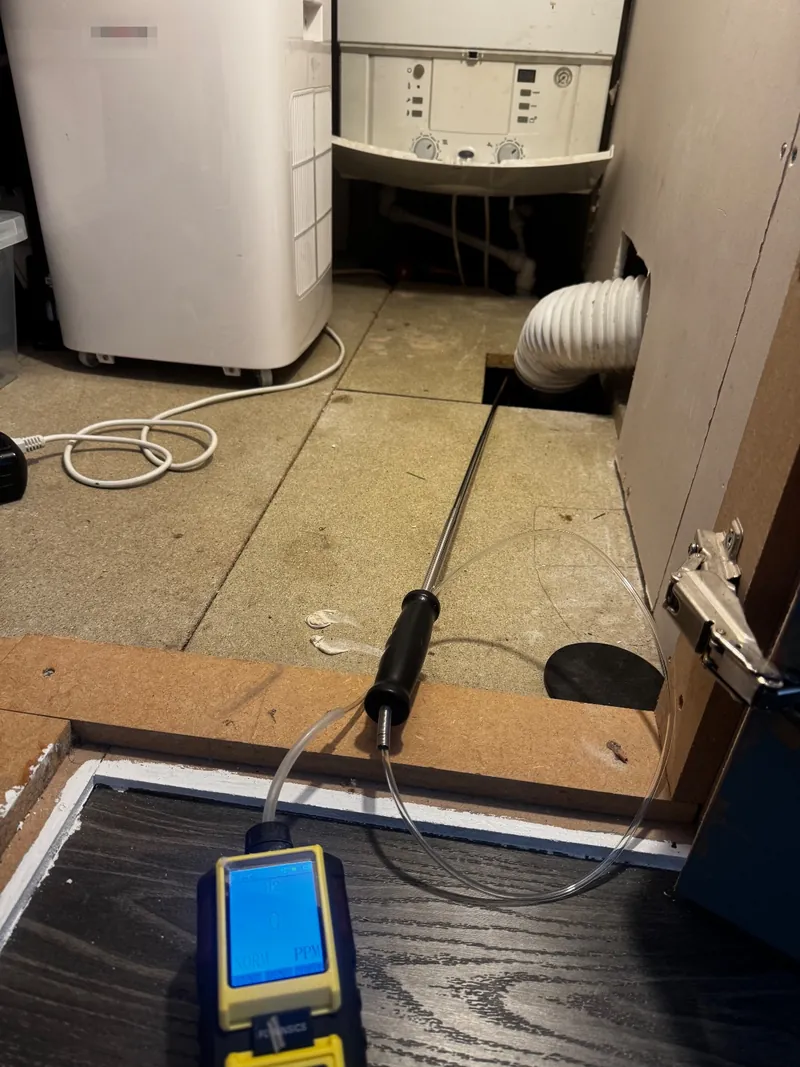
Tracer gas
A harmless gas is introduced to the pipe and detected where it escapes. Finds small leaks under floors and slabs.
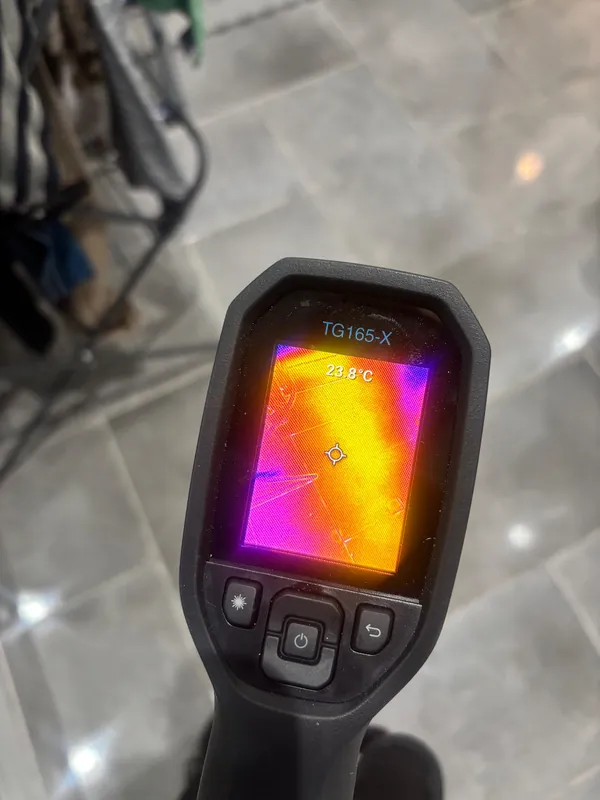
Thermal imaging
A thermal camera shows the temperature difference that wet or heated pipework leaves in a surface.
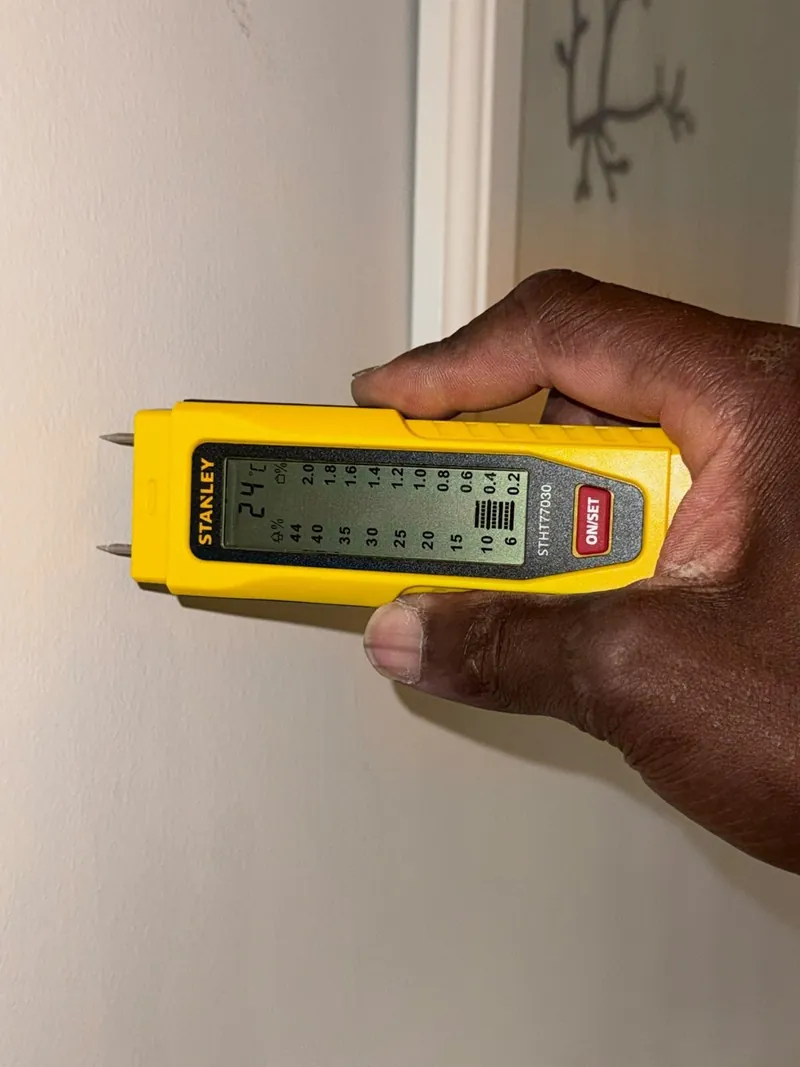
Moisture mapping
Readings across walls and floors show where water has travelled, and where it started.
Pipe tracing
Locating the route of buried supply pipe so a leak can be pinpointed before anyone digs.
If you have a hidden leak in a London home or block and need to know where it is, send us the address, access contact and your reference. We locate the leak with non-invasive methods and send a written report with photos at an hourly rate quoted before anyone travels. Whether a report is accepted on a claim is your decision or the insurer’s.
What we do for an instruction
You send us a property with a symptom: a stain on the flat below, a wet party wall, a communal ceiling that keeps dripping, a meter that will not stop. We find the source. We use thermal imaging, moisture mapping, tracer gas and pipe tracing, starting with the method least likely to need anything opened, and we report in writing what we found, how we found it and what remains uncertain.
We do not decide cover, quantum or liability, and we do not act as an adjuster or a claims handler. The report is evidence about where the water is escaping. What anyone does with it is for the instructing party.
To send an instruction, use the report a leak form and put the claim or job reference, the address, the access contact and the number of units involved in the notes. Or call 020 3961 5444 and we will take the details and ring back to agree the rate before anyone travels.
How the roles fit together

These pages are read by people on different sides of a claim, so here is how the roles are described in the sources we checked.
- Loss adjuster: the Chartered Institute of Loss Adjusters (CILA) describes a loss adjuster as an impartial evaluator who assesses the damage, finds the cause and checks that the policy responds. An insurer may appoint one from a panel and pays the fee. A policyholder can appoint their own at any time and pays the fee, unless their policy covers it.
- Managing agent: the RICS service charge residential management code (4th edition, March 2026, England) defines a managing agent as an agent who typically manages whole blocks of flats or estates with communal areas for a client such as the freeholder or a residents’ or right-to-manage company, with service charges normally paid to the agent.
- Leaseholder and freeholder: GOV.UK says the lease sets out whether the leaseholder or the freeholder handles repairs and what each contributes.
We make no statement about what a managing agent must do when a leak is reported on shared pipes. That depends on the lease and on the management agreement, and neither is ours to read. If a leak starts in a communal pipe and damages a flat, the report says where the pipe is and what is wet. The people who hold the lease and the policy decide the rest.
What to put in an instruction
- The property address and the unit numbers involved.
- Your claim, job or instruction reference, so that it appears on the report.
- The access contact, with a phone number, and any times when access is not possible.
- The symptoms and when they were first noticed, and whether the water supply to any unit has already been isolated.
- Who should receive the report and the invoice, if they are not the same person.
We confirm the rate on the phone before anyone travels. If something is unclear when we arrive, the report records what we were told and what we found, in that order.
What the report gives you
Every visit ends with a written report with photos. In general terms it records the following.
- Property, date of the visit, who gave access and the reference you supplied.
- The symptoms reported and the areas inspected.
- The methods used, in the order used, with readings and thermal images where relevant.
- The position of the leak, described in words and marked on photographs.
- What we could not confirm, so that you can see where the finding is firm and where it is not.
- Recommended access and the likely type of repair, without a repair price. Repairs are quoted separately.
You can see the layout in the leak detection report sample, which uses an invented address and invented readings and says so. For the wider case, read leak detection report for an insurance claim.
Evidence, and why a clear location helps
Insurers’ own pages show the sort of evidence they ask policyholders for. NFU Mutual asks for photos or film of the damage and for plumber’s bills, repair invoices and receipts. Direct Line asks for photos or video. Saga’s policy wording says it may ask a policyholder to instruct a plumber for a Cause of Damage report if the source is unknown, with the work agreed in advance. A document that says where the pipe failed, with photos taken during the visit, fits alongside those items.
We do not say any insurer will accept our report, and we do not claim approval or accreditation from any insurer or trade body. Financial Ombudsman decision DRN-5970477 shows an ombudsman weighing a leak detection specialist’s report against an insurer’s surveyor’s report and photographs. It is one decision and it depended on its own facts.
Many policies include trace and access, meaning the cost of finding the source of a hidden leak and making good the access work, but wording differs. In the Ageas and Saga pages we read, it is tied to damage from escaping water. Ageas says costs are not repaid if the claim is later declined, so agree tracing work first. If you instruct us on an insurer’s behalf, you will know the right sequence for the policy in front of you.
Blocks, several flats and access
Leaks in blocks rarely have a single neat symptom. A stain in flat 3 may start in flat 5, in a riser, or in a communal pipe. Ageas says leaseholders and tenants do not usually arrange buildings insurance themselves because the freeholder or landlord does, but its page does not explain block policies, so check the lease and ask the freeholder or managing agent which policy applies.
Tell us how many units are involved, who holds keys, which homes can be entered and whether any resident is vulnerable or needs notice. We plan the visit around that, and the report records which areas we could and could not reach. Moisture mapping and thermal imaging let us read across a wall or ceiling without opening it, which means less disruption to residents and fewer arguments about who pays to make good a hole that turned out to be in the wrong place.
See managing agent water leak instruction checklist for what to gather before you send an instruction, and what does a loss adjuster do after a water leak if you are a resident trying to understand who is who.
Rates, out of hours and repairs
Trace and access with a written report for an insurer is charged at £200/hr, with a typical total of £400 to £800. The hourly rate is quoted first and never exceeded. Tracer gas is included in the price. Emergency and out-of-hours visits are charged at from £220/hr. No VAT charged. The report is included in the job.
Repairs are separate. Once the leak is located we quote any repair in writing, and you decide whether to instruct us or someone else. We are plumbers as well as leak specialists, so we can do the repair if asked. Full detail of the rate table is on the pricing page.
Last reviewed .
Sources
- Advice for policyholders, Chartered Institute of Loss Adjusters
- Service charge residential management code, 4th edition, RICS
- Leaseholder rights and responsibilities, GOV.UK
- What does buildings insurance cover?, Ageas
- What is tracing a leak and what does it cover?, Ageas
- Saga Plus home insurance policy wording, March 2026, Saga
- Escape of water claims, NFU Mutual
- Home insurance claims: common questions, Direct Line
- Financial Ombudsman Service decision DRN-5970477, Financial Ombudsman Service
Want it located, not guessed at? Call us
What the price covers
- £100 for the first hour, then £150 an hour, quoted before we start.
- No VAT charged.
- Tracer gas, acoustic detection, thermal imaging, a camera inspection and a written repair quote are included in the standard price.
- Written report with photos.
No find, no fee: if a leak is present and we do not find it, you pay nothing.
Found the leak? We quote the repair.
Repairs are quoted in writing once the leak is located. Every fix is different, so there is no repair price list.
We are plumbers as well as leak specialists, so we can carry out the repair once you approve the quote.
Related
- Leak detection report for an insurance claimInsurance claims
- Leak detection report sampleInsurance claims
- Managing agent water leak instruction checklistInsurance claims
- What does a loss adjuster do after a water leak?Insurance claims
We cover every London borough from one call-out area, so there is no separate page to find for your part of London.
Questions about this service
Can we instruct you directly from a claim file?
Yes. Use the report a leak form or call 020 3961 5444 with the address, access contact and your reference, and we ring back to agree the rate before anyone travels.
Do you decide cover or liability?
No. We locate the leak and report what we found. Cover, quantum and liability stay with the insurer, the adjuster and the parties concerned.
Will the insurer accept your report?
We give you a written report with photos. Whether an insurer accepts it is its decision, and we do not claim that our reports are approved by any insurer.
What is the difference between a loss adjuster and a managing agent?
CILA describes a loss adjuster as an impartial evaluator of insurance claims. The RICS code describes a managing agent as an agent who manages blocks of flats or estates for a client such as the freeholder. They do different jobs.
Can you survey several flats in one visit?
Tell us how many units are involved and who can give access, and we agree a plan and rate by phone. The report records which areas we could and could not reach.
Is there a charge for the report?
No. It is part of the job. Trace and access is charged at £200/hr, and No VAT charged.
Do you quote repairs?
Yes, separately and in writing once the leak is located. You are not obliged to use us for the repair.
Who pays for tracing under a policy?
That depends on the policy. In the Ageas and Saga wording we read, tracing cover is tied to damage from escaping water, and Ageas asks for agreement before work starts. Check the wording of the policy in front of you.

Talk to someone about your leak
£100
for the first hour, then £150 an hour, everything included
No find, no fee. No VAT. Repairs quoted in writing once the leak is found.