Plumbing leak repair in London
We find the leak first, report it with photos, then quote the plumbing repair in writing.

The quick version
- What it is
- Locating and repairing leaks on internal pipework, fittings and the supply into the property.
- What it costs
- Detection at £150/hr, quoted first and never exceeded. Repairs are quoted in writing after the leak is located. No VAT charged.
- What you get
- Written report with photos and a written repair quote you can accept, decline or take elsewhere.
Signs you may need this
- Damp patch or stain on a wall or ceiling
- Meter moving with everything off
- Sound of running water with no tap open
- Soft or lifting floor near pipework
- Falling boiler or system pressure
How we find it
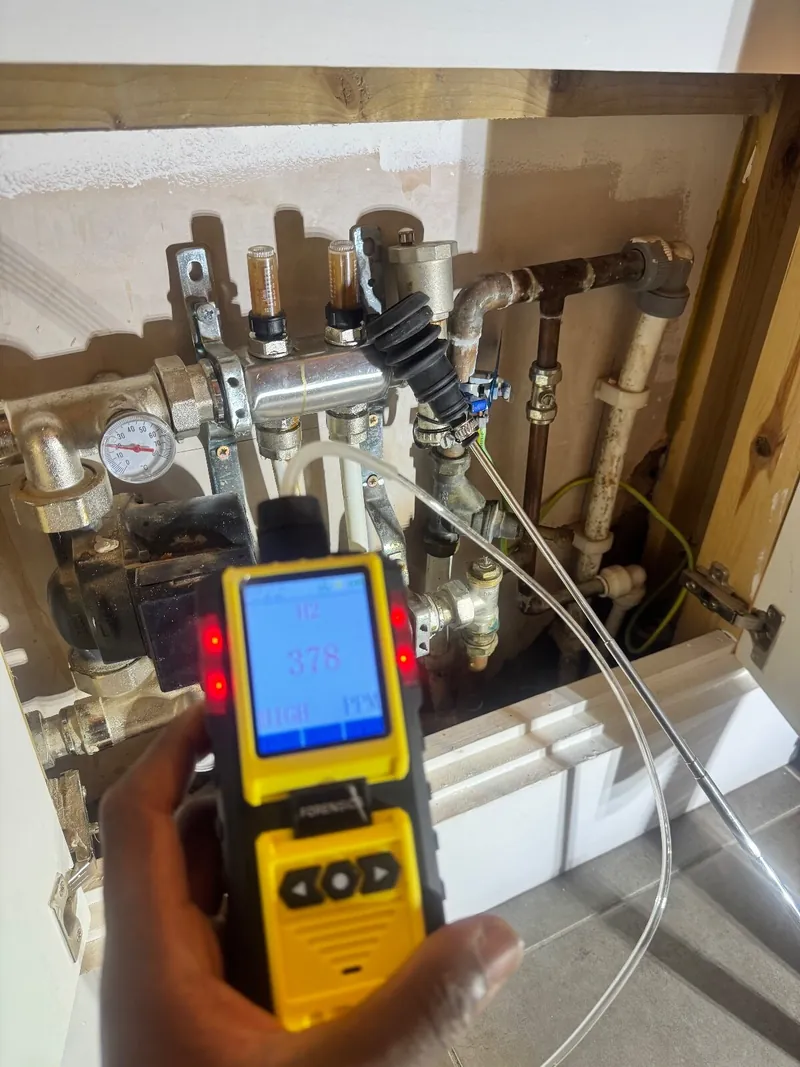
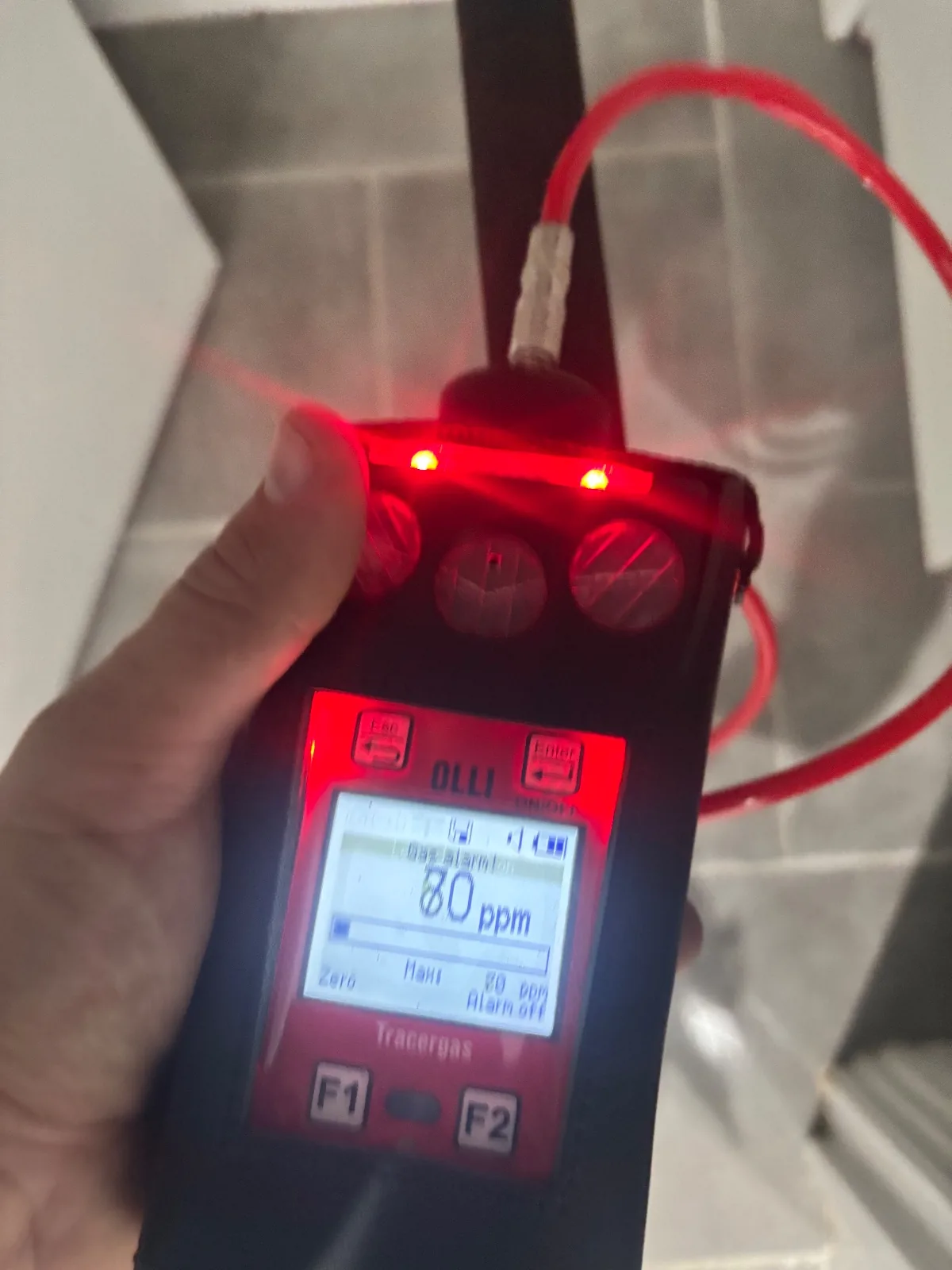
Tracer gas
A harmless gas is introduced to the pipe and detected where it escapes. Finds small leaks under floors and slabs.
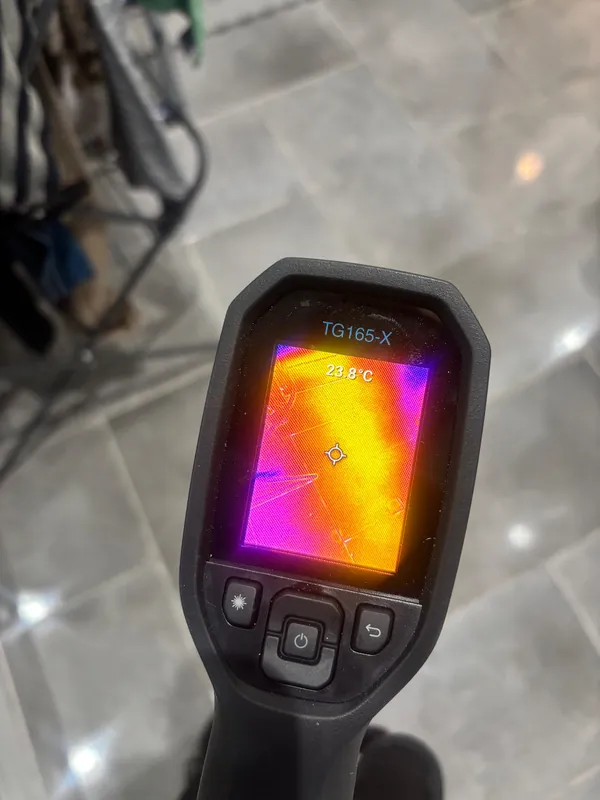
Thermal imaging
A thermal camera shows the temperature difference that wet or heated pipework leaves in a surface.
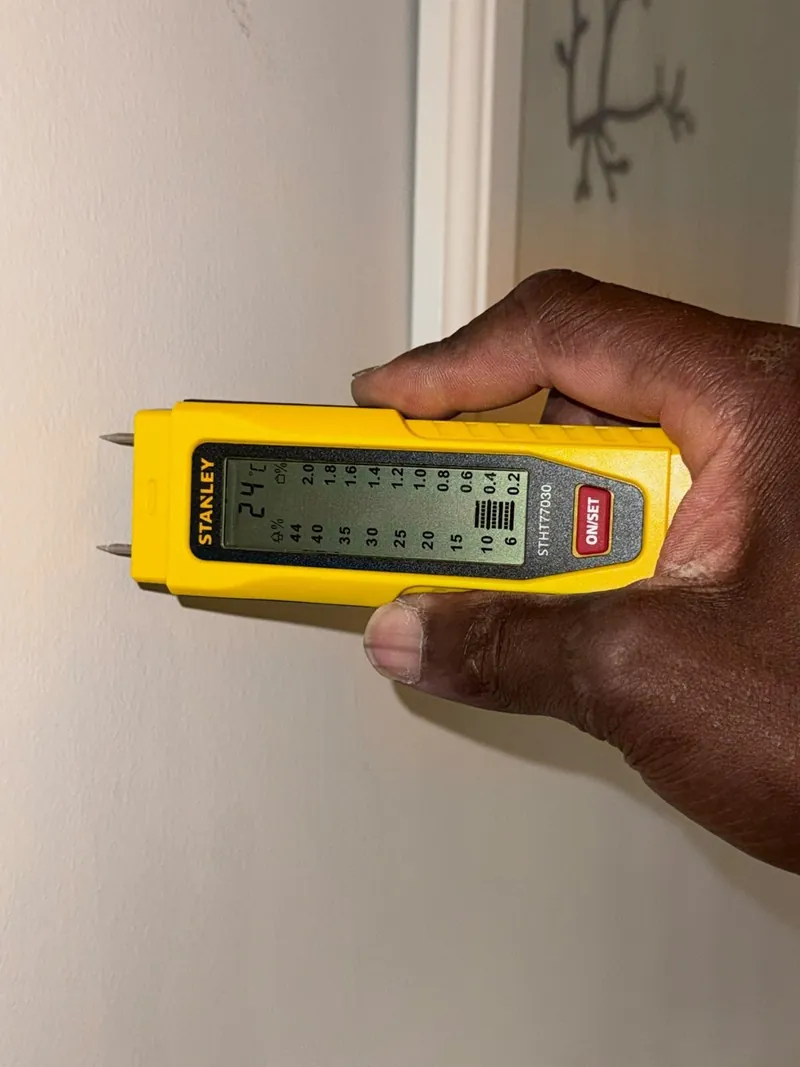
Moisture mapping
Readings across walls and floors show where water has travelled, and where it started.
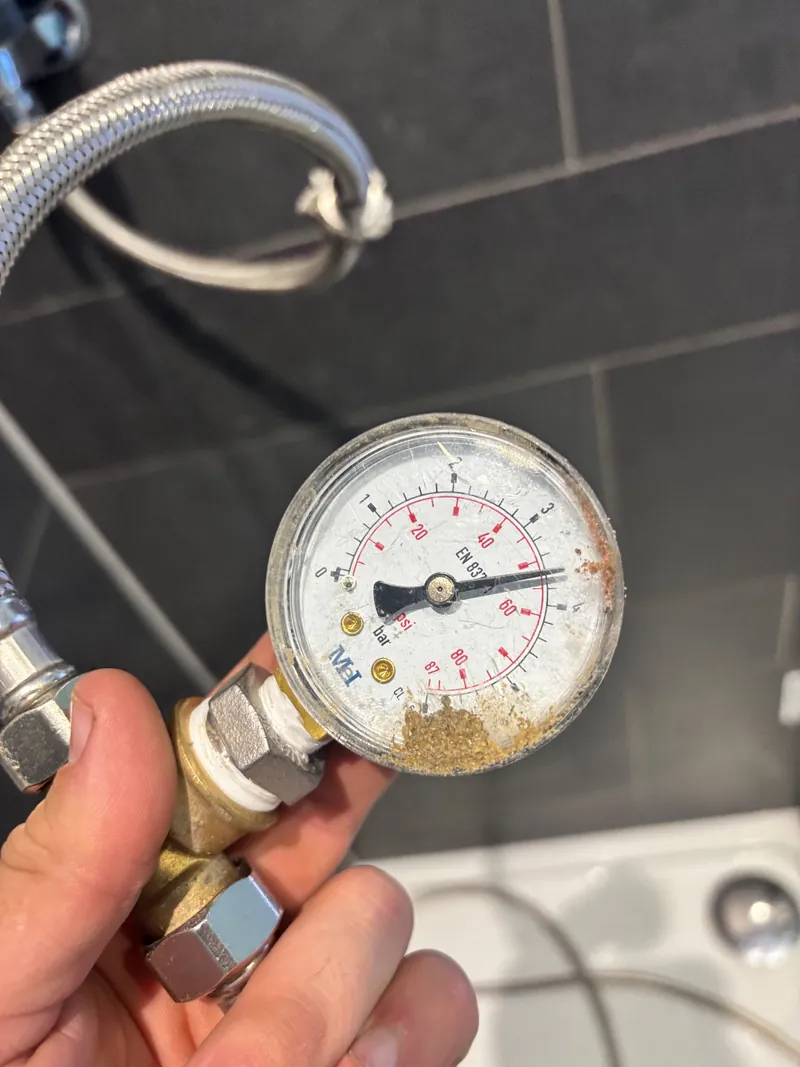
Pressure test
Isolating a section of pipe and watching whether it holds pressure confirms where the loss is.
We find where the water is escaping before anyone cuts into a wall or floor, then send a written repair quote. We are leak detection specialists who also plumb, so one firm can locate the leak and fix it, but you can take our report to any other plumber.
Why we find the leak before we fix it
Most leak repairs that go wrong go wrong at the first step. A stain on a ceiling is where the water ended up, not where it started. Water can run along a joist or down a pipe run for a long way before it shows, so repairing the visible damage, or opening the wall where the stain is, often means a second hole later.
So we do the detection first and the repair second. The detection is charged at an hourly rate that is quoted before we start, and the repair is a separate written quote that you can accept, decline or take elsewhere. That order also means you are not paying a plumber to guess. Our leak detection survey page describes the first stage, and what happens on the day walks through a visit.
The leaks we repair

Repairs are quoted after the leak is located, so the table is a guide to where we usually work, not a price list.
| Leak | What it often is | Usual repair |
|---|---|---|
| Joint or fitting weeping inside a wall or under a floor | A failed compression or push-fit joint, or a soldered joint that has let go | Remake or replace the joint after a small opening |
| Pinhole in copper pipe | Corrosion from the inside. See pinhole leaks in copper pipes | Cut out and replace a section. Several pinholes can point to a pipe near the end of its life |
| Leak from a tap, isolator or flexible hose | A worn washer, a loose nut or a perished hose | Replace the part. See leaking tap repair and replacement |
| Cistern or toilet supply leak | A valve or connector at the cistern | Replace the part. See toilet leak and running cistern repair |
| Supply pipe leak between boundary and house | Damaged or aged underground pipe | Repair or replace a section. See supply pipe leak trace and repair |
| Leak that only shows with the heating on | Heating pipework or an underfloor loop | Often a different specialism. We tell you in the report if we think so |
The cause column is our practitioner view of what these usually are. The pipework in your own house is what decides it, and the written report will say what we actually found.
How a repair job runs
- You report the leak with photos and what you have noticed. We tell you on the call what we expect to do and confirm the hourly rate before anyone travels.
- We locate the leak using non-invasive methods first: thermal imaging, moisture mapping, listening and pressure testing where we can isolate a run, and tracer gas where it helps. Non-invasive leak detection explains each one.
- You get a written report with photos showing where the leak is.
- We send a written repair quote. It covers the fix, any opening up and the making good that we have agreed to do. You decide whether to go ahead.
- If you accept, we repair it, test the repaired section and restore the water. We check the area is dry before we close up.
If the leak is still running while you wait, turn off the inside stop valve first. Thames Water says to use that one before the outside valve. How to turn off your mains water shows the safe way, and what to do in the first hour covers the rest.
What we avoid doing
- Opening a wall or floor on a hunch. We try to confirm the position with a second method first, because one reading is a lead and two that agree are a finding.
- Fixing the stain. If the water is still arriving, patching and repainting only hides the next stain.
- Replacing more than we have to. Where a short section has failed we say so, and where the pipe looks tired along its whole length we tell you that too, and let you choose.
It is also worth knowing when a leak is not a plumbing leak. Condensation, rising or penetrating damp and rain through a roof can look the same. Moisture mapping and damp diagnosis covers how we tell them apart.
What helps us before we arrive
You do not need to know the cause. A few facts shorten the visit and make the quote closer to the real job.
- Where the water appears, when you first noticed it and whether it changes when you use a tap, flush a toilet or run the heating.
- Photographs of the stain or wet area, and of the stop valve and meter if you can find them.
- The age and type of the property, and whether the pipes have been replaced. Older London houses and converted flats often have a mix of copper, lead and plastic, and the mix changes how we work. Water leaks in Victorian and Edwardian London houses explains why.
- Who has to agree to the work: the freeholder, a managing agent or a neighbour below. In a flat, the leak may start in another property or in a shared pipe.
If the leak is near boxed-in pipes, a bath panel or kitchen units, clear the space if it is safe to do so. We tell you before we open anything and agree what making good covers.
Insurance and who pays
Thames Water’s repair page advises checking your home insurance first, because some policies cover leak repair. Many policies also include trace and access cover, which pays to find a hidden leak and make good the access, but the wording differs. In the two insurers we looked at, Ageas and Saga, it is tied to damage from escaping water, and Ageas asks to agree the tracing work before it starts. Whether any insurer accepts our report is their decision. Check your policy before you book, not after.
Our guides on whether home insurance covers water leaks, the escape of water claim checklist and the leak detection report for an insurance claim go through what to ask and what to keep. In a rented home the landlord is generally responsible for the plumbing, so tell them in writing. See landlord and leaseholder water leak insurance claims.
Costs, paperwork and the WaterSafe register
We do not publish repair prices. Every leak is different, and a joint behind an accessible panel is not the same job as a pipe under a floor. The repair is quoted in writing after we have located the leak. Leak detection is £150/hr, quoted before we start and never exceeded for the time agreed with you, with tracer gas and the written report included in the price. No VAT charged. See the pricing page for every rate.
Thames Water recommends a WaterSafe-listed plumber for visible leaks and a WaterSafe-listed leak detection contractor for hidden or outside ones. It also says that if the plumber is not on the register, it may inspect the work and charge for further repairs where the work does not meet its standards. We are not on the WaterSafe register. That is a real consideration for some customers, so we say it up front, and you are free to use a listed plumber with our report. Thames Water also says to ask for a certificate of water regulations compliance after the work, so ask any plumber, us included, what you will receive.
Find the rest of our advice in the guides hub, or report a leak and we will tell you on the call whether we can take it on.
Last reviewed .
Sources
- Arranging a leak repair, Thames Water
- Leaks at home, Thames Water
- How to find and use your outside stop valve, Thames Water
- What is tracing a leak?, Ageas
- Trace and access cover, Saga
- Landlord and Tenant Act 1985, section 11, legislation.gov.uk
- WaterSafe register, WaterSafe
Want it located, not guessed at? Call us
What the price covers
- £100 for the first hour, then £150 an hour, quoted before we start.
- No VAT charged.
- Tracer gas, acoustic detection, thermal imaging, a camera inspection and a written repair quote are included in the standard price.
- Written report with photos.
No find, no fee: if a leak is present and we do not find it, you pay nothing.
Found the leak? We quote the repair.
Repairs are quoted in writing once the leak is located. Every fix is different, so there is no repair price list.
We are plumbers as well as leak specialists, so we can carry out the repair once you approve the quote.
Related
- Leak detection surveyFind a leak
- Non-invasive leak detectionFind a leak
- Underground supply pipe leak: trace and repairFind a leak
- Leaking tap repair and replacementLeaking now
We cover every London borough from one call-out area, so there is no separate page to find for your part of London.
Questions about this service
Do you repair the leak or only find it?
Both. We are leak detection specialists first and we also plumb. After we locate a leak we send a written repair quote. You can accept it, ask questions or take our report to another plumber.
How much does a leak repair cost?
We do not give a repair price without seeing the leak, because the same-looking leak can be a quick fix or a floor-up job. The repair is quoted in writing after detection. Detection is charged at the rates on our pricing page.
Will you cut into my walls or floors?
Not until we know where the leak is. We locate it without opening up first, and any opening is limited to the pinpointed spot and covered in the quote. Making good is agreed in writing beforehand.
Can another plumber use your report?
Yes. The written report with photos is yours. It says where the leak is and what we found, so another plumber can work from it.
Should I call my insurer first?
Often yes. Thames Water advises checking your insurance before arranging a repair, and some insurers, Ageas for example, ask to agree tracing work before it starts. Check your policy wording.
Are you on the WaterSafe register?
No. Thames Water recommends listed contractors and may inspect work by others and charge for further repairs if it falls short of its standards. We say so up front so you can decide.
I rent. Who arranges the repair?
In tenancies covered by section 11 of the Landlord and Tenant Act 1985, the landlord must keep the water supply installations in repair and working order. Report the leak in writing and check your tenancy.
Do you charge VAT?
No. We do not charge VAT on detection or on repair quotes.

Talk to someone about your leak
£100
for the first hour, then £150 an hour, everything included
No find, no fee. No VAT. Repairs quoted in writing once the leak is found.