Stopcock replacement in London
We replace a failed inside stopcock, fit isolation valves where you want them and quote it in writing first.

The quick version
- What it is
- Replacing the inside stop valve on the incoming supply, and adding isolators on taps and appliances while the water is off.
- What it costs
- Quoted in writing after we have seen the pipework, never priced on this page. No VAT charged.
- What you get
- A new valve you can reach and a tested shut-off, with the paperwork agreed in the quote.
Signs you may need this
- Water keeps running after the stopcock is closed
- Drip or crust at the spindle
- Handle spins freely or will not turn
- No usable valve on the incoming supply
- No isolators on taps or appliances
How we find it
Replacing the inside stopcock means cutting the supply upstream, fitting a new valve where you can reach it and testing it before we leave. We quote the job in writing once we have seen the pipework, and we do not touch the outside stop tap in the street, which is the water company’s equipment.
Which valve are we talking about?
Most homes have two main shut-off valves, and they belong to different people. The inside stop valve, usually under the kitchen sink or where the supply comes into the house, is the one you are meant to use. Thames Water’s page on it says it is your responsibility to install, maintain, fix and replace it. The outside stop tap sits under a small cover in the pavement or near the boundary. Thames Water’s leakage code of practice treats that one as its own apparatus.
This page is about the inside valve, because that is the one a plumber can replace. If you are not sure which is which, where is my stopcock in a house and what does a stopcock look like will get you to it. Who owns the one in the street is covered in boundary box and stop tap: who owns it.
When a stopcock needs replacing
A valve that works is better left alone. A valve that fails the test below is a problem waiting for the night you need it. Our stopcock and isolation valve maintenance page has the two-minute test. These are the findings that usually point to replacement, in our judgement as plumbers.
| What you find | Usual meaning | Next step |
|---|---|---|
| Water keeps running at the tap after the valve is shut and a few minutes have passed | The valve is not sealing | Plan a replacement. Do not rely on it in an emergency |
| Drip or crust at the spindle or the joints | Worn packing or a weeping joint | Sometimes re-packed, often cleaner to replace |
| Handle spins but the flow does not change | Snapped spindle or stripped head | Treated as failed. Replace |
| Will not turn at all | Seized, commonly by scale | Do not force it. See stopcock won’t turn or is seized |
| No valve you can find, or it is boarded in | An access problem rather than a failure | Often fixed by moving things; sometimes a new valve in a better place |
Thames Water says not to use excessive force on a stop valve. That matters here, because a spindle that snaps in your hand turns a stiff valve into one that has to be replaced under pressure.
What is involved
The valve you want to replace is the one that stops the water, so the water has to be stopped some other way first. That is the part of the job people do not expect. In our experience a plumber cannot swap an inside stop valve while mains water is still arriving at it.
- We look at the existing valve, the pipe material and the space around it, and ask whether the outside stop tap and any other valves in the house work.
- We agree a time when the water can be off and tell you how long to plan for. If you share a supply with neighbours, they need warning too.
- We cut the supply upstream of the valve. How depends on the house, as the table below shows.
- We remove the old valve, fit the new one on the right pipe fittings and leave it where you can reach the handle.
- We restore the water, check every joint for weeping and test the new valve by closing and reopening it.
- We tell you what we fitted and where, and you get the quote and paperwork we agreed beforehand.
| Method | What it is | Our note |
|---|---|---|
| Outside stop tap | The valve in the pavement or near the boundary | Thames Water describes how customers can use it in an emergency. It is not always in good order, and in a shared supply it cuts the neighbours off too |
| Another valve in the house | A second stop valve or a communal valve in a flat | Works only if it exists and closes fully. Ask the managing agent first for a communal one |
| Isolation fitting | Thames Water’s page mentions a permanent isolation valve that can be fitted without turning the water off, and a freezing and clamping method by a plumber | Used when nothing upstream will shut. Suitability depends on the pipe, and we confirm it on site |
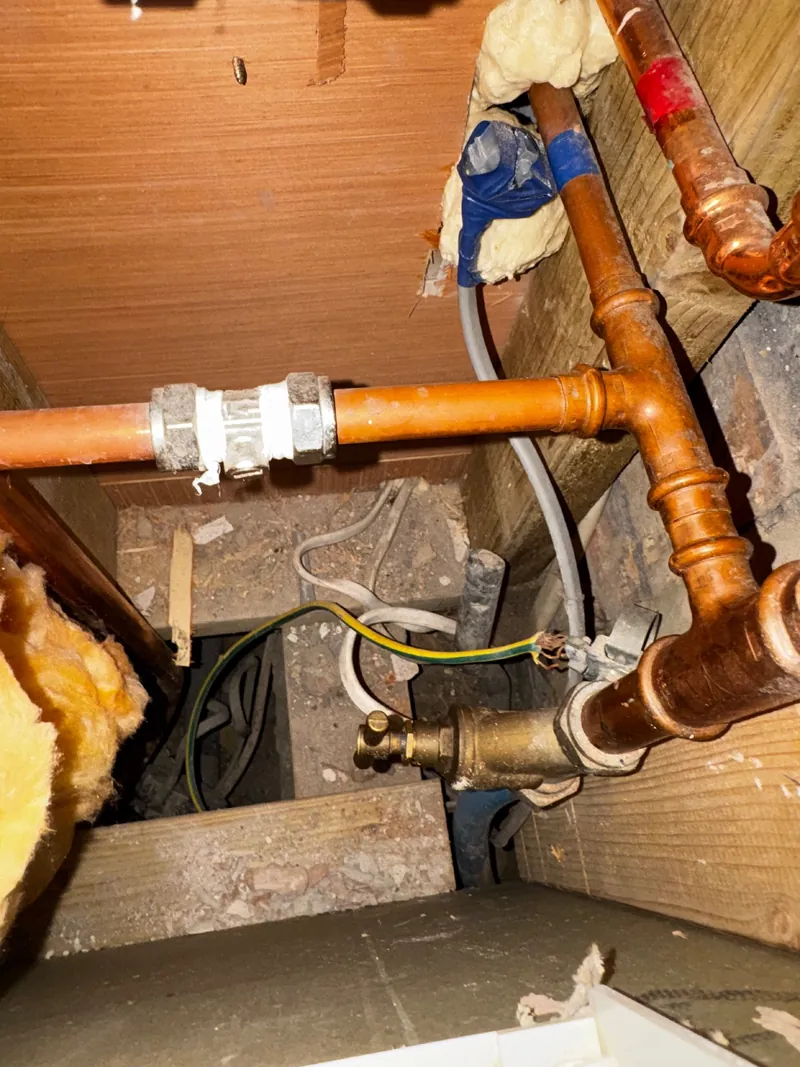
If the outside stop tap will not turn either, the job needs one of the last two routes. Thames Water’s page on it says to contact a plumber if neither valve works, and does not say who may operate or replace it. We do not replace or alter the outside stop tap, because it is the water company’s equipment.
How long it takes
There is no fixed answer, and a plumber who gives one over the phone is guessing. The deciding factors are whether the supply can be cut easily, what the pipe is made of, how cramped the space is and whether anything has to be moved first. Where the supply shuts off cleanly, the swap itself is often a short job on the day, with the rest of the time spent draining, refilling and checking. A seized outside valve or a boarded-in pipe adds time. We give you a realistic window on the visit and in the written quote, and we ask for photographs of the existing valve first if you can send them.
Fit extra isolation valves while we are there
A new stopcock cuts the whole house. Small isolation valves on the cold supplies to the kitchen tap, basin, toilet cistern, washing machine and dishwasher cut one fitting at a time, which is what you want when a hose splits or a tap starts to drip. Thames Water’s inside stop valve page notes that you may be able to turn the water off for just one room using other stop valves, if you have them and they work.
- Where a fitting has no isolator, we can add one while the water is already off. It costs less to do it now than to book a separate visit later.
- We fit lever or slotted types you can operate without tools where the space allows.
- We can test the ones you already have and tell you which are stiff or weeping.
See washing machine hose leaks prevention for why the machine valve is worth having, and automatic water shut-off valves: are they worth it if you are weighing a motorised valve against a plain one.
Flats, rented homes and shared supplies
In a flat the stop valve may be where the supply enters the building, and Thames Water says there may be a communal valve as well. Closing a communal valve can cut water to other flats, so ask the managing agent before anyone touches it. In a rented home covered by section 11 of the Landlord and Tenant Act 1985, the landlord has to keep the water supply installations in repair and working order, so report a failed valve in writing with a photograph rather than paying for a plumber yourself. Check your own tenancy. Leak prevention for flats and managing agents has more for agents.
Quote, paperwork and what we are not
We do not publish a price for a stopcock replacement, because the cost depends on how the water is cut off, how reachable the pipe is and what else you want done while the water is off. We give you a written quote once we have seen it, and you can say no and take it to another plumber. If you have a leak somewhere you cannot find, we also do leak detection, and the rates are on the pricing page. No VAT charged.
Thames Water says to ask for a certificate of water regulations compliance after plumbing work, and recommends WaterSafe-listed plumbers for visible leaks. We are not on the WaterSafe register. Ask what paperwork you would get before you accept the quote, and if the register matters to you, you are free to use a listed plumber instead. The regulations themselves say repairs to fittings should be done in a workmanlike way, which means to a suitable British Standard or an installation method the water company accepts.
To ask about a replacement, report a leak and say it is a stopcock job, or browse the guides hub first. If water is running now, close what you can and read mains water leak: what to do in the first hour.
Last reviewed .
Sources
- How to find and use your inside stop valve, Thames Water
- How to find and use your outside stop valve, Thames Water
- Arranging a leak repair, Thames Water
- Household customer side leakage code of practice (PDF), Thames Water
- Water Supply (Water Fittings) Regulations 1999, regulation 4, legislation.gov.uk
- Landlord and Tenant Act 1985, section 11, legislation.gov.uk
- WaterSafe register, WaterSafe
Want it located, not guessed at? Call us
What the price covers
- £100 for the first hour, then £150 an hour, quoted before we start.
- No VAT charged.
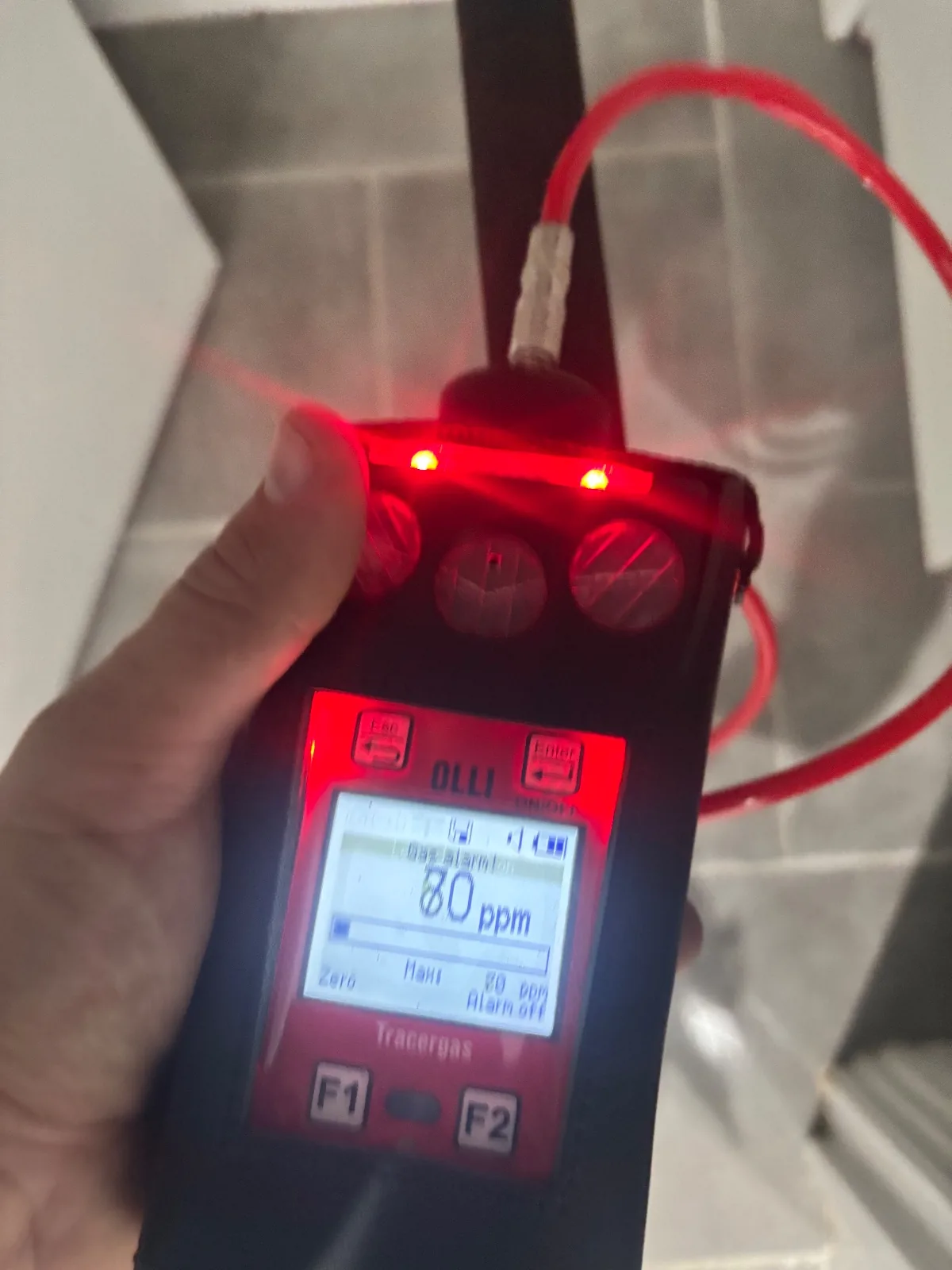
- Tracer gas, acoustic detection, thermal imaging, a camera inspection and a written repair quote are included in the standard price.
- Written report with photos.
No find, no fee: if a leak is present and we do not find it, you pay nothing.
Found the leak? We quote the repair.
Repairs are quoted in writing once the leak is located. Every fix is different, so there is no repair price list.
We are plumbers as well as leak specialists, so we can carry out the repair once you approve the quote.
Related
- Stopcock wont turn or is seizedLeaking now
- Stopcock and isolation valve maintenanceLeak prevention
- Where is my stopcock in a house?Leaking now
- Boundary box and stop tap: who owns it?Who is responsible
We cover every London borough from one call-out area, so there is no separate page to find for your part of London.
Questions about this service
Where is my stopcock?
Thames Water says the inside stop valve is usually just after the supply pipe enters the house, commonly under the kitchen sink, but sometimes in an airing cupboard, under the stairs, near the front door or in a garage, utility room or cellar. The outside one is under a cover near the boundary.
My stopcock will not turn off fully. What do I do?
Do not force it. Thames Water says you should not need excessive force, and a snapped spindle makes things worse. Taps can run for a few minutes after closing, so wait before deciding it has failed. If the water still runs, it is probably not sealing, and a plumber needs to cut the supply another way and replace it.
How often should a stopcock be replaced?
There is no fixed interval that we can point to a published source for. Replace it when it fails a test: it will not close, it weeps, it is seized or it is damaged. Thames Water suggests checking it monthly, and a yearly full close and reopen by hand is sensible.
Can I add isolation valves when the stopcock is replaced?
Usually, yes. With the water already off, adding isolators to taps, the toilet cistern and appliances is a small extra job. We confirm on site which fittings have room for one.
How long does a stopcock replacement take?
It depends on how easily the supply can be cut, the pipe material and the access. We give a window on the visit and in the written quote, not a promise over the phone. Seized outside valves and boarded-in pipes add time.
Who owns the stop tap and who owns my internal stopcock?
Thames Water’s code of practice treats the outside stop tap as its equipment, and its inside stop valve page says the inside one is your responsibility to install, maintain, fix and replace. Where the meter or valve sits does not decide who owns the pipe. If you rent, the landlord may be responsible, so check your tenancy.
Will I get a compliance certificate?
Thames Water says to ask for a certificate of water regulations compliance after plumbing work. We are not on the WaterSafe register, so ask us what paperwork we provide before you accept a quote, and use a listed plumber if you want one.
Do you charge VAT on a stopcock replacement?
No. We do not charge VAT, and our quotes do not add it on later.

Talk to someone about your leak
£100
for the first hour, then £150 an hour, everything included
No find, no fee. No VAT. Repairs quoted in writing once the leak is found.