
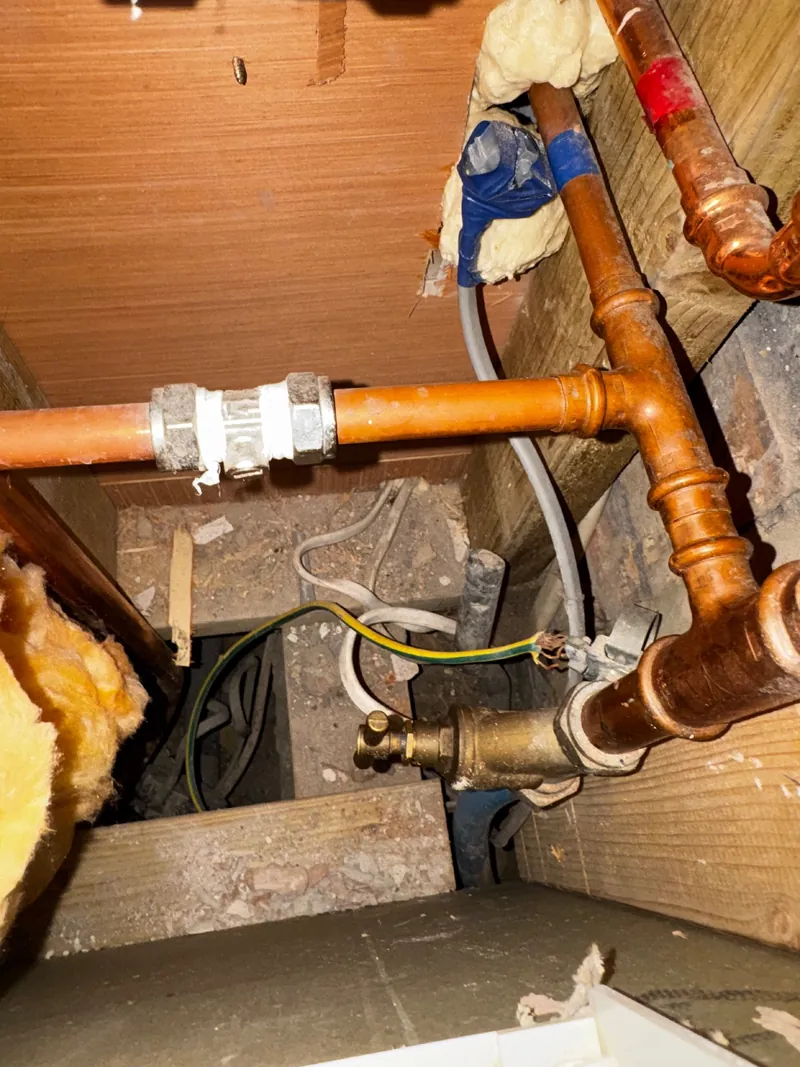
The valve you only need once
A stopcock or isolation valve is cheap and ignored until a pipe bursts. It sits unused for years. Scale builds up around the spindle, the washer hardens and the handle seizes. Then a pipe bursts, you reach for it, and it does not turn.
This page is about keeping that from happening. It covers a short test, how to read what the valve tells you, when to replace and when to leave well alone, and how to log the result. It does not cover finding the valve, which is in where is my stopcock in a house and what does a stopcock look like, nor the outside stop tap in the pavement, which belongs to the water company, as explained in boundary box and outside stop tap: who owns it. The yearly routine around it is in prevent escape of water at home.
The sources are Thames Water’s page on the inside stop valve, read on 24 November 2026, and Which? advice on a stopcock that does not work, also read that day. Both are cited where they appear. Advice that comes from plumbing practice rather than a published source is labelled and worth a plumber’s confirmation for your valve.
The two-minute test
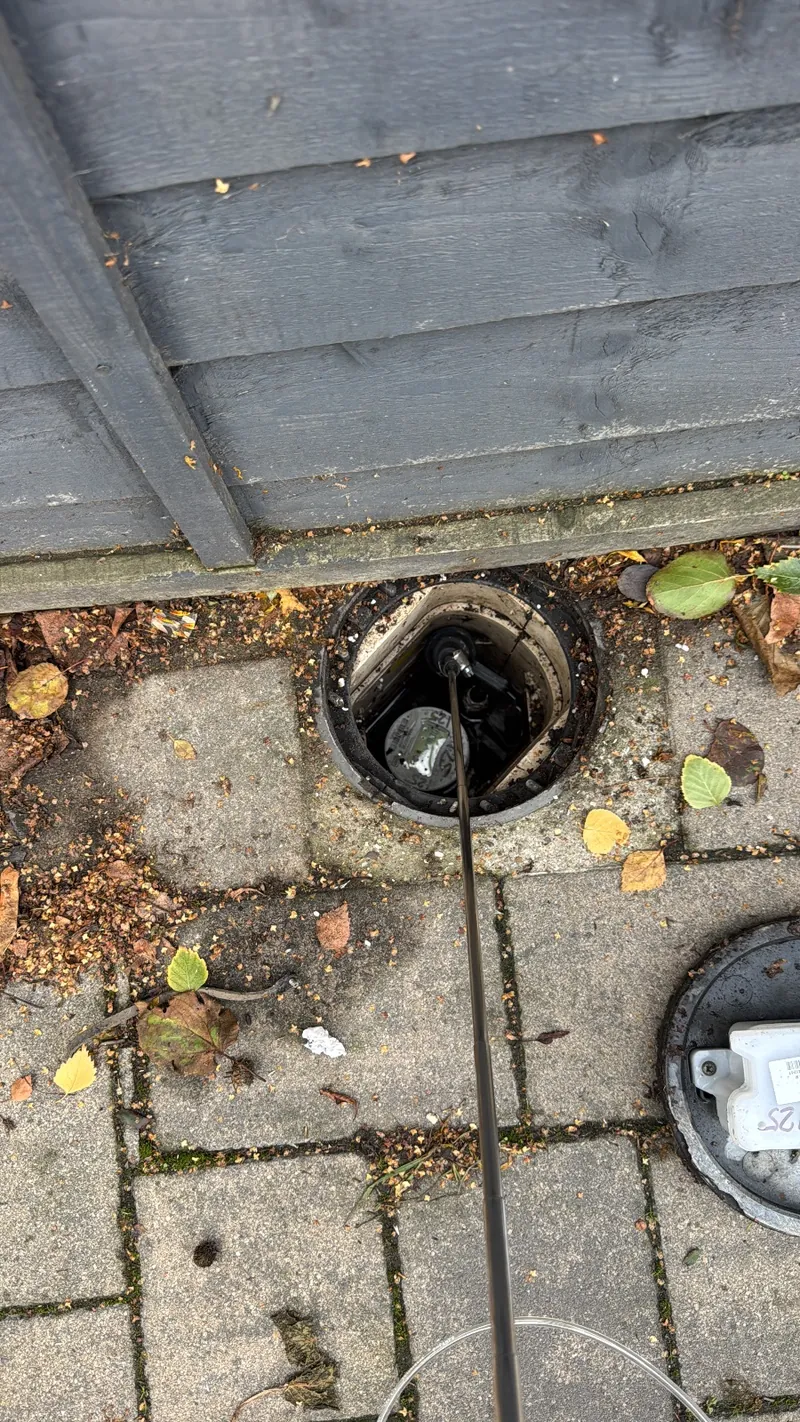
Thames Water recommends a monthly reminder to check that your inside stop valve is working correctly. Which? says it is really important to test your stopcock at least once a year. A monthly look and a yearly full test cover both.
- Tell anyone at home that the water will be off for a minute. Open a cold tap and note the flow.
- Turn the valve clockwise by hand. Thames Water says it may take several turns, and that you should not need excessive force once it stops.
- Watch the cold tap. The flow should slow and stop within a minute or so. Thames Water says water may keep running from taps for a few minutes after the valve is closed.
- Look at the valve while it is shut: any water at the spindle, on the body or at the joints.
- Turn it anti-clockwise to open, which Thames Water says may also take a few turns. Water may take a few minutes to return to the taps.
- Let the tap run for a few seconds and close it. Write down the date and what you found.
Not every valve turns the same way or the same number of times. Some have a wheel head and need several turns, some have a lever. This is our own observation, so follow what your valve does and the marks on it. If the water does not stop when the valve appears shut, it is failing.
What the valve is telling you
| What you find | Likely cause (our own judgement) | Do this |
|---|---|---|
| Turns easily, water stops, spindle dry | Healthy | Log it. Retest at the next interval |
| Turns, but water keeps flowing at a trickle after a few minutes | A worn washer or a partly open valve | Book a plumber to replace it. Do not rely on it in an emergency |
| Weeps at the spindle when you turn it | A worn gland or packing | A plumber can sometimes re-pack it. Often replacement is cleaner |
| Stiff, then loosens after a few turns | Scale at the spindle that has broken free | Retest in a week. If it stiffens again, replace it |
| Will not move at all | Seized by scale and debris | Leave it. Which? says the cause is usually scale and debris rather than rust. A plumber can fit a new valve ahead of it |
| Handle turns but nothing happens | A snapped spindle or a stripped head | Treat as failed. Replace |
| Green or white crust on the body | A slow leak from a joint, an early warning | Dry and watch. Book a plumber if it returns |
| Hidden behind boxes or boarded in | A problem of access, not of the valve | Clear the space in front of it and mark it. See below |
A valve that hardly moves has already failed. It has not leaked yet, but at the moment you need it, it will not do its job. The cheap time to replace it is before winter, with the water off at your convenience, not at 2 a.m.
What to avoid
| Mistake | Why | Do this instead |
|---|---|---|
| Forcing a stuck valve | Which? warns the spindle can snap. Thames Water says not to use excessive force | Stop. Call a plumber |
| Spraying it with a penetrating oil or WD-40 | Which?’s plumber does not recommend lubricating oil or WD-40 on a stop tap, because it is designed for rust, and says it makes the valve slippery to work. Other trade advice differs, so ask a plumber if you are tempted | Leave a seized valve to a plumber |
| Using a wrench and a pipe as a lever | Too much torque on the spindle or the pipe. A joint behind it can fail | Hand pressure only |
| Hiding the valve behind boxes, a boiler cover or a bath panel | You cannot reach it in an emergency. Our own advice: keep a clear space and label it | Move things now |
| Using the pavement valve as an everyday off switch | Thames Water says the inside stop valve is the main way to turn off and the outside one is for emergencies | Use the inside valve, and fix it if it fails. See the stop tap in the street: who can turn it off |
| Closing the valve and forgetting | A closed valve cuts water to the whole home, including a heating top-up on some systems | Tell people and note the time |
| Painting over a valve | Paint seizes spindles and hides the label | Mask it |
The small valves: isolation valves on taps, appliances and cisterns
Stopcocks get the attention. The small valves, sometimes called service valves or isolators, do most of the work in a leak, because they let you shut off one thing and leave the rest of the home running. Thames Water’s page on the inside stop valve says that you may be able to turn off the water for just the affected room using other stop valves in the home. That only works if you have them and they work.
| Fitting | Where the valve is | Check at each test |
|---|---|---|
| Kitchen and bathroom taps | Under the sink or basin, on each supply pipe, with a small slotted head or a lever | Quarter turn or a few turns. Water at the tap should stop. No drip at the spindle |
| Washing machine and dishwasher | On the pipe behind the machine, usually a lever or a tap-shaped valve | Pull the machine out only if it moves safely. See washing machine hose leaks prevention |
| Toilet cistern | On the supply pipe at the cistern, a small slotted valve | Close it and flush. The cistern should not refill |
| Outside tap | Inside the house, on the pipe feeding it | Close and open. See outside tap: frozen or leaking |
| Boiler or cylinder | On the cold feed and the flow and return | Leave to an engineer. Do not adjust. Follow the maker’s instructions |
| Loft tank | On the supply pipe to the tank, and the float valve | Ask a plumber. Do not climb into the loft unless you can do so safely |
If a fitting has no isolation valve, ask a plumber to fit one next time they are working in the area. It is a small job compared with the damage it can prevent. Our own advice is to ask for lever or slotted valves that you can operate without tools.
When to replace, and how it is done
You replace a valve when it fails the test, not when it fails in anger. Which? suggests having a plumber fit a new stop tap ahead of a broken or stuck one before an emergency. Thames Water’s page lists other ways a plumber can cut the supply for a job when the usual valve will not close, including a device fitted in the supply and a short-term freeze and clamp done by a plumber. In our experience, a plumber cannot swap an inside valve while water is still arriving at it, which is why those options exist.
- Ask for the job to be planned. A plumber needs to cut the supply upstream, using the pavement valve or one of the alternatives above.
- Agree a time when the water can be off, and warn neighbours if you share a supply, as Thames Water says.
- Ask for the new valve to be placed where you can reach it, with clear access and a space around the handle.
- After the work, ask for a certificate of compliance with the water regulations, as Thames Water says to. The regulations say repairs to fittings should be workmanlike, to a recognised standard.
- Test the new valve straight away and log it.
We do not print a price for this job, because it depends on the access and the method. Ask for a written quote. If you want to book us for plumbing work, see report a leak, and we will tell you what is needed.
The valve log
Print this, or copy it into your phone. It takes two minutes to fill in, and it is the evidence you want if an insurer later asks whether the valve was in working order.
| Valve | Where | Date tested | Closed fully? | Spindle dry? | Action |
|---|---|---|---|---|---|
| Inside stop valve | |||||
| Kitchen sink, hot isolator | |||||
| Kitchen sink, cold isolator | |||||
| Washing machine | |||||
| Dishwasher | |||||
| Bathroom basin, hot | |||||
| Bathroom basin, cold | |||||
| Toilet cistern | |||||
| Outside tap isolator | |||||
| Other |
Label each valve with a tag or a note. Photograph the stop valve with the date and put the photograph next to the water-off card in the stop tap in the street: who can turn it off.
Flats, rented homes and shared supplies
In a flat, Thames Water says the stop valve may be where the supply enters the building, and in some flats that is a communal valve. Your own valve may isolate only your flat, or none at all. Ask the managing agent before you test a communal valve, because closing it can cut the water to others. For a rented home, the inside stop valve is part of the plumbing the landlord keeps in repair in covered tenancies under section 11 of the Landlord and Tenant Act 1985. If it is stiff or weeping, tell the landlord or agent in writing with a photograph, as soon as you find out. See leak prevention for flats and managing agents and escape of water prevention checklist for landlords.
A valve that weeps is also a leak
A slow drip at a spindle or a joint can run for months because it lands in a cupboard that nobody opens. It looks like nothing, and it adds up on a meter. If the valve is dry on test day but the meter moves with everything off, the leak is somewhere else. How to do a water meter leak test gives the steps, and why is my water meter reading so high lists the other causes of a high reading.
If you cannot find the source, a leak detection survey locates it without opening up the house. Our rate for standard leak detection is £150/hr, typically £325 to £400 for a visit. Tracer gas and the written report are included in the price. No VAT charged. See the pricing page for every rate and the guides hub for the rest of our prevention pages. If a valve has failed during a leak, start with mains water leak: what to do in the first hour.
For a frozen or burst pipe, a valve you tested in advance is one you can rely on. See frozen pipes: what to do before they burst.
