Leak detection report for an insurance claim
Find the leak without opening up more than needed, then put the finding in writing for your insurer.

The quick version
- What it is
- Leak location with a written report and photos you can send to your insurer, landlord, freeholder or managing agent.
- What it costs
- £200/hr, typically £400 to £800 in total. £100 for the first hour, then £150 an hour, quoted before we start. No VAT charged. Repair quoted separately.
- What you get
- Written report with photos, and a written repair quote if you want the leak fixed.
Signs you may need this
- A stain or damp patch with no visible pipe above it
- A meter that keeps turning with everything off
- Damage from a leak that your insurer wants located
- A flat where the source could be above, below or in a shared pipe
How we find it
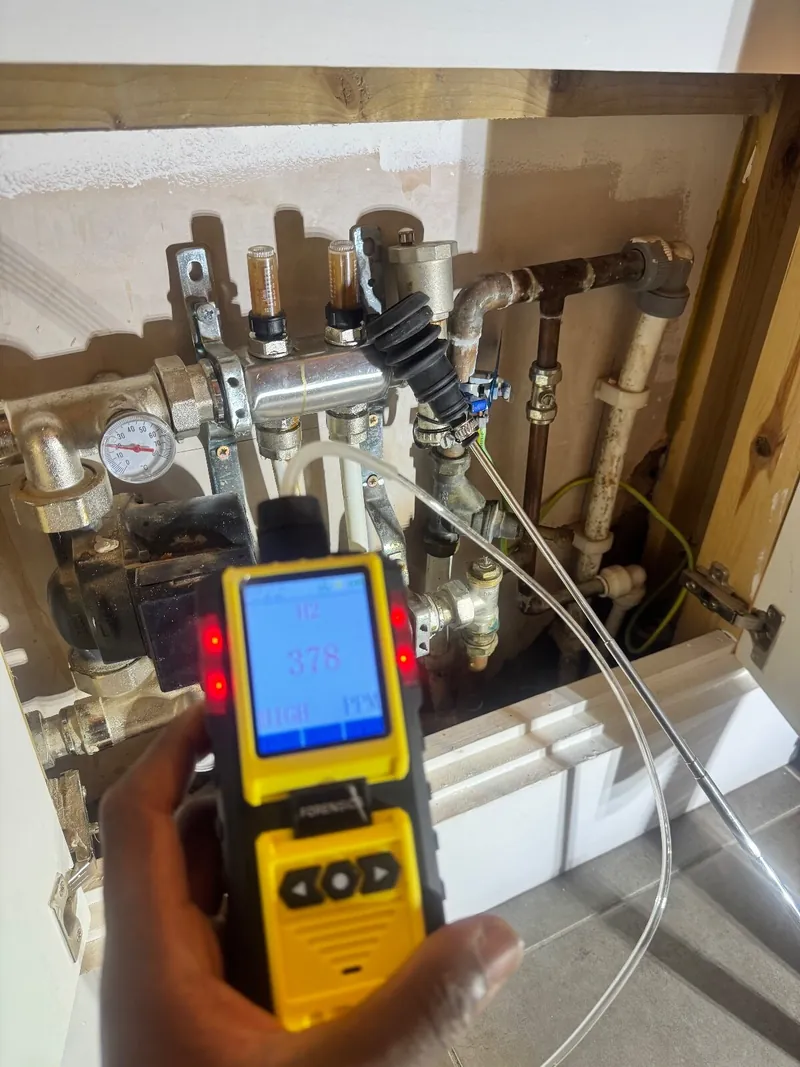
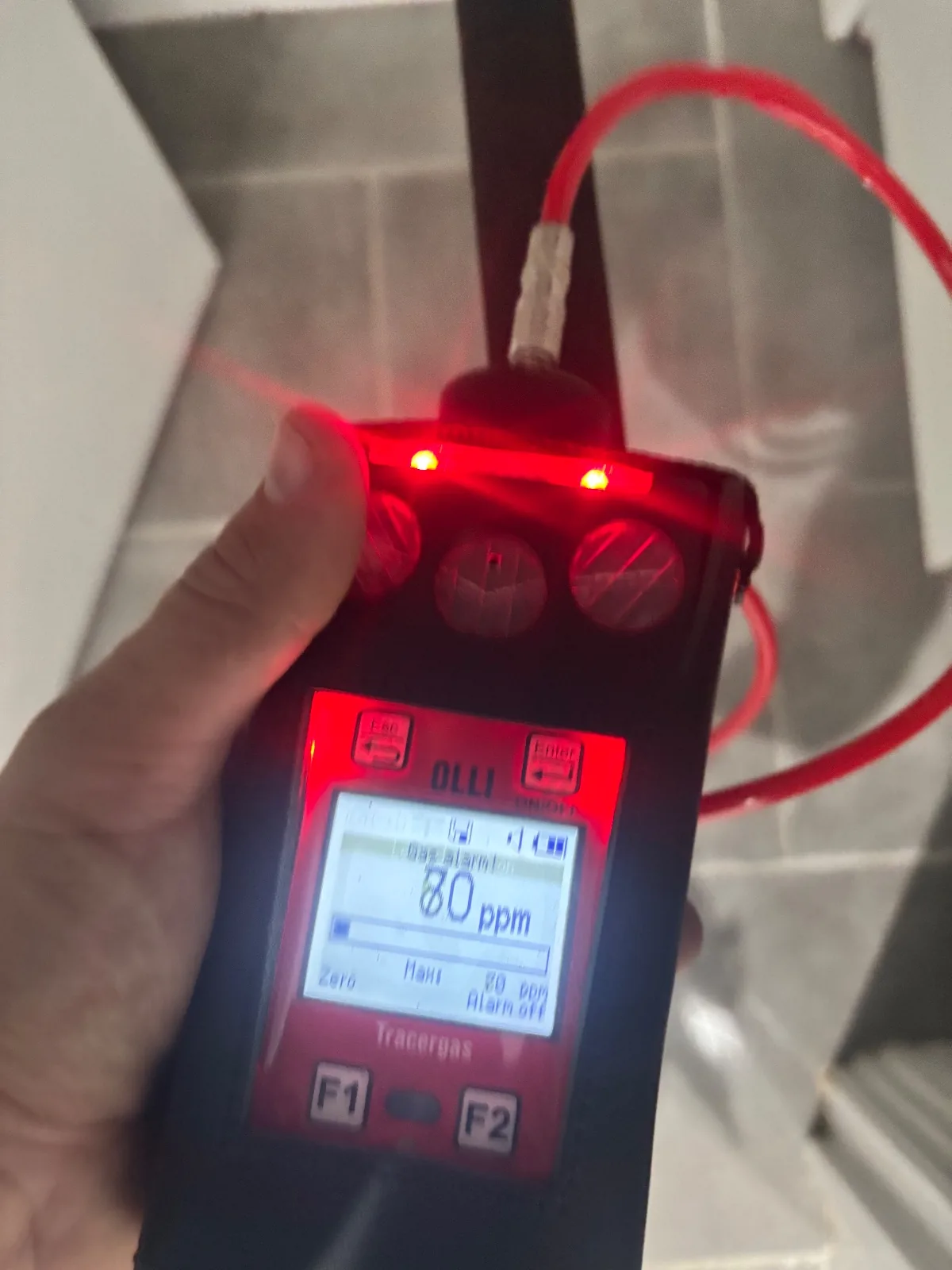
Tracer gas
A harmless gas is introduced to the pipe and detected where it escapes. Finds small leaks under floors and slabs.
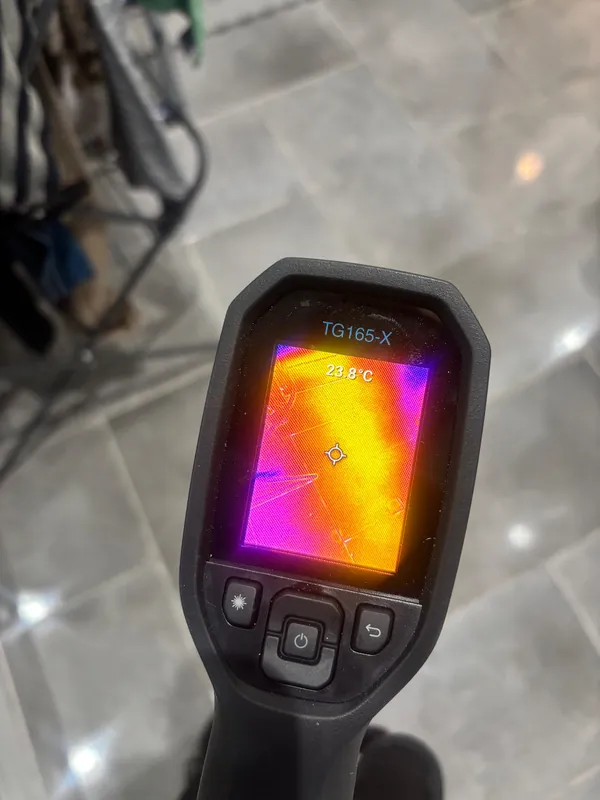
Thermal imaging
A thermal camera shows the temperature difference that wet or heated pipework leaves in a surface.
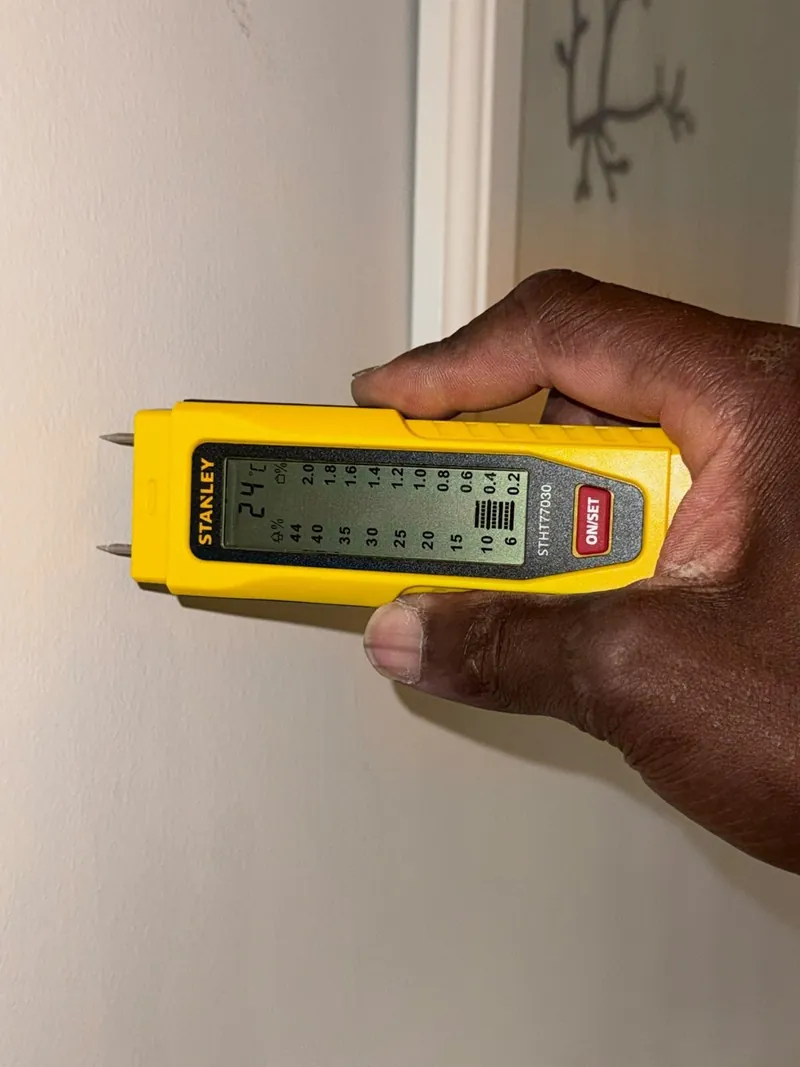
Moisture mapping
Readings across walls and floors show where water has travelled, and where it started.
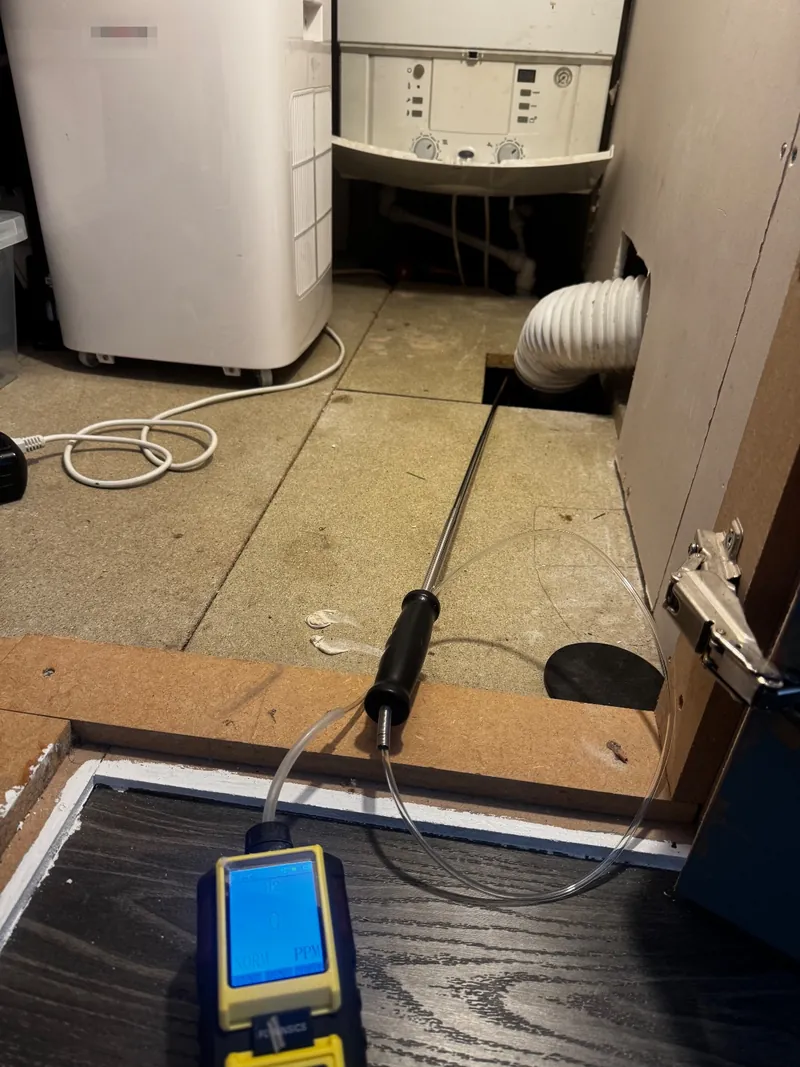
Pipe tracing
Locating the route of buried supply pipe so a leak can be pinpointed before anyone digs.
We locate the leak without opening up the building more than necessary, then give you a written report with photos that says where the water is escaping, how we found it and what we recommend. You send it to your insurer; whether the insurer accepts it is its decision, so check your policy wording and ask them before work starts.
What we do for a claim, and what we leave to you and your insurer
A hidden leak is hard to claim for because nobody can say where it is. The ceiling is stained, the floor is damp, the meter is turning, and the insurer wants to know which pipe has failed before it will discuss anything else. Finding that pipe is our job. We use thermal imaging, moisture mapping, tracer gas and pipe tracing, choose the least invasive method that fits the symptoms, and write up what we found.
What we do not do is handle your claim. We do not notify the insurer for you, negotiate with it, or tell you whether you are covered. You and your insurer decide that. We give you a document you can attach to a claim, and we are straightforward in the report about what we measured and what remains uncertain.
Ready when you are: request an insurer-ready report or call 020 3961 5444. We ring you back to agree the rate before anyone travels.
Who this is for
- Homeowners with buildings insurance who have found a stain, a damp patch or a rising bill and cannot see the source.
- Landlords who need to show an insurer, a tenant or a letting agent where the water is coming from.
- Leaseholders in a flat, where the lease decides who handles repairs. GOV.UK says the lease sets out whether the leaseholder or the freeholder is responsible, so check your lease and ask your freeholder or managing agent before you commission work.
- Managing agents and loss adjusters who need a clear written finding on a building. There is a separate page for you: leak detection for loss adjusters and managing agents.
What the written report contains
Every visit ends with a written report with photos. In general terms it covers the following, in plain English so that a claims handler, a freeholder or another plumber can follow it without having been in the room.
- The property and the reason for the visit: address, date, who let us in and what you told us about the symptoms.
- What was tested and in what order: for example meter and pressure checks, moisture readings across the affected area, thermal images, then tracer gas or pipe tracing where the earlier steps pointed to a pipe.
- The readings and images, with photos of where they were taken.
- Where the leak is: a position described in the report and marked on photos, such as the pipe run, the wall or the floor area.
- What we could not establish. If a result is uncertain, or two sources are possible, the report says so rather than guessing.
- What we recommend: the access needed to reach the pipe, whether the leak looks to be on a supply pipe, a heating pipe or an appliance connection, and what a repair is likely to involve.
To see how this looks on the page, open the leak detection report sample. It uses an invented address and invented readings and says so. It shows the layout, not a real customer.
How detection supports a claim, without promising an outcome
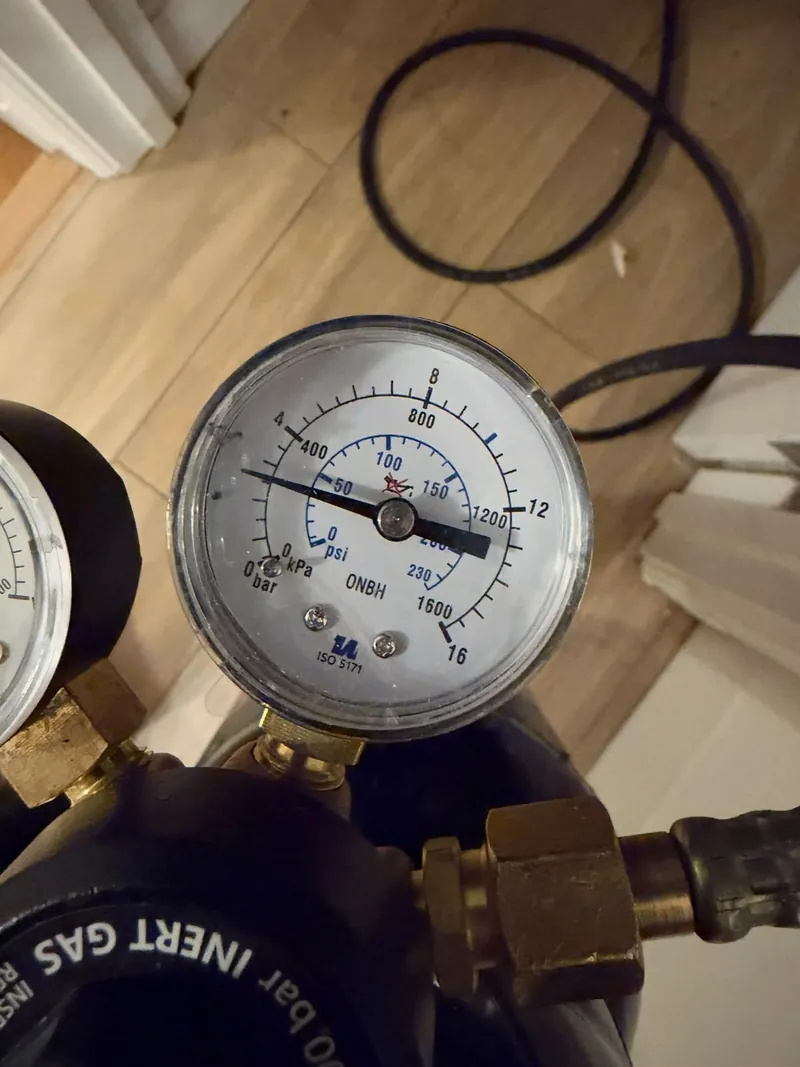
Insurers ask for evidence. NFU Mutual asks you to photograph or film the damage and keep plumber’s bills, repair invoices and receipts. Direct Line asks for photos or video. Saga’s policy wording says it may ask you to instruct a plumber for a Cause of Damage report, agreed in advance. A written finding of where the leak is, with dated photos, fits that kind of request.
It is not a guarantee of anything. We cannot promise that an insurer will accept a report, pay for tracing, or cover the repair. Policies differ. In the policy wording we read, tracing cover is tied to damage from escaping water: Ageas and Saga both say so, and Saga says that with no damage the work is maintenance. A Financial Ombudsman decision (DRN-3869874, 19 May 2023) found that one policy’s wording did not require a successful water damage claim for tracing costs. That shows how much the exact wording matters. Read your own schedule, and ask your insurer what it needs.
An ombudsman can also weigh a specialist’s report as evidence. In decision DRN-5970477 the ombudsman compared a leak detection specialist’s report against the insurer’s own surveyor’s report and photographs, and upheld the complaint. That is one decision and it turned on its own facts. It tells you reports can matter, not that yours will decide a claim.
If you are not sure what to photograph and keep, start with the escape of water claim checklist. For how the excess works, see escape of water excess.
Trace and access, in plain English
Trace and access has two halves. Trace is finding the source of the leak. Access is getting to the pipe, which often means opening a wall, lifting a floor or breaking into a surface, and then making good the opening afterwards. Many home insurance policies include cover for both, but the wording differs by insurer, and limits and excess sit on your policy schedule.
This is where non-invasive detection earns its keep. Because we locate the leak before anyone opens anything, the access can be small and in the right place. A report that says the leak is under a particular section of floor is much easier for everyone to work from than a hole made in the hope of finding it. More on the methods is in non-invasive leak detection.
A note on what we do not know: whether your own policy covers the access work depends on your wording, so the report describes the access that would be needed and you take that to your insurer.
What it costs
Trace and access with a written report for an insurer is charged at £200/hr. A typical total is £400 to £800, depending on the size of the area and how hard the leak is to pin down. The hourly rate is quoted first on the phone and never exceeded. Tracer gas is included in the price. No VAT charged.
The report itself is part of the job and is not charged separately. Repairs are different: once the leak is located we quote any repair in writing, as a separate job with its own price. We are plumbers as well as leak specialists, so we can do the work if you want us to. You can equally take the report to another plumber. Full detail is on the pricing page.
How to engage us
- Contact your insurer first and ask what it needs, whether tracing work must be agreed in advance, and what your excess is.
- Request an insurer-ready report or call 020 3961 5444. Tell us the insurer, the policy type and any claim reference you have, plus access notes.
- We ring you back, confirm the rate and agree a time. Before we arrive, switch off the water at the stop tap if the leak is active, and read how to turn off your mains water if you are not sure where it is.
- We carry out the survey and send the written report with photos.
- You send the report to your insurer, landlord, freeholder or managing agent. If a repair is needed, we send a separate written quote.
To understand what happens on the visit, read what happens on the day. For a wider look at how escape of water cover works, start with escape of water insurance explained.
Last reviewed .
Sources
- What is tracing a leak and what does it cover?, Ageas
- Trace and access cover, Saga
- Saga Plus home insurance policy wording, March 2026, Saga
- Escape of water claims, NFU Mutual
- Home insurance claims: common questions, Direct Line
- Financial Ombudsman Service decision DRN-3869874, 19 May 2023, Financial Ombudsman Service
- Financial Ombudsman Service decision DRN-5970477, Financial Ombudsman Service
- Leaseholder rights and responsibilities, GOV.UK
- Leak allowance, Thames Water
Want it located, not guessed at? Call us
What the price covers
- £100 for the first hour, then £150 an hour, quoted before we start.
- No VAT charged.
- Tracer gas, acoustic detection, thermal imaging, a camera inspection and a written repair quote are included in the standard price.
- Written report with photos.
No find, no fee: if a leak is present and we do not find it, you pay nothing.
Found the leak? We quote the repair.
Repairs are quoted in writing once the leak is located. Every fix is different, so there is no repair price list.
We are plumbers as well as leak specialists, so we can carry out the repair once you approve the quote.
Related
- Leak detection report sampleInsurance claims
- Escape of water claim checklistInsurance claims
- Escape of water excess: what you payInsurance claims
- Leak detection for loss adjusters and managing agentsInsurance claims
We cover every London borough from one call-out area, so there is no separate page to find for your part of London.
Questions about this service
Will my insurer accept your report?
We give you a written report you can send to your insurer. Whether the insurer accepts it is its decision, and we make no claim that any insurer approves our reports. Check your policy wording and ask your insurer what evidence it wants.
Do I need my insurer’s approval before you start?
Ask first. Ageas, for one, says it wants to agree tracing work before it starts and that costs are not repaid if the claim is later declined. Other insurers’ terms differ, so check your wording.
Will the insurer pay for trace and access?
We cannot say. Many policies include it, but in the Ageas and Saga wording we read it applies where escaping water has damaged the building. Your schedule shows your limit and excess.
Do you handle my claim for me?
No. We provide the report. You or your insurer decide the claim, and we do not notify, negotiate or advise on whether you are covered.
Can I choose my own leak detector?
That depends on your policy. Some insurers have their own process: Saga’s wording, for example, says it may ask you to instruct a plumber for a report, agreed in advance. Ask your insurer before you book anyone.
What does the report cost?
Nothing separately. Trace and access is charged at £200/hr, typically £400 to £800 in total, with No VAT charged. Repairs are quoted separately.
I am a leaseholder. Who should commission the report?
The lease decides who handles repairs, according to GOV.UK. Check your lease and ask your freeholder or managing agent before you instruct work.
Does a report help with a Thames Water leak allowance?
Thames Water’s stated proof of repair is a plumber’s invoice or a Thames job number, and its pages do not mention detection reports. A report can help describe where the leak was. Ask Thames Water what it needs.

Talk to someone about your leak
£100
for the first hour, then £150 an hour, everything included
No find, no fee. No VAT. Repairs quoted in writing once the leak is found.