
Why the outside tap is the first thing to go
An outside tap is a short pipe that pokes through a cold wall into open air and is then left full of water. Thames Water’s winter advice of 8 January 2026 singles out the pipes leading to outside taps as particularly vulnerable to freezing, and the Consumer Council for Water’s winter advice tells households to cover outside taps with a tap cover and lag exposed pipes. Both were read on 24 November 2026.
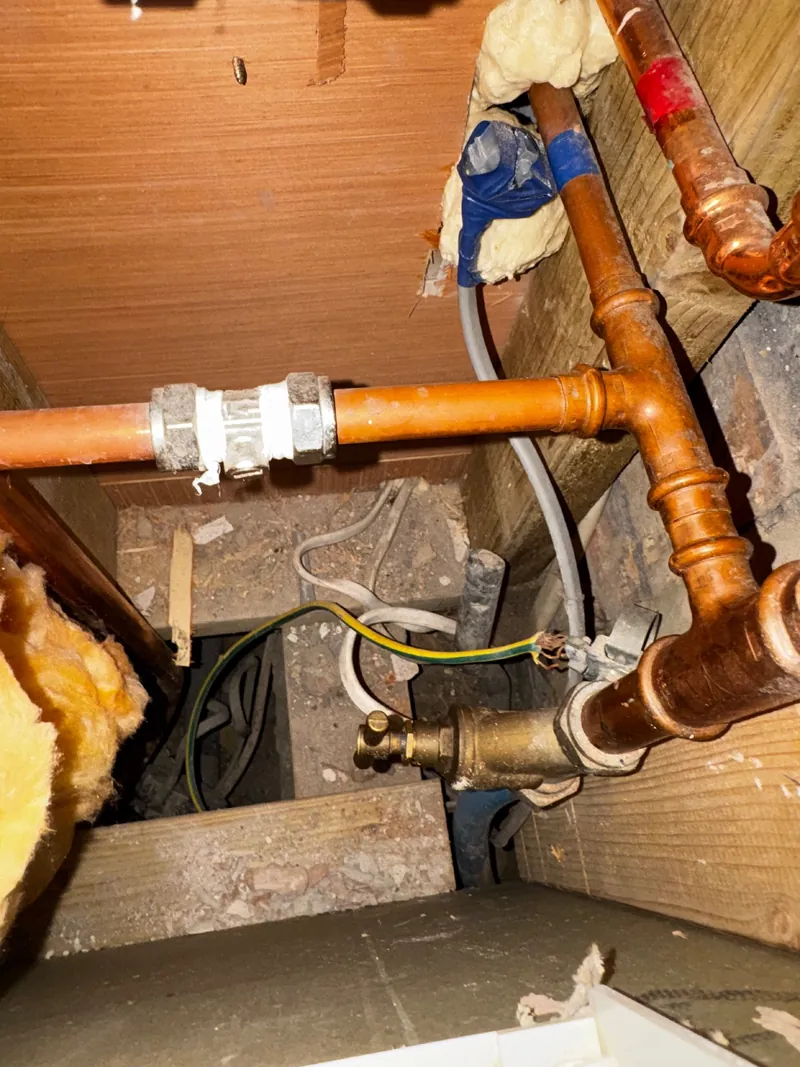
The failure usually goes like this. Water stays in the tap body and the pipe behind it. A hard frost freezes it. The ice expands and splits the tap or, more often, the pipe just inside the wall, where nobody can see it. The crack holds while the ice holds. On the thaw it opens, and water runs into the wall cavity or under the floor for as long as the pipe is under pressure. The leak you see, a drip from the spout, can be the smallest part of it.
This page is the seasonal routine for that one fitting: how to tell what is wrong, what to do in the first hour, how to close it down in autumn, how to open it again in spring, and how to catch the hidden version. For the wider leak types around the garden, see garden tap and outside supply leaks. For frozen pipes inside the house, see frozen pipes: what to do before they burst.
Frozen, leaking or both?
| What you see | Probably | First move |
|---|---|---|
| Tap turned fully open, no water or a thin trickle, frost on the tap or pipe | Frozen in the tap body or the pipe behind it | Close the inside valve to the tap, leave the tap open, thaw slowly. Do not keep forcing the handle |
| Tap closed, still dripping from the spout | Worn washer or cartridge, or a seat that has frozen and cracked | Use the inside valve to stop it, then replace the washer or tap. Check the wall |
| Water at the spindle or round the handle when the tap is open | Worn gland or packing | Close the inside valve. A tap that leaks when used is a repair, not an emergency |
| Damp patch or stain on the outside wall below the tap | A leak at the wall joint or in the cavity | Close the inside valve and check inside the house at that point |
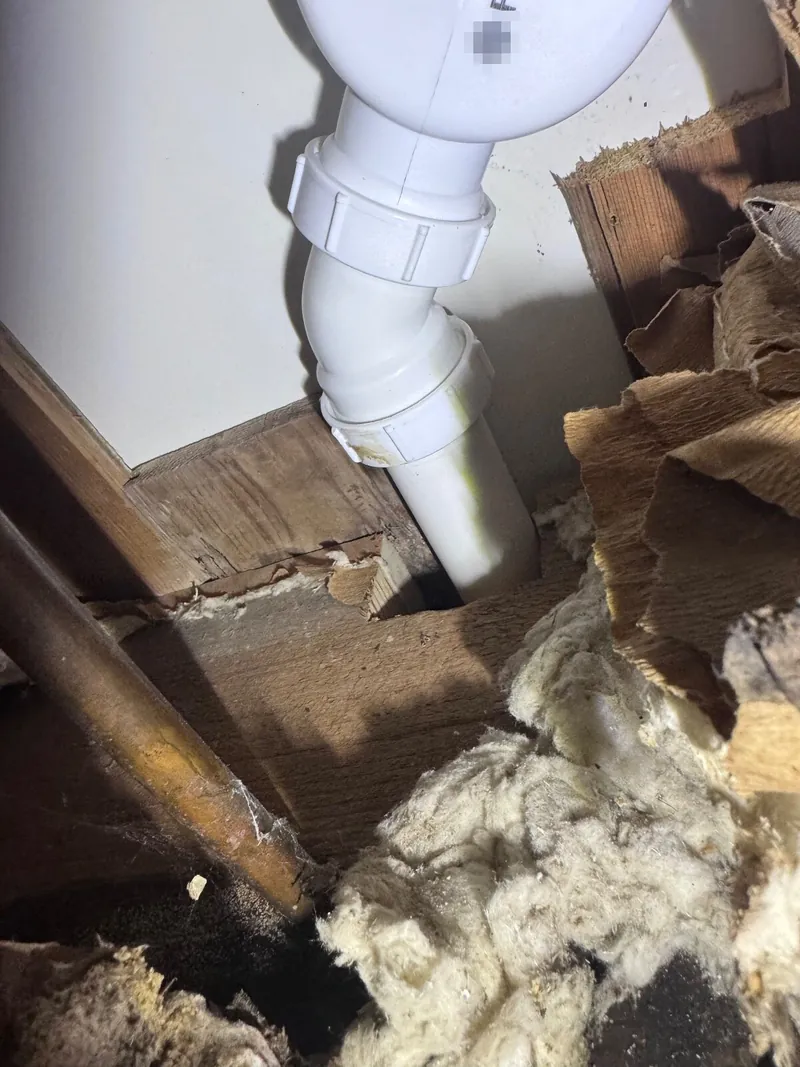
| Damp patch, bubbling paint or a musty smell on the inside wall or floor behind the tap | A pipe split inside the wall | Close the inside valve, keep the tap open and call a plumber |
| Tap runs normally but the meter moves with everything off | A leak somewhere else on the supply, or a slow one at this tap | Run the meter test described below |
| Hose attached, tap leaking at the hose connector | A worn connector or washer | Disconnect the hose and fit a new connector. Not frost related |
The right-hand column mixes two things. The thaw and drain steps follow Thames Water and the Consumer Council for Water. The wall-damp signs and the “close the inside valve” instruction for a dripping tap are our own practical judgement and worth a plumber’s view for your pipe layout.
If it is frozen right now
- If there is an inside isolation valve for the outside tap, close it. This is often a small valve on the pipe in the kitchen, utility room, garage or under the stairs, close to where the pipe goes through the wall. Many homes have none. If yours does not, close the main stop valve instead, as Thames Water does for any frozen pipe, usually under the kitchen sink, clockwise.
- Leave the outside tap open so that water can escape as it thaws. The Consumer Council for Water says to leave the cold tap on so thawed water can escape.
- Remove any hose, hose gun or splitter from the tap. A hose holds water that can freeze and split the connector.
- Thaw slowly. Thames Water suggests a wrapped hot water bottle or warm towels. Our own advice for the outside tap: wrap a warm, damp towel round the body of the tap and the first stretch of pipe. Do not use a flame, a blow torch or boiling water.
- When water flows, leave it for a minute with the inside valve still closed and the tap open, then check the tap, the wall and the floor inside for wet. Run a dry cloth along any pipe you can reach, as Thames Water suggests, and watch for a few minutes.
- If it is dry, reopen the inside valve slowly and watch the wall for 10 minutes. If anything is wet, close the valve again and call a plumber.
If the first sign is damp rather than ice, you are already past the thaw. Keep the inside valve closed and the tap open and phone a plumber. If the water you can see is coming from the road or pavement, not your property, report it on Thames Water’s own page.
If it is leaking
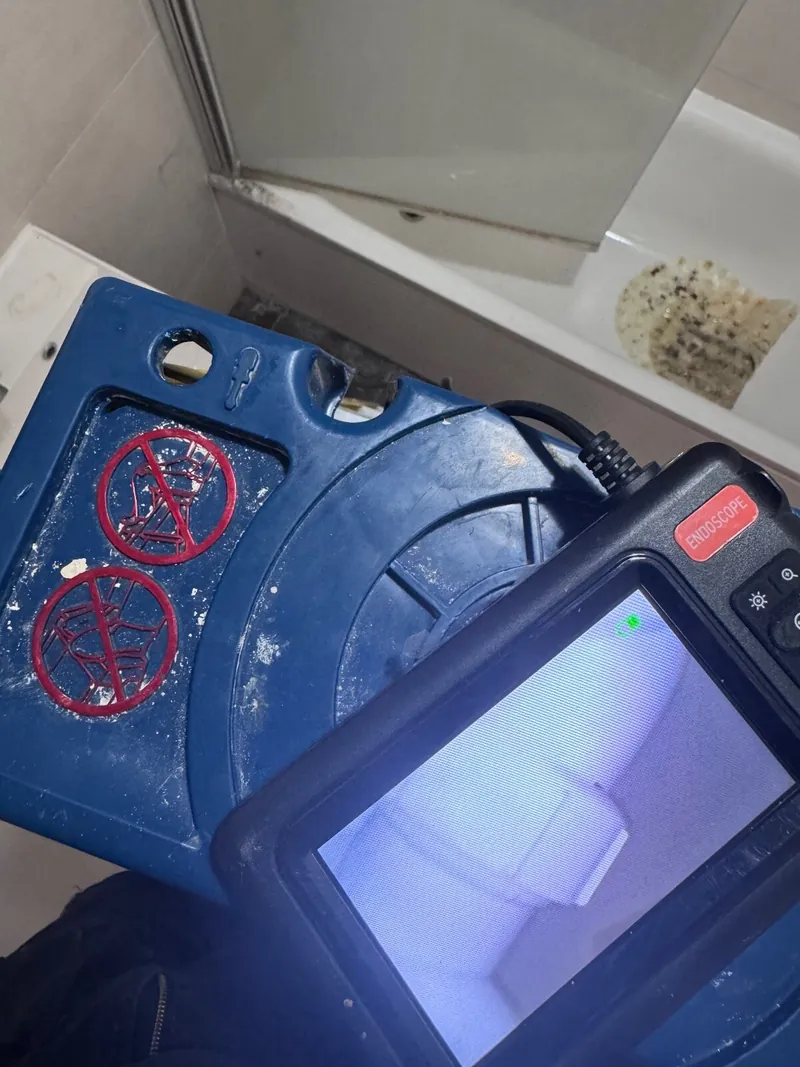
A leak at the tap itself is a small repair. A leak behind the tap is a bigger job, because the water has to go somewhere. The question to ask is where.
| Where it shows | What it means | What to do |
|---|---|---|
| Drips from the spout onto the path | It runs out of the tap and is visible | Replace the washer or tap. Isolate meanwhile |
| Runs down the wall outside | Leaking at the wall joint | Isolate. A plumber can reseal or replace |
| Disappears into the soil and a lawn patch is boggy | Leak in a buried pipe feeding the tap, such as a garden or driveway supply | See garden tap and outside supply leaks and signs of a leak underground |
| Inside the house: damp skirting, stain on a wall, lifted laminate, peeling wallpaper | A pipe or joint is leaking behind or beneath | Close the inside valve. Keep photos. Call a plumber |
| Nowhere you can see, but the meter moves and the bill rises | A concealed leak | Meter test, then a leak detection survey |
The tap’s year: close down, freeze watch, open up
The routine takes 10 minutes twice a year. Dates follow London winters, not a rule: bring them forward in a cold October.
| When | Do this | Why |
|---|---|---|
| Late October or early November | Disconnect the hose. Close the inside isolation valve to the tap, then open the outside tap and leave it open so the pipe drains | Our own advice. An empty pipe cannot freeze. The CCW and Thames advice we read covers covering the tap and lagging the pipe, not draining it |
| Same visit | Fit an insulated tap cover. Lag any exposed pipe near the wall with foam insulation | The Consumer Council for Water recommends a tap cover and lagging exposed pipes. Thames Water advises foam lagging |
| If there is no inside isolation valve | Ask a plumber to fit one. It is a small job | Our own advice: a drain-down valve is the clean way to make a tap safe for winter |
| First frost forecast | Look at the cover and the open tap. Check nothing has been left full | A hose full of water or a forgotten spray gun can freeze |
| During a freeze | Check the wall inside the house near the tap once a day | A pipe that has split will show damp before it shows a drip |
| After the thaw | Look at the tap, the wall, the floor and the meter | Thames Water says leaks often appear on the thaw |
| March or April | Close the tap. Reopen the inside valve slowly. Watch the tap, the wall and the ground for 10 minutes, and run the meter test | A leak found in spring is cheaper than one found in August |
| Summer | Check the double check valve is fitted and the hose reel is tidy | See below |
One more point on drains. Closing the inside valve and opening the tap is a widely used winter routine, but we have not found it in the water companies’ advice, so treat it as practitioner advice that a plumber should confirm for your own pipework. Where a tap has no isolation valve and the pipe cannot be drained, a cover and lagging reduce the risk and do not remove it.
The check valve and why it matters in summer too
WaterSafe, the register of plumbers, says that every outside tap needs protection against backflow and advises fitting a compliant double check valve to garden taps. It adds that valves should be replaced every ten years under the British Standard it cites, BS EN 806-5. A hose left in a bucket or a pond could otherwise draw dirty water back into the supply. Check whether yours has one. A double check valve may be built into the tap or the pipe feeding it, depending on the age of the home. Our practical advice: if you cannot tell, ask a plumber to look when they fit the isolation valve.
If you rent, ask your landlord. If you own, add it to the winter close-down visit.
Who deals with it, and who pays
| Situation | Likely position | Source |
|---|---|---|
| You own the home | The pipe from your property boundary into the house and the plumbing inside is yours to repair | Thames Water’s pipe responsibility page, as read on 24 November 2026 |
| You rent | Tell the landlord or agent straight away. Section 11 of the Landlord and Tenant Act 1985 requires the landlord to keep in repair the exterior of the dwelling-house, including external pipes, and the water supply installations, in the tenancies it covers. Whether a particular outside tap counts is a question for the tenancy | legislation.gov.uk |
| You are a leaseholder | Read the lease and ask the freeholder or managing agent | GOV.UK says the lease sets out repairs |
| You are insured | Read the wording on frost and on pipes outside the building. Admiral’s freeze page, for example, lists frost damage to external or outdoor pipes as not covered, and the position at other insurers differs | Admiral |
An outside tap is exactly the kind of fitting where policy wording draws lines, so read the schedule before the first frost, not after. If you do claim for damage inside the home, NFU Mutual says to contact your insurer as soon as possible and keep photographs and receipts. We cannot say what any insurer will pay. More on responsibility is in burst pipe from freezing: who pays.
