Underground supply pipe leak: trace and repair
We find where an underground supply pipe is losing water without digging up the garden, then quote the repair.
The quick version
- What it is
- Tracing a leak on the buried pipe between your boundary and the building, then reporting its position in writing.
- What it costs
- £180/hr, typically £360 to £540 in total. Fixed hourly rate quoted first, never exceeded. No VAT charged. Repair quoted separately.
- What you get
- Written report with photos, and a written repair quote if you want the leak fixed.
Want it located, not guessed at? Call us
Signs you may need this
- The meter keeps turning with every tap and appliance off
- A lawn patch that is boggy, sunken or greener than the rest
- A drive or patio that has settled along a line
- Low pressure, or a running sound with no tap open
- A bill that has risen with no change in use
How we find it
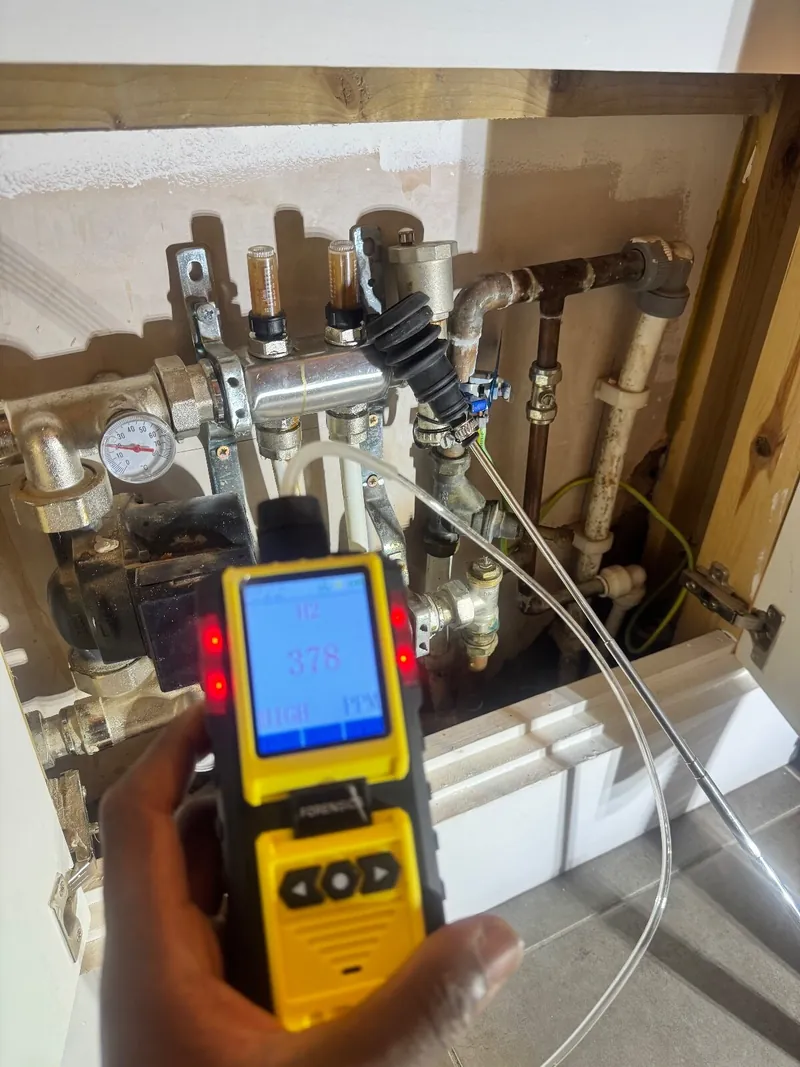
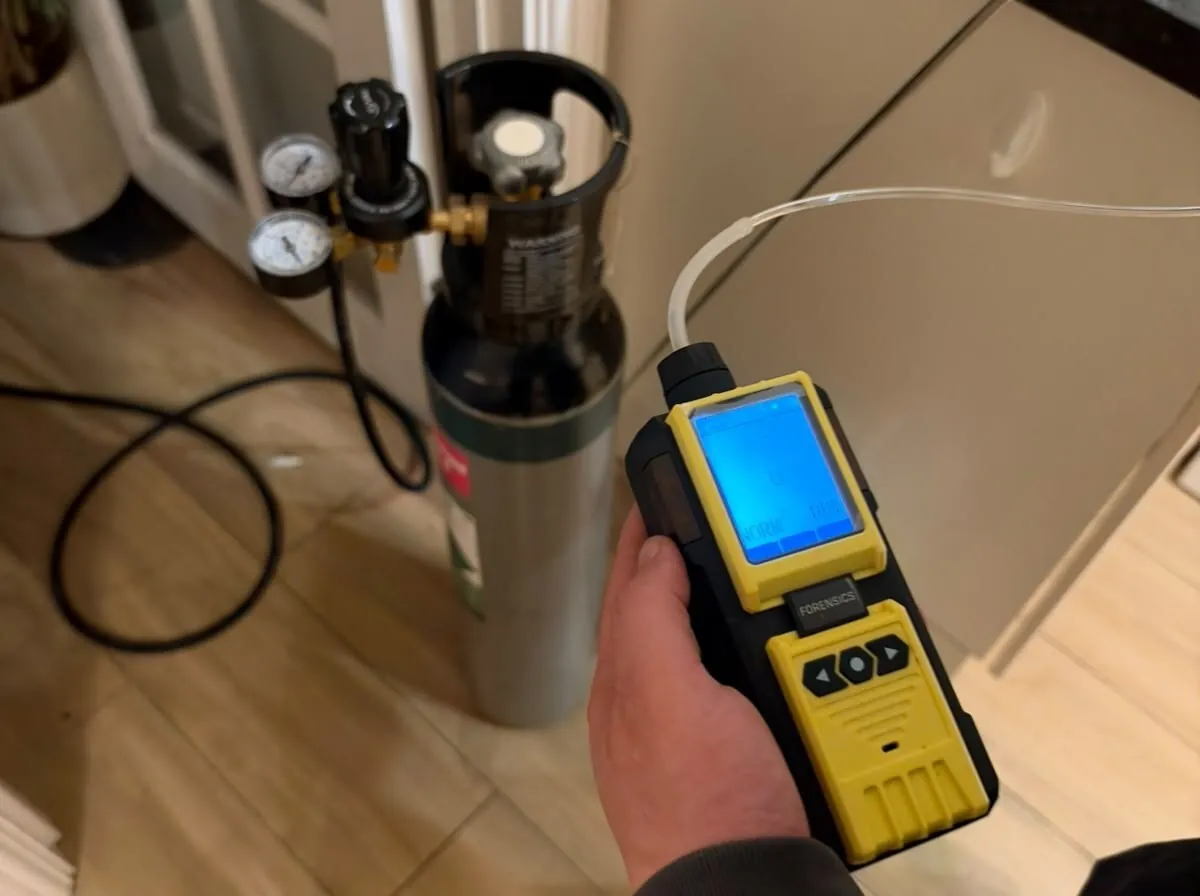
Tracer gas
A harmless gas is introduced to the pipe and detected where it escapes. Finds small leaks under floors and slabs.
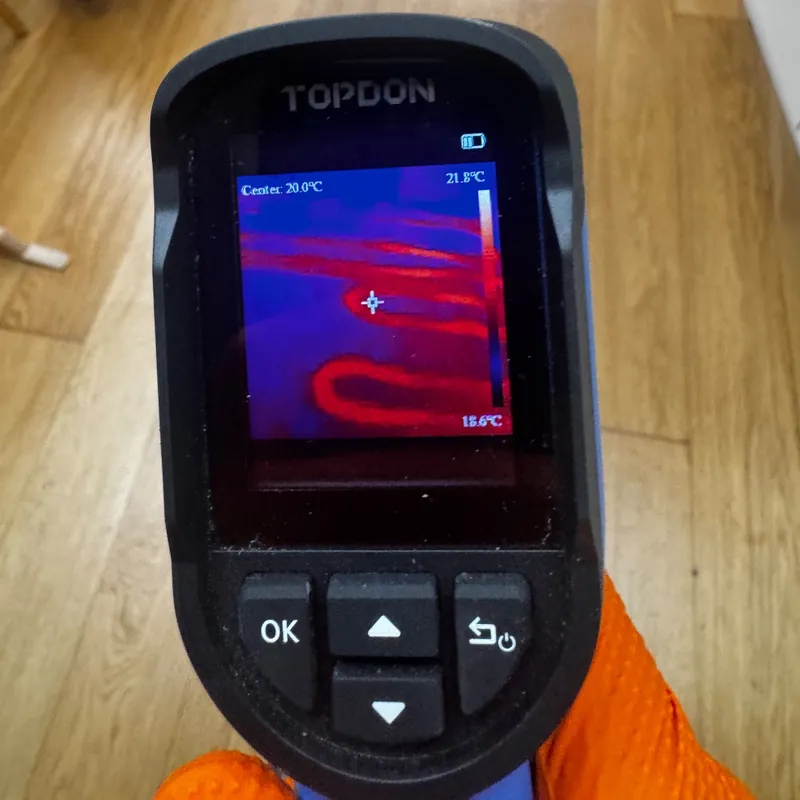
Thermal imaging
A thermal camera shows the temperature difference that wet or heated pipework leaves in a surface.
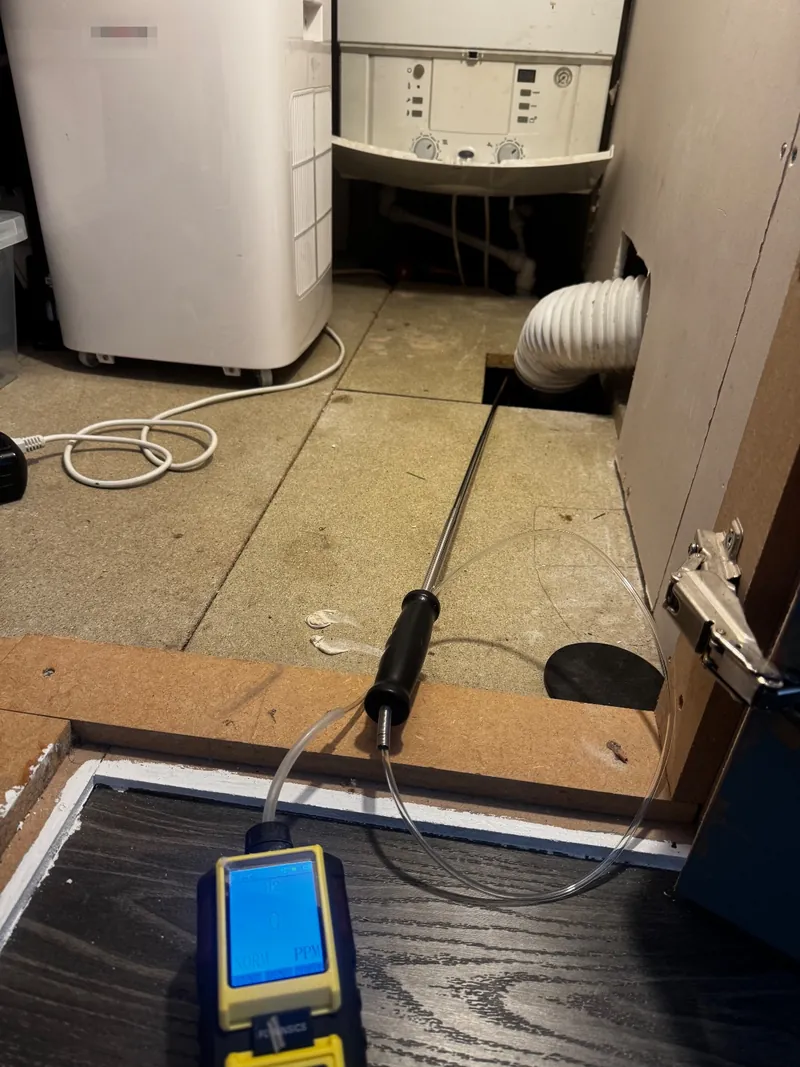
Pipe tracing
Locating the route of buried supply pipe so a leak can be pinpointed before anyone digs.
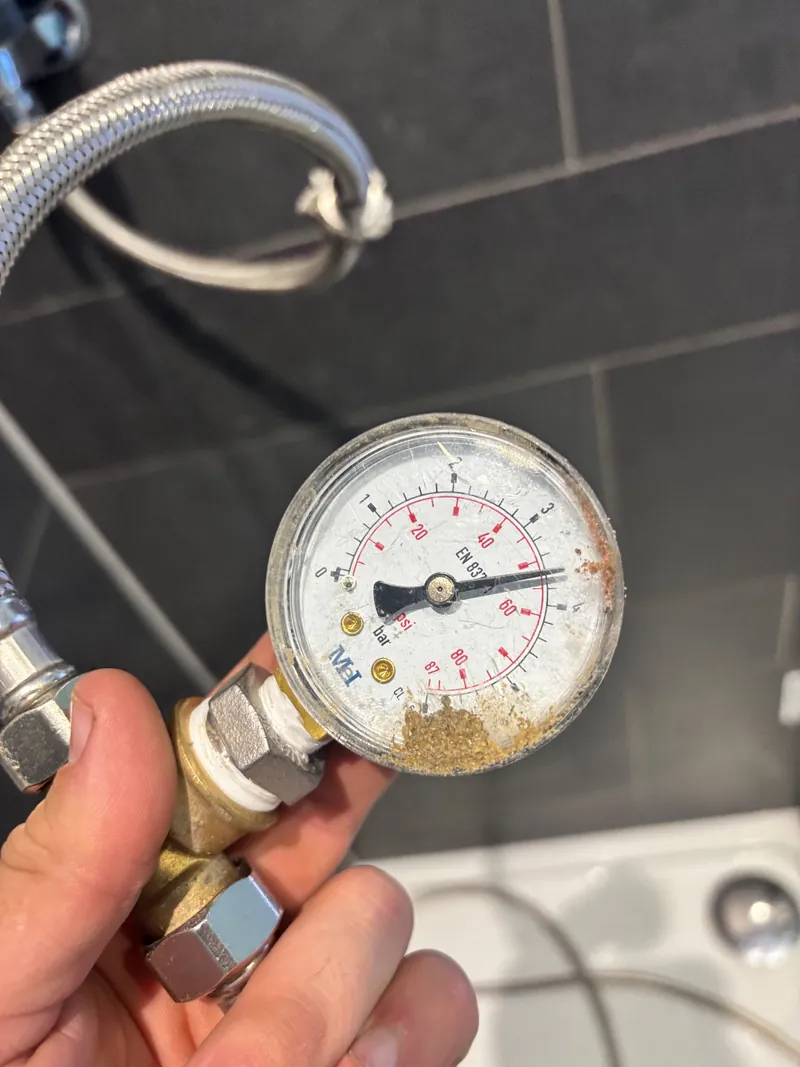
Pressure test
Isolating a section of pipe and watching whether it holds pressure confirms where the loss is.
A leaking underground supply pipe is usually the property owner's to fix. We trace the leak without digging, give you a written report with photos, then send a written repair quote. The trace is charged at £180/hr, quoted before we start and never exceeded, and No VAT charged.
Who this page is for
You have reason to think the pipe between the street and your front door is losing water, and you do not know where. The pipe may run under a front garden, a block-paved drive, a patio or the ground floor itself. Nobody wants to dig up all of it to find a leak the size of a pinhole.
Thames Water describes the supply pipe as the pipe from your property boundary into the house, usually under the garden or driveway, and says it is generally the property owner's responsibility. If the pipe crosses a neighbour's land or the road, you remain responsible for it up to the point where it meets the water company's pipe. Terraces often share one supply between several homes, with the owners sharing the common section. Our guide to who owns the water supply pipe covers the edge cases.
How an underground leak shows itself
Underground leaks rarely announce themselves with a puddle, because the water drains away through the soil or finds the line of least resistance. Look for these instead:
- The meter turns when everything is off. This is the clearest sign and the first thing to check.
- A bill that rises while your habits have not changed.
- A patch of lawn that is greener, boggier or sunken compared with the rest, or a drive that has settled along a line.
- Low pressure, or a pipe that sounds like it is running when no tap is open.
- Damp rising in a ground-floor wall nearest to where the supply enters.
Every one of these has other possible causes. Signs of a leak underground explains how to tell them apart, and water leak under a driveway deals with the commonest case.
What the engineer does, step by step
- Confirm the loss. We run the meter test with every appliance off and the inside stop valve closed. If the meter moves, the water is leaving after it. If it does not move, we look elsewhere before charging you for a supply pipe trace.
- Find the route. If you do not know where the pipe runs, we trace it with a locator from the stop tap towards the house and mark it. Most of the time the route is not where the owner thinks it is.
- Narrow the section. Where the pipe can be isolated, a pressure test shows which length holds and which does not.
- Pinpoint the leak. On paved or hard surfaces we use tracer gas along the marked route and check the readings in more than one place. Where the pipe is metallic, we also listen along it.
- Check we have the right pipe. Thermal imaging and moisture mapping inside the building rule out a heating pipe or waste leak that looks like a supply problem.
- Mark it, photograph it and write it up.
The methods are described in non-invasive leak detection. We do not use one method for every job. The pipe material, the surface above it and how old the property is decide which one leads.
What the trace can tell you
| What we find | What the report says | Usual next step |
|---|---|---|
| One leak at a joint or fitting | Position, depth where measurable, photos of the marked spot | Spot repair: a small opening at the marked point |
| Leak on an old section of a mixed-material run | Position plus the condition of the pipe around it | Repair now, or replace the old section |
| More than one leak, or a pipe in poor condition | Where each reading was taken and why we think the pipe is failing | Replacement of the run is likely better value than repeat repairs |
| No loss on the supply side | The tests that were run and the readings | Look inside the building. The report stops you digging in the wrong place |
Choosing between repairing a section and renewing the pipe is covered in water supply pipe: repair or replace and, for how the work is done, moling vs digging.
What it costs
A mains and supply pipe trace is £180/hr. Typical totals are £360 to £540, a guide and not a cap. We quote the hourly rate before we travel, and it is never exceeded for the survey time agreed. Tracer gas is the same rate plus a one-off £80 bottle charge when it is needed. No VAT charged.
The repair is not in that price. We quote it in writing once the leak is located, because a repair at a visible joint beside the stop tap and a repair under a resin-bound drive are different jobs. There is no repair price list, and we will not give you a number over the phone for a leak nobody has found. The pricing page shows every rate in one table.
Repair: what happens after the trace
You get the report first. Read it, and if you want us to mend the leak we send a written quote for the work: the opening, the pipe and fittings, reinstatement of what we had to lift and the plumbing itself. You can accept it, ask us questions or take the report to another plumber. The report works for any of them because it states where the leak is.
Thames Water's page on arranging repair says to ask for a certificate of compliance with the water regulations after the work and says some home emergency or buildings insurance covers supply pipe leaks, so it is worth checking your policy before you book anyone. Ask every firm you get a quote from whether it can provide the certificate.
Thames Water's own code says it may help at its discretion for customers on its Priority Services Register, WaterHelp or WaterSure, so if one of those applies, ask Thames Water first.
Where a trace can fall short
- A very slow leak under deep, wet clay can be hard to pinpoint, and tracer gas has to travel through the ground to reach the surface. If we cannot place it to a point, we say how far we got and what we would try next.
- Heavy concrete, tarmac or a thick slab slow the gas. We may need more than one reading position.
- Some leaks are on the water company's side of the boundary. If the evidence shows that, we tell you, and the repair is theirs.
- We can place a leak, but we cannot make a repair without opening the ground.
Ready to find out where it is? Report a leak or call 020 3961 5444. The related page on mains water leaks has the first steps if the water is running now.
Last reviewed .
Sources
- Pipe responsibility, Thames Water
- Arranging leak repair, Thames Water
- Leak allowance, Thames Water
- Identifying leaks, Thames Water
- Leakage code of practice (PDF), Thames Water
What the price covers
- Fixed hourly rate quoted first, never exceeded.
- No VAT charged.
- Tracer gas is charged at the same rate plus a one-off £80 bottle charge, only when needed.
- Written report with photos.
No find, no fee. The only extra is a tracer gas bottle, and only if gas is used.
Found the leak? We quote the repair.
Repairs are quoted in writing once the leak is located. Every fix is different, so there is no repair price list.
We are plumbers as well as leak specialists, so we can carry out the repair once you approve the quote.
Related
- Mains water leak detection and repairFind a leak
- Leak detection pricesPrices
- Water leak under a drivewayFind a leak
- Signs of a water leak undergroundFind a leak
We cover every London borough from one call-out area, so there is no separate page to find for your part of London.
Questions about this service
How do I know the leak is underground and not inside?
Run the meter test: appliances off, inside stop valve closed, read the meter, wait 30 minutes, read again. Thames Water says that if the reading has moved, the leak is between the meter and the inside stop valve. We then check the inside to rule out pipes there.
Do I need to dig to get the leak found?
No. We locate it first with pipe tracing, pressure testing and tracer gas. Only the repair needs an opening, and by then it is at a known spot.
How much does the repair cost?
We do not publish repair prices, because every leak and every pipe run is different. After we locate the leak you get a written repair quote. The trace itself is £180/hr, quoted before we start.
Can you trace a pipe that is shared with my neighbours?
Yes. The report shows where the leak sits, which helps when a cost has to be split. Thames Water says it does not step into disputes between neighbours, so agree the split with them.
What if the leak turns out to be the water company's?
We tell you in the report and you report it to the water company. We tell you before booking what is charged if a survey ends without a leak on your side, and it goes in the written quote.
Will you give me a written report?
Yes, every time. It has photos, the method used, readings and a recommended repair.
Talk to someone about your leak
Hourly rate quoted first, never exceeded. Repairs quoted in writing once the leak is found.