
What “between the meter and the house” means
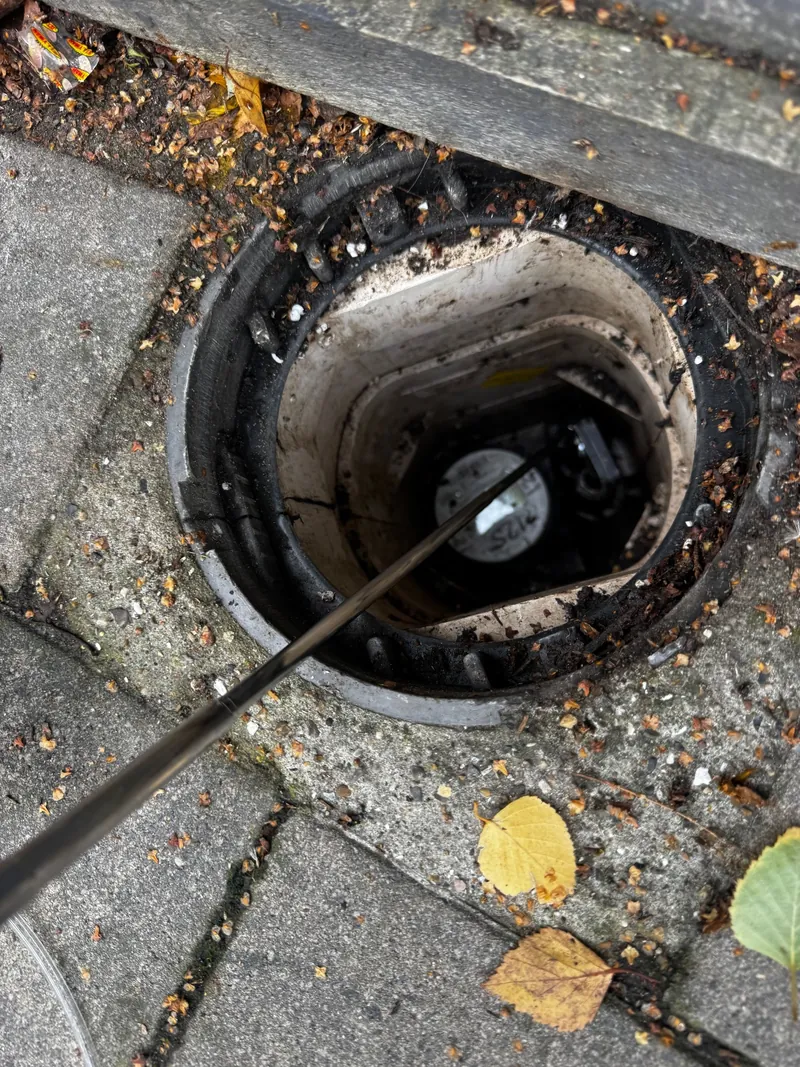
Most London homes with a meter have the same basic layout. The water main runs under the road. A short pipe leaves the main and ends at an outside stop tap, usually under a small cover in the footpath or just inside your boundary. The meter sits next to it. From there, your own pipe runs through the garden, drive or hallway to the building, rises to an inside stop valve (usually under the kitchen sink) and carries on to the taps.
The stretch people mean when they say “between the meter and the house” is the first part of that last pipe: everything from the meter, along the ground, up to the point where it enters the building, and on to the inside stop valve. It is typically a plastic or copper pipe laid underground at some depth, and you can rarely see it. That is why a leak here is easy to miss. Thames Water’s own leak page says that over 95 percent of leaks are never seen by customers, and that about a third of leaks are on customers’ and businesses’ own pipes.
Terms differ between sources, and the difference matters. Thames Water calls the pipe from the main to the boundary the “communication pipe”. The “supply pipe” is the pipe from the boundary into the building. We explain how that splits in who owns the water supply pipe. If you are not sure where your meter is, start with where is my water meter.
Who looks after this part of the pipe
This is where most of the worry comes from, so it is worth being exact about what the sources say. We read the following on 24 November 2026. Water companies can change their guidance, so check the current page before you act.
- Thames Water says the supply pipe from your property boundary into your home, and all the plumbing inside, is generally the property owner’s responsibility. It describes this as the pipe under your garden or driveway.
- The water company looks after the mains and the communication pipe. For Thames Water customers, those repairs are Thames Water’s job.
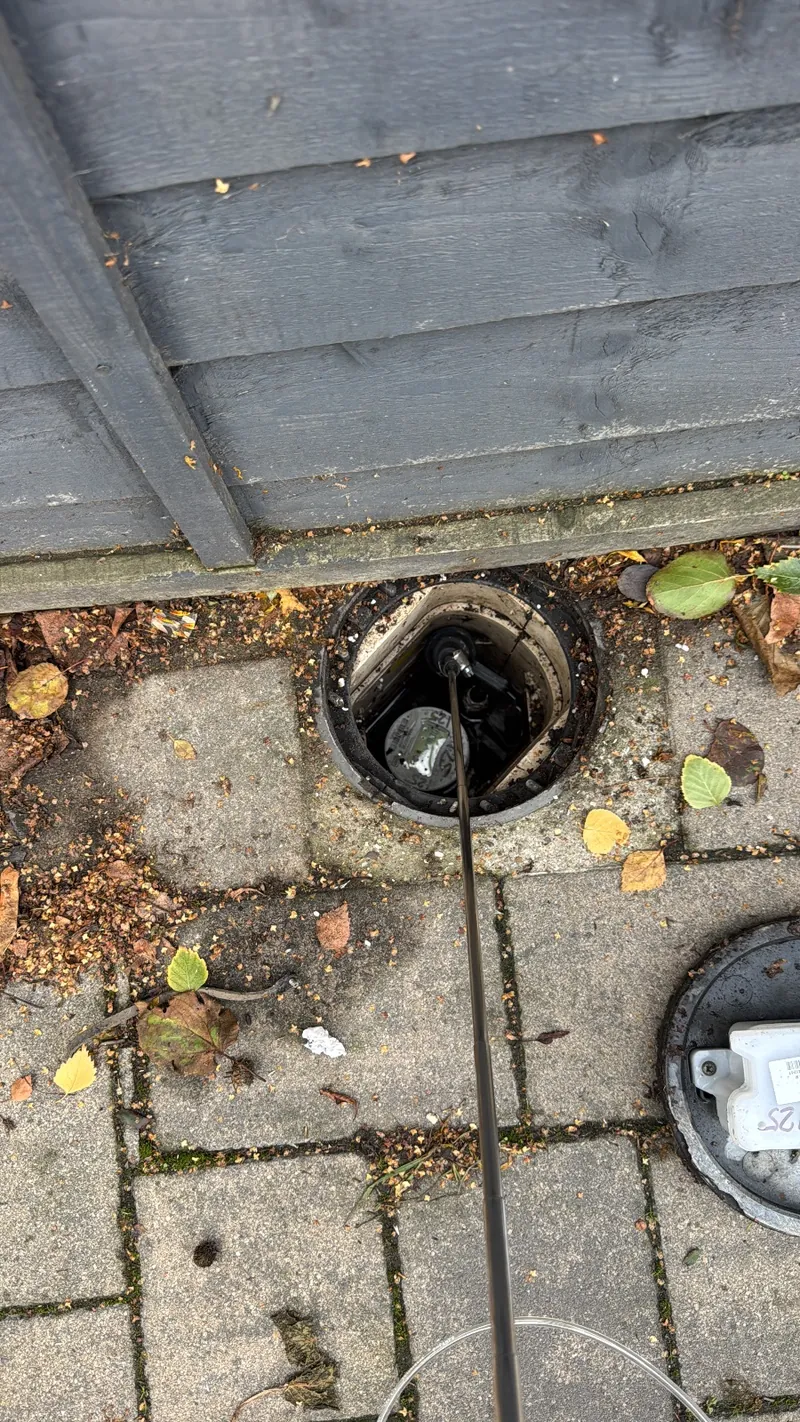
- The outside stop tap and the meter are Thames Water’s equipment, usually near the boundary. Where the meter sits does not decide who owns the pipe.
- If your supply pipe crosses a neighbour’s land or the road, you remain responsible for it up to the point where it meets Thames Water’s communication pipe.
- Where one supply pipe feeds several homes, each owner looks after the part serving only their home, and the owners share the common section. Thames Water says it does not step into disputes between neighbours.
So a leak found between the meter and the house is, as a rule, a problem for the owner of the property to deal with. That includes the cost of finding it and the cost of fixing it. Thames Water’s current code of practice says it may help at its own discretion for customers on its Priority Services Register, WaterHelp or WaterSure, or where there is a risk to life or to its network. It does not say it repairs these leaks for free for everyone, and neither do we. Ask Thames Water what applies to your address. Does Thames Water fix my supply pipe for free walks through the wording.
If you rent, the landlord generally keeps the water supply installations in working order under section 11 of the Landlord and Tenant Act 1985, in the tenancies it covers. If you are a leaseholder, GOV.UK says the lease sets out who handles repairs, so check the lease and ask your freeholder or managing agent. See who is responsible for a water leak.
Signs of a leak on this stretch
Signs vary with the soil, the pipe and the pressure. Few are certain on their own. Several together are a strong hint.
| What you notice | Why it fits a leak here | What else it could be |
|---|---|---|
| Meter moves with everything off | Water is leaving the pipe somewhere after the meter | A running toilet, a topping-up appliance, a shared supply |
| Wet, sunken or unusually green patch above the pipe route | Water is surfacing or feeding the ground | Rain, a blocked drain, an irrigation line |
| Hissing or running sound near the stop valve or meter box | Water escaping under pressure | A noisy valve or a pipe vibrating |
| Low pressure, or taps slow to fill | Flow is going elsewhere before it reaches you | A partly closed valve, scale, a problem on the main |
| Water in the meter box that does not drain | A weeping joint near the meter | Groundwater, condensation |
| Higher metered bill without more use | A steady, quiet loss | More occupants, weather, an estimated bill |
| Damp low on an outside wall or in a basement | A leak close to the house wall | A failed damp course, a gutter, a drain |
We cover the visual clues in more detail in signs of a leak underground and the specific meter box problem in water meter box leaking or full of water. Thames Water also lists extra occupants, weather and renovations as reasons for a higher bill, and says estimated bills are adjusted once a real reading arrives, so check the bill against your actual readings first.
Confirming it with the meter
Thames Water’s test for a leak between the meter and the inside stop valve is short. Switch off water-using appliances and close the inside stop valve. Read the meter, wait 30 minutes and read it again. If the readings differ, there is a leak somewhere between the meter and the valve. The Consumer Council for Water describes the same logic: movement with the inside valve closed points to the supply pipe outside, and movement that stops when you close the valve points to a leak inside the house.
Our page how to do a water meter leak test gives the full step-by-step with a reading log and a table that turns the movement into litres per hour. Read it before you start, because most false alarms come from a refilling toilet or an appliance, not a leak in the ground.
A positive test tells you the loss is on the owner’s side of the line, and roughly how big it is. It does not tell you where. A leak could be at the meter, under the drive, at the wall entry or just before the inside valve. Those are different repairs with different costs, so locating it matters.
How the leak is found without digging blind
The expensive mistake here is digging along the line you think the pipe runs. Pipes bend around trees, footings and old drains, and a guessed trench can miss the leak by metres. A trace works from the outside in.
- Confirm that the loss is real and where it falls on the pipe, using the meter test and the visible signs.
- Establish the route. Pipe routes are often unrecorded, so we trace the line with equipment and reference points such as the meter, the inside valve and any records, not memory.
- Narrow the section. Listening equipment picks up the sound of water escaping from a pressurised pipe, and a leak shows as a louder point along the route. Results depend on the pipe material, depth and ground, and plastic pipe carries sound poorly.
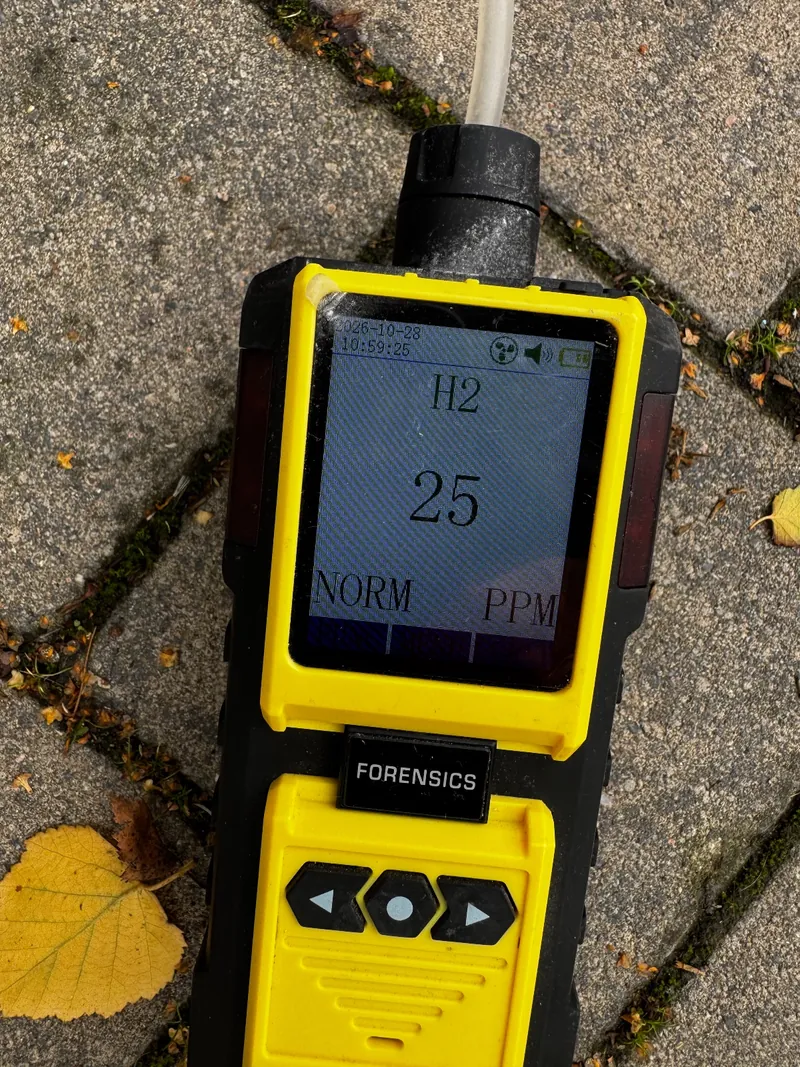
- Confirm the point. Where listening is unclear, we may use tracer gas, which is a gas mix pushed along the pipe and detected at the surface, or thermal imaging and moisture readings where water is surfacing. Tracer gas is used where listening alone is unclear.
- Mark the spot, document it and report in writing, so the repair is a small, planned excavation and not a trench.
Methods overlap and no single one works everywhere. Our overview is in non-invasive leak detection, and the service page is supply pipe leak trace and repair. A trace is the same job whether the leak is under a lawn, a block-paved drive or a patio, though the access differs. Under paving the finish matters more than the dig, which water leak under driveway deals with.
For this kind of mains and supply pipe trace we charge a fixed £450, however long the job takes. Tracer gas is included in the price. We charge No VAT charged. You get a Written report with photos. A repair is quoted separately in writing once the leak is found, because every repair is different. See the pricing page for the full rates and how we work them out.
Fixing it: repair, relay or replace
Once the point is known, the options depend on the pipe and the damage. A clean leak on a sound pipe may need a section cut out and a proper joint. A pipe that is old, brittle or has failed in several places is a candidate for replacement. Longer-term options run from digging a new trench to threading a new pipe through the old route by moling. We compare them in water supply pipe repair or replace and moling vs digging.
Two rules apply to any repair on your side of the boundary. Thames Water says to ask for a certificate of compliance with the water regulations after the work. The Water Supply (Water Fittings) Regulations 1999 ask for fittings repairs to be done in a workmanlike way, meaning to a relevant British Standard or an approved method. In the text we read, a like-for-like repair is not on the regulations’ list of work needing prior notice, but laying underground pipe shallower than 750mm or deeper than 1,350mm is. Ask whoever quotes which applies.
Thames Water recommends a WaterSafe-approved plumber for visible leaks and a WaterSafe-approved leak detection contractor for hidden or outside leaks, and it may inspect other work and charge for extra repairs. We are independent and are not listed on the WaterSafe register, so if that matters to you, check the register at watersafe.org.uk before you choose anyone, including us. Our guide to how to choose a leak detection company in London lists what to ask.
You may be tempted to dig it yourself. Can I replace my own water supply pipe explains why that is rarely a weekend job, and what the regulations expect.
Time limits, bills and insurance
Thames Water’s current leak pages say a confirmed leak on your property should be repaired within four weeks, and if you want to claim its leak allowance you should claim within three months of the repair date. The allowance is for metered customers. These are the figures on its page on 24 November 2026, and they may change. Under section 75 of the Water Industry Act 1991, a water company can serve a notice on an owner who does not fix a leak in time, and then do the work itself and recover reasonable costs. The statute gives at least seven days to comply with a notice.
To claim an allowance, Thames Water asks for the plumber’s details and invoice, or a Thames job number if it did the work, plus meter readings and a description of the leak. A leak detection report can help describe where and how big the leak was, but we cannot say Thames Water accepts a report as evidence, because its pages do not say so. Ask it before you rely on one. We keep the paperwork in the leak allowance evidence checklist.
Insurance may help with some of this. Thames Water advises checking home emergency or buildings insurance before arranging a repair, since some policies cover supply pipe leaks. Where policies cover finding a hidden leak, the two insurers we read tie it to damage caused by escaping water. Ageas says to get its agreement before work starts, and that costs are not repaid if the claim is later declined. Read your wording, and phone your insurer before you book a trace. See does home insurance cover water leaks.
What to do now
- Run the meter test and write down the readings and the time.
- If water is surfacing or the loss is large, close the inside stop valve. Use the outside valve only as the emergency back-up, turn it clockwise without force, and warn neighbours if you share a supply.
- Take photographs of the meter, any wet ground and the route.
- Tell your landlord, managing agent or freeholder if you are not the owner.
- Check your policy and phone your insurer before paying for a trace.
- Get the leak located, then get a written repair quote.
If you would like us to trace it, report a leak or call 020 3961 5444. Tell us the postcode, where your meter is and what the test showed. The more you tell us, the fewer hours we spend finding it.
