What leak detection is, and why it comes before any digging
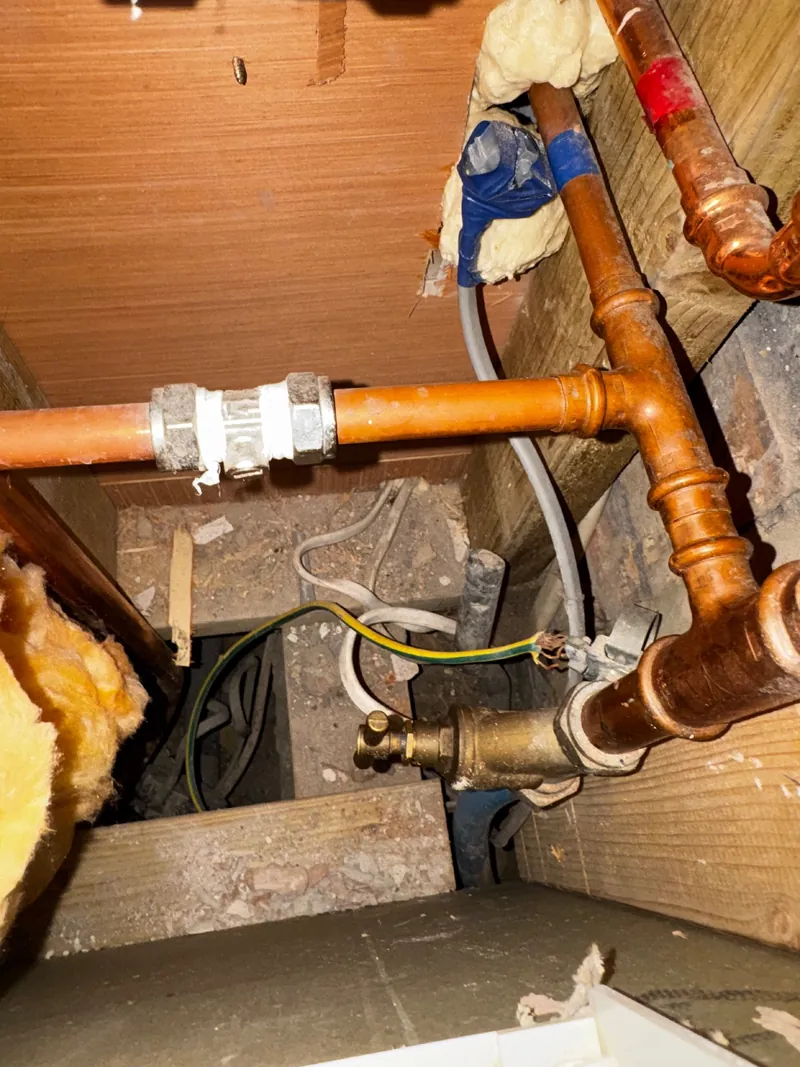
Leak detection is the job of finding exactly where water is escaping before anyone lifts a floor or breaks up a drive. It matters because a hidden leak rarely shows itself where it starts. Damp turns up on a wall two metres from the pipe, a meter keeps turning with every tap shut, or the water pressure drops and nobody can say why.
Guessing the position and opening up costs more than finding it first. A survey that pins the leak to a short length of pipe means the repair can be quoted for that section and the opening kept small. We are plumbers as well as leak specialists, so the survey and the repair quote come from the same people, but you do not have to use us for both. For what a survey includes, read our leak detection survey page.
How we find a leak without digging
No single method works on every leak, so we pick from a small set and check one against another.
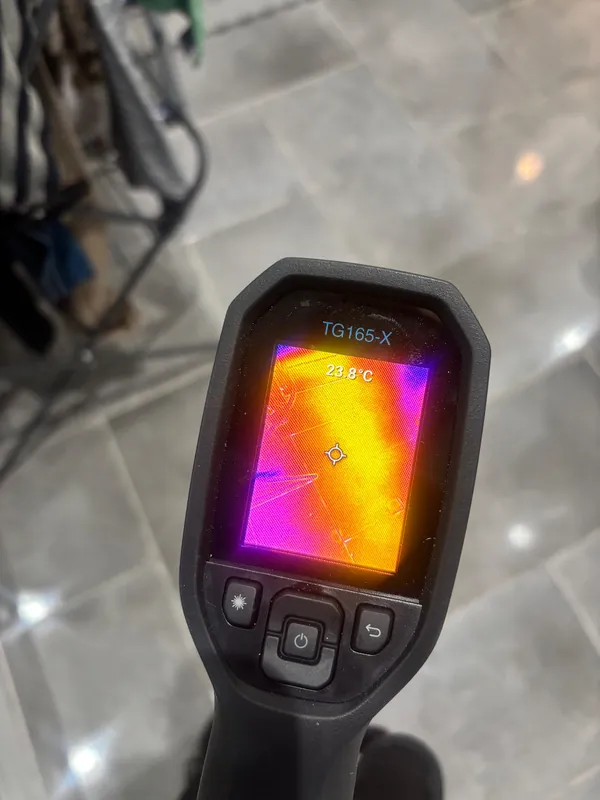
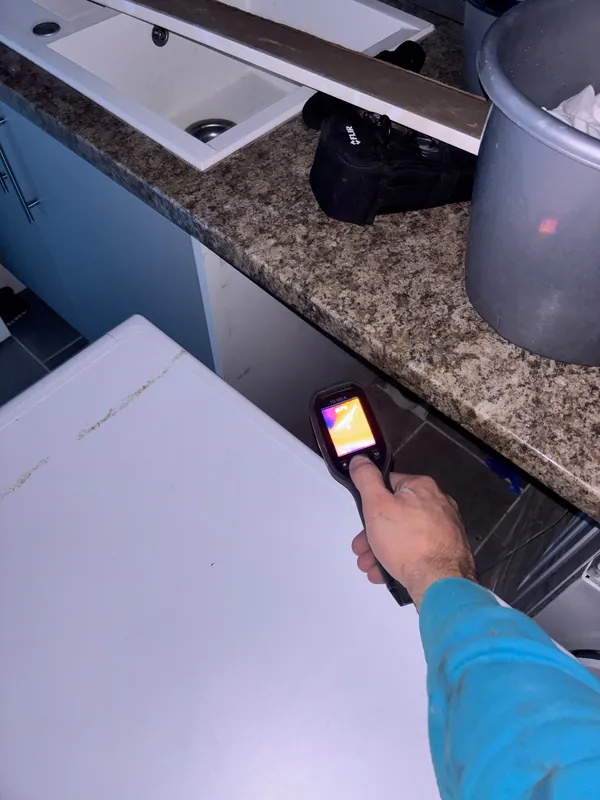
- Thermal imaging shows warm and cold patches behind plaster, under floors and along pipe runs, which points to where water or a heated pipe is leaking.
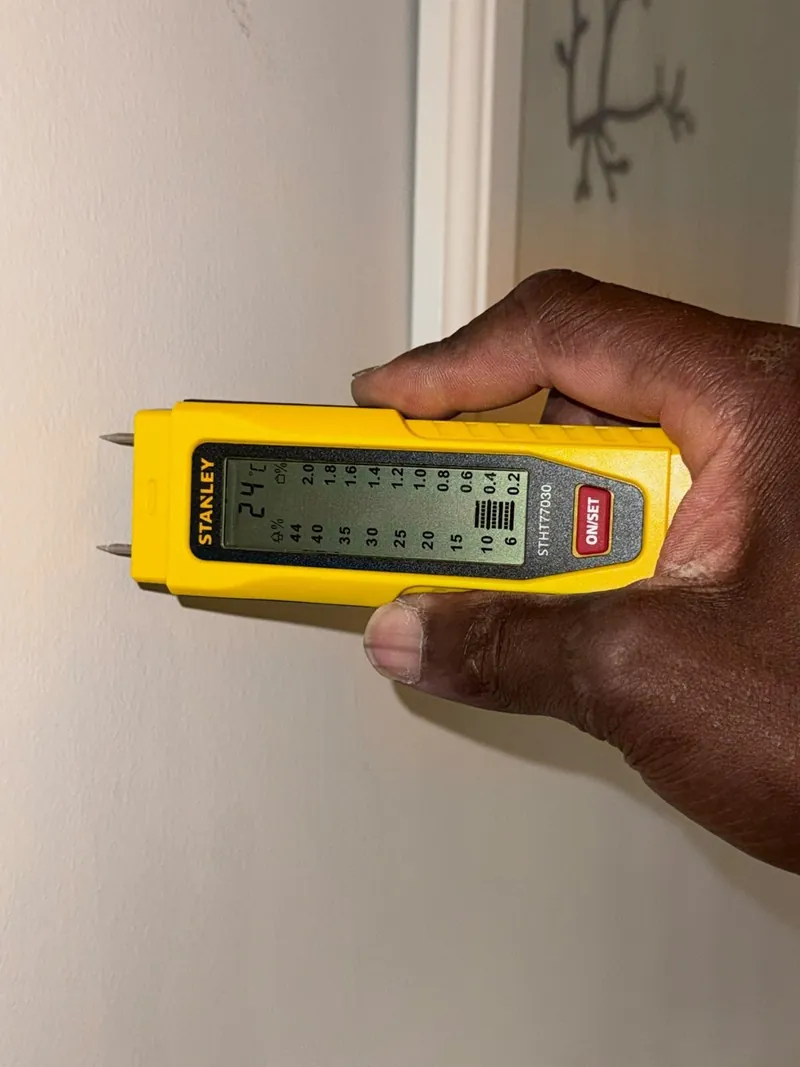
- Moisture mapping reads damp across a wall or floor so we can see where it is strongest and which way it is spreading.
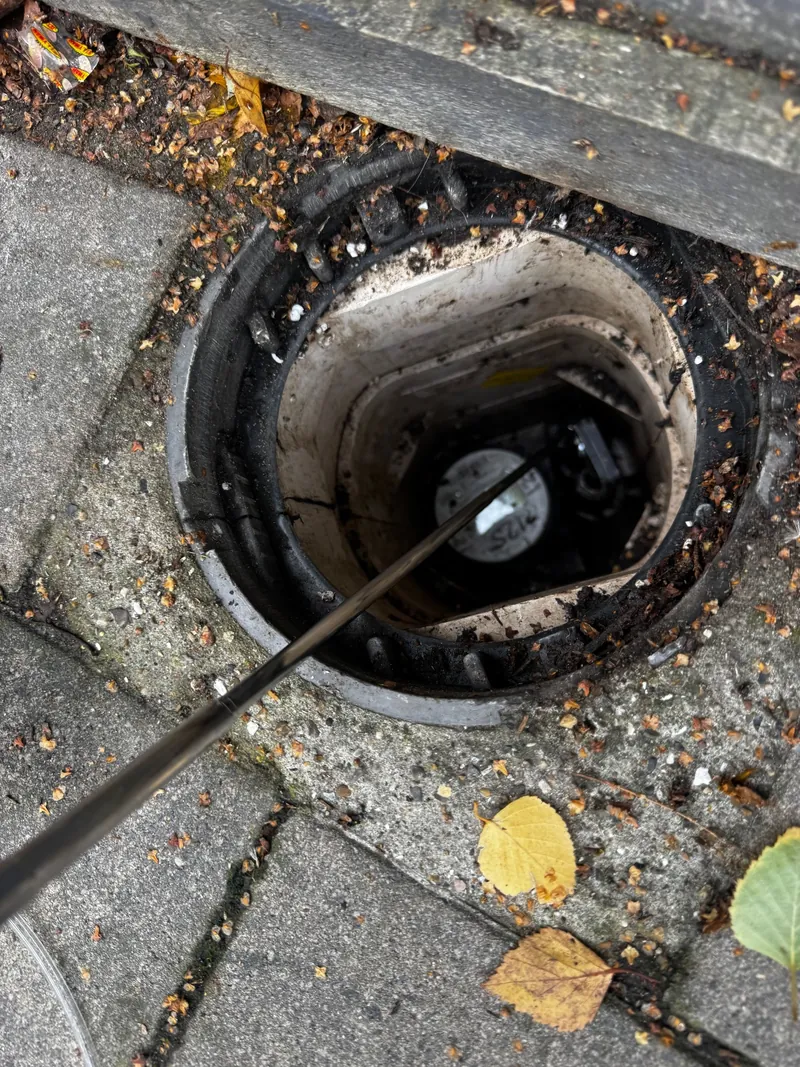
- Pipe tracing follows the route of a buried supply pipe, which matters when the pipe runs under a drive, a patio or a neighbour's side of the fence.
- Pressure testing isolates one section of pipe at a time, so a leak can be ruled in or out of that section.
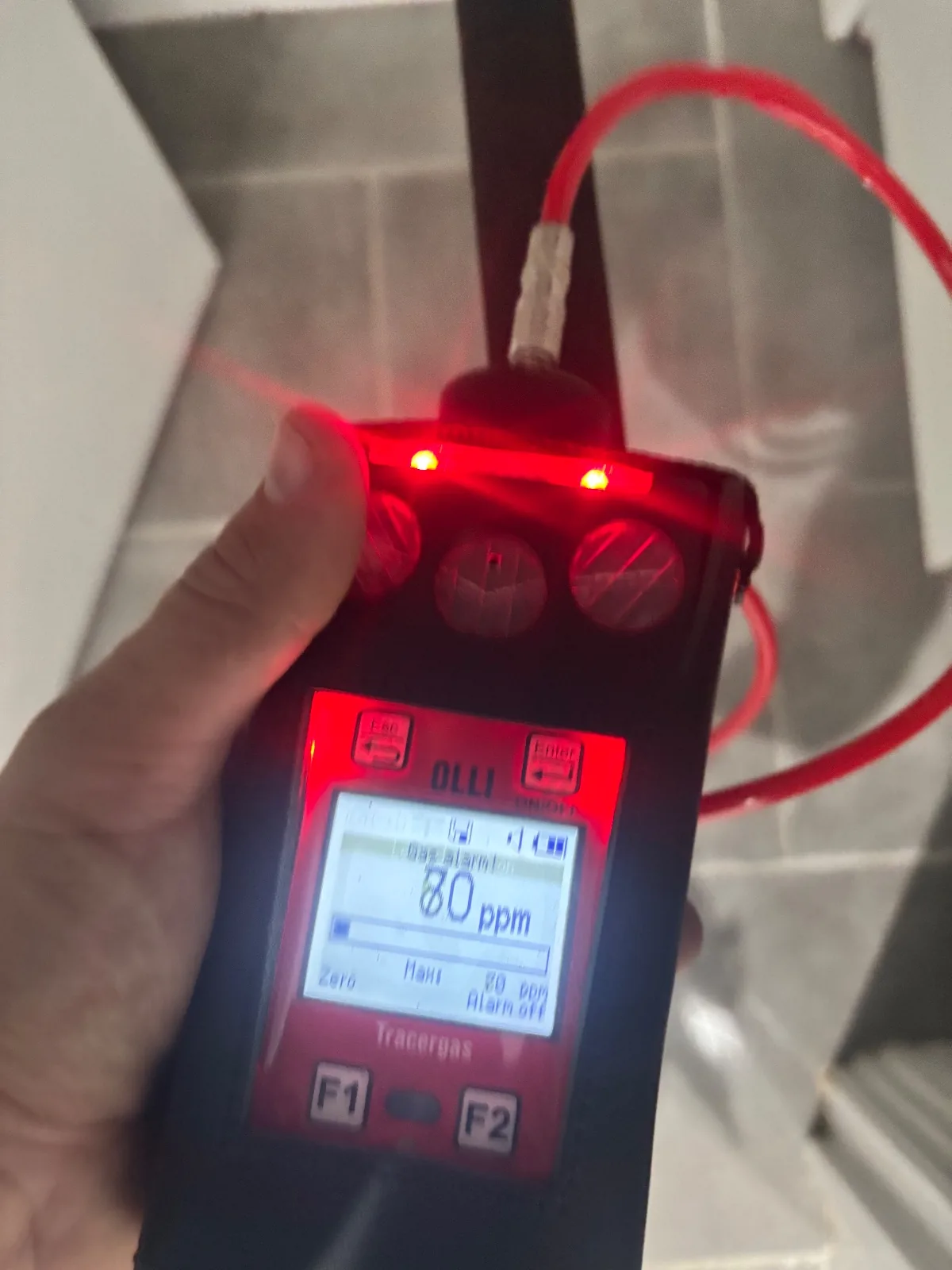
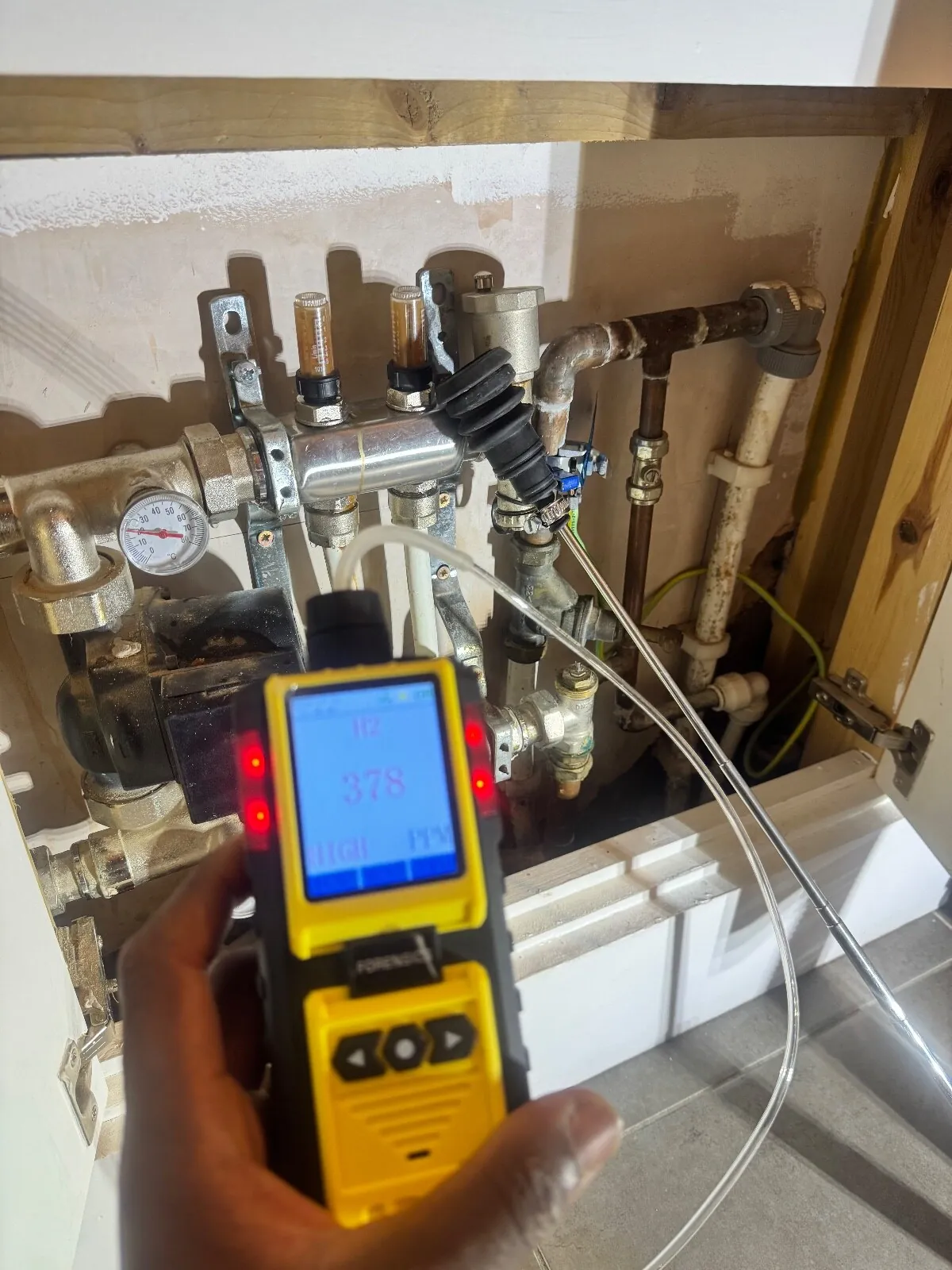
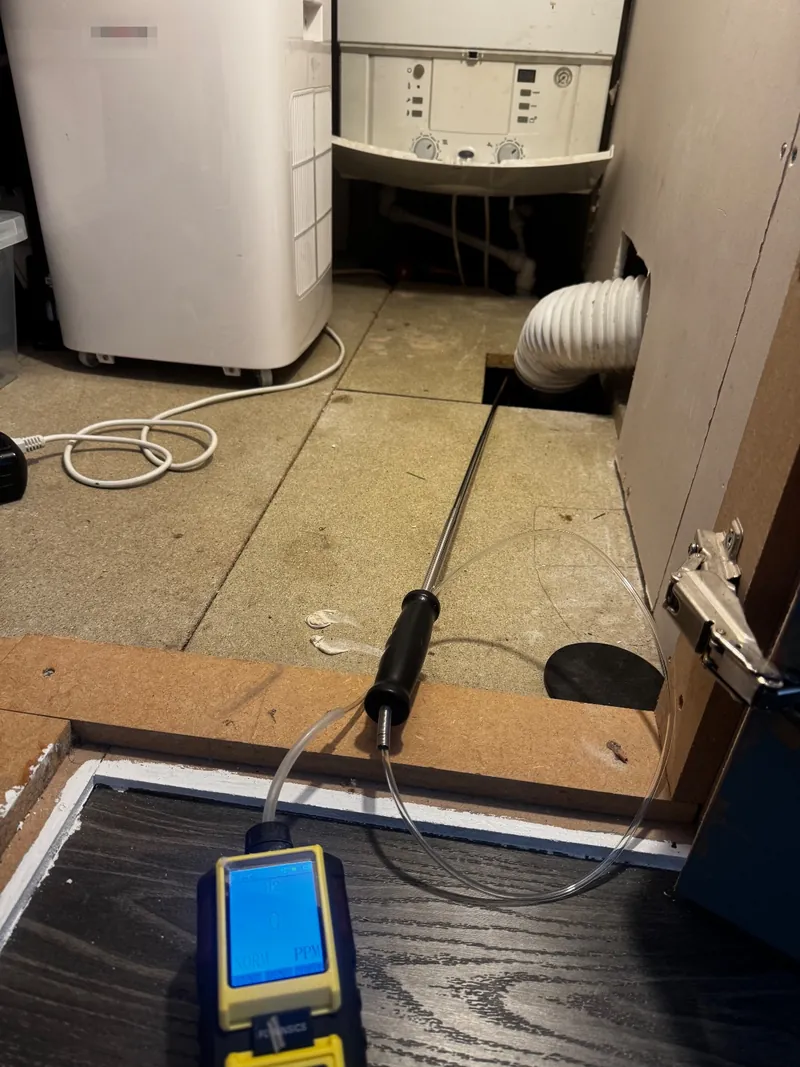
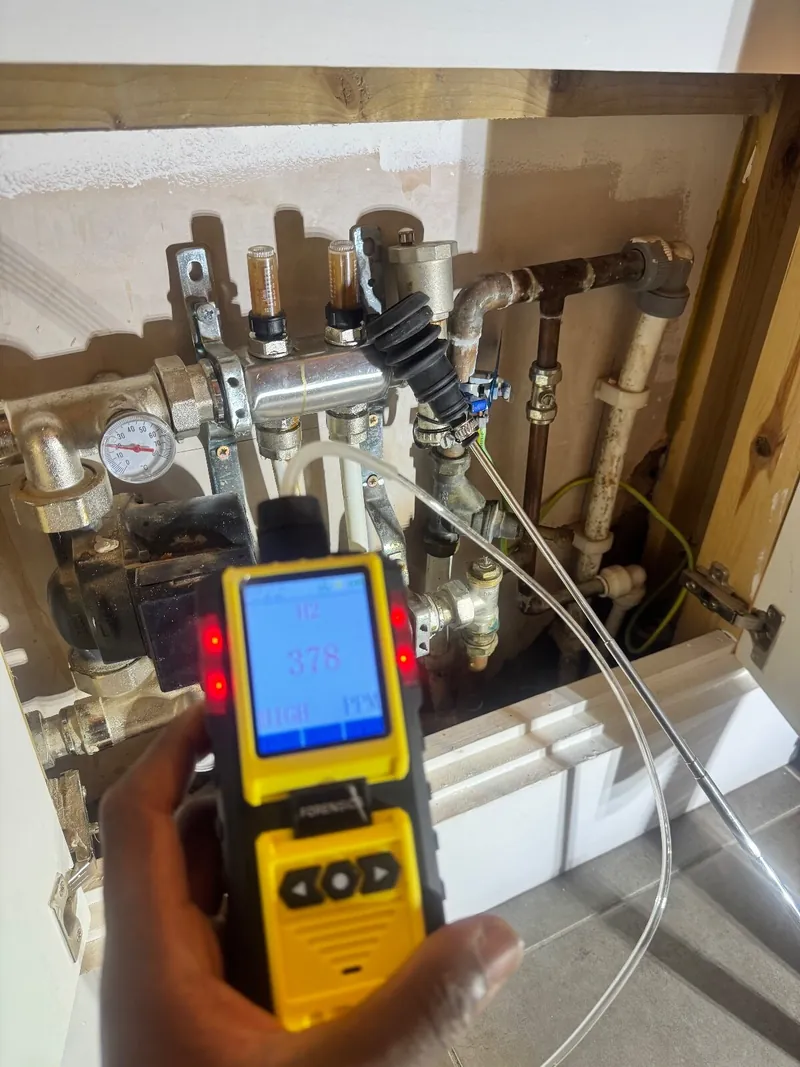
- Tracer gas is used when the other methods do not settle it, and it is included in the price.
We confirm a position with a second method before marking it. Fixing the pipe usually still means an opening, but a small one at a known spot. Our guide to non-invasive leak detection explains each method, and what happens on the day walks through a visit from the front door to the report.
Signs you may have a hidden leak
- The water meter keeps moving when every tap and appliance is off.
- Your bill rises and nothing about how you use water has changed.
- A damp patch or stain grows on a ceiling, wall or floor, or comes back after you dry it.
- You can hear water running when the house is quiet.
- Pressure at the taps has dropped, or the boiler keeps losing pressure.
- Part of a floor feels warm, or soft, green or sunken ground appears along the line of a pipe in the garden or drive.
A quick check you can do yourself is the meter test Thames Water describes: switch off everything that uses water, close the inside stop valve, read the meter, wait 30 minutes and read it again. If the reading has moved, there is a leak between the meter and the inside stop valve. Our guides cover where your water meter is, the signs of a leak underground and what to look for with a leak under a driveway.
Who is responsible for which pipe
This is the question that decides who pays. Thames Water says it looks after the mains and the communication pipe that links your supply pipe to the main. Generally the supply pipe from your property boundary into the house, and all plumbing inside, is the property owner's responsibility. If the supply pipe crosses a neighbour's land or the road, you remain responsible for it up to where it meets the communication pipe.
The outside stop tap and the meter are the water company's equipment, usually near the boundary. Where the meter sits does not decide who owns the pipe. Where one supply pipe feeds several homes, as on many terraces, each owner looks after the part serving only their home and the owners share the common section.
Thames Water's current page says it expects a confirmed leak on your property to be repaired within four weeks. That page was read on 24 November 2026 and can change, so check it before you act. The full picture is in our guide to who is responsible for a water leak, with detail on who owns the water supply pipe and the boundary box and outside stop tap. If water is coming up in the street, report it on Thames Water's own page. We are independent and not part of Thames Water or any water supplier.
Thames Water and your leak: what to do, and what help exists
If you are a Thames Water customer, there are three separate questions: is the leak in the street or on your property, has the water company said how long you have to fix it, and is there any allowance on the bill once it is repaired. They are answered in that order.
- Water in the street, or a leak on the pipe up to the communication pipe: report it on Thames Water's own page. That part is the water company's.
- A leak on your own pipe: do the meter test above, then book a survey so the position is found before any digging. Thames Water's current page says it expects a confirmed leak on your property to be repaired within four weeks.
- The bill: on a metered supply, Thames Water has a leak allowance. Its current page says to claim within three months of the repair and to send proof of repair, such as the plumber's details and invoice. Its page does not say a detection report counts as proof, so do not assume it does.
We read those pages on 24 November 2026 and they can change, so check the current wording before you act. We are independent and not part of Thames Water, so we cannot say what it will accept in your case. Our leak detection survey gives you the written location and photos, and who is responsible for a water leak explains which pipe is whose.
How a visit works
- 1You report the leak by form or phone. We ring you back, ask what you have seen and agree the price before anyone travels.
- 2On site we look at the meter and the inside stop valve, and talk through when the problem started and what changes it.
- 3We isolate the pipework so each section can be tested on its own.
- 4We measure with the methods above and confirm the position with a second one.
- 5We mark the spot and explain what we found before we leave.
- 6You receive a written report with photos. If you want the leak repaired, a written repair quote follows.
Start on the report a leak page, or call 020 3961 5444.
What it costs
We charge 100 pounds for the first hour and then by the half hour, quote the rate first and do not exceed it for the survey time we agree. No VAT charged, so the price you are quoted is the price you pay.
Rates and typical totals| Survey | Rate | Typical total |
|---|
| Standard leak detection | £100 for the first hour, then £150 an hour | £325 to £400 |
| Mains and supply pipe trace | a fixed £450, however long the job takes | Fixed price |
| Trace and access with insurer report | £200/hr | £400 to £800 |
| Emergency and out of hours | from £220/hr | Confirmed on the call |
For hourly jobs a rate is not a job price and a typical total is a range, not a promise. A mains or supply pipe trace is the exception, because its price is fixed. No find, no fee: if a leak is present and we do not find it, you pay nothing, and it goes in the written quote. Every rate is on the pricing page, and pricing method and sources explains how the figures were set.
Repairs are quoted in writing, after the leak is found
There is no repair price list, because no two fixes are the same. A leaking joint on an accessible pipe is a different job from a failed supply pipe under a driveway. Once the leak is located you get a written repair quote for the right section of pipe. You decide after reading it, and you can take the report to another plumber.
The repair pages cover mains water leak repair, the supply pipe trace and repair, water supply pipe replacement and water meter leak repair.
Insurance claims, landlords and managing agents
Many home insurance policies include cover for finding the source of a hidden leak and making good the access work, but the wording differs by insurer. In the two insurers whose pages we read, Ageas and Saga, that cover applies where escaping water has damaged the building. Policies also commonly exclude damage that builds up gradually, so the wording of your own policy decides. Some insurers, Ageas for example, ask you to get their agreement before tracing work starts, and do not repay the costs if the claim is later declined. Thames Water also advises checking your home emergency or buildings insurance before you arrange a repair.
We write findings in a format insurers and loss adjusters can read, and you can send the report to your insurer. Whether an insurer accepts it is its decision, and we do not handle the claim for you.
If you rent, section 11 of the Landlord and Tenant Act 1985 requires a landlord in covered tenancies to keep the installations for water supply in working order, so tell your landlord or agent straight away. Leaseholders should check the lease and ask the freeholder or managing agent who handles shared pipes. With your say-so we can send the report and quote to the landlord or agent.