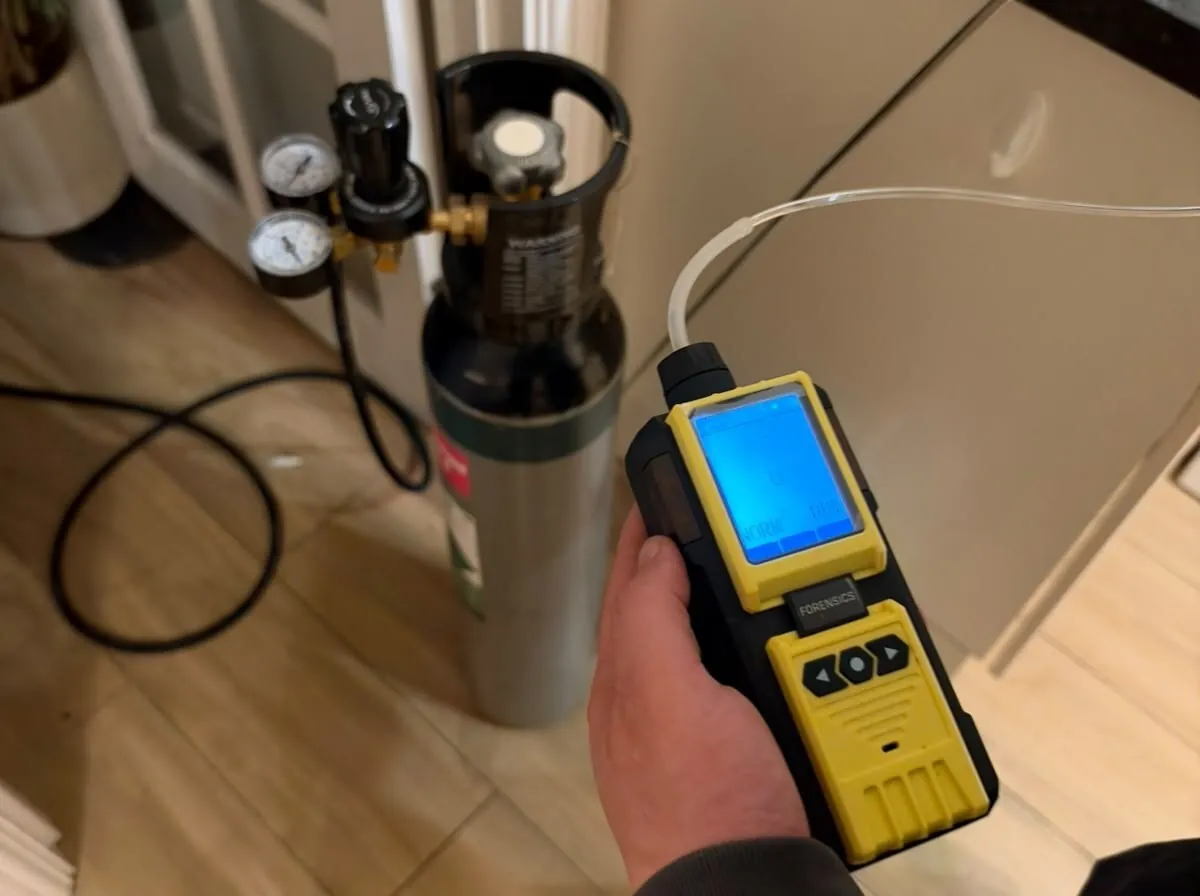
Water meter leak: find it and fix it
We find where the water goes after the meter, report it in writing and quote the repair.
The quick version
- What it is
- Locating a leak on the pipework between your water meter and the taps, on your side of the boundary.
- What it costs
- £160/hr, typically £320 to £640 in total. Fixed hourly rate quoted first, never exceeded. No VAT charged.
- What you get
- Written report with photos, and a written repair quote if you want the leak fixed.
Want it located, not guessed at? Call us
Signs you may need this
- The meter keeps turning with every tap and appliance off
- A bill that has climbed with no change in use
- A hissing or running sound near the stopcock
- Damp ground between the meter and the house
- The meter reading moves during a half-hour test
How we find it
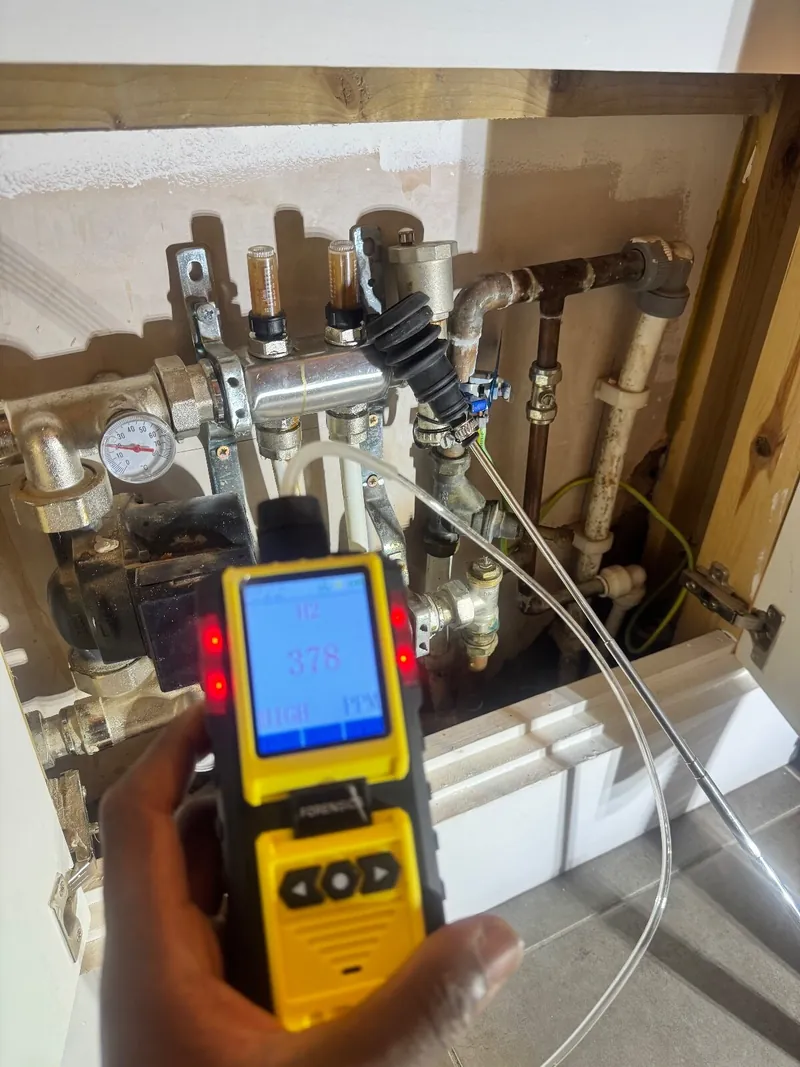
Tracer gas
A harmless gas is introduced to the pipe and detected where it escapes. Finds small leaks under floors and slabs.
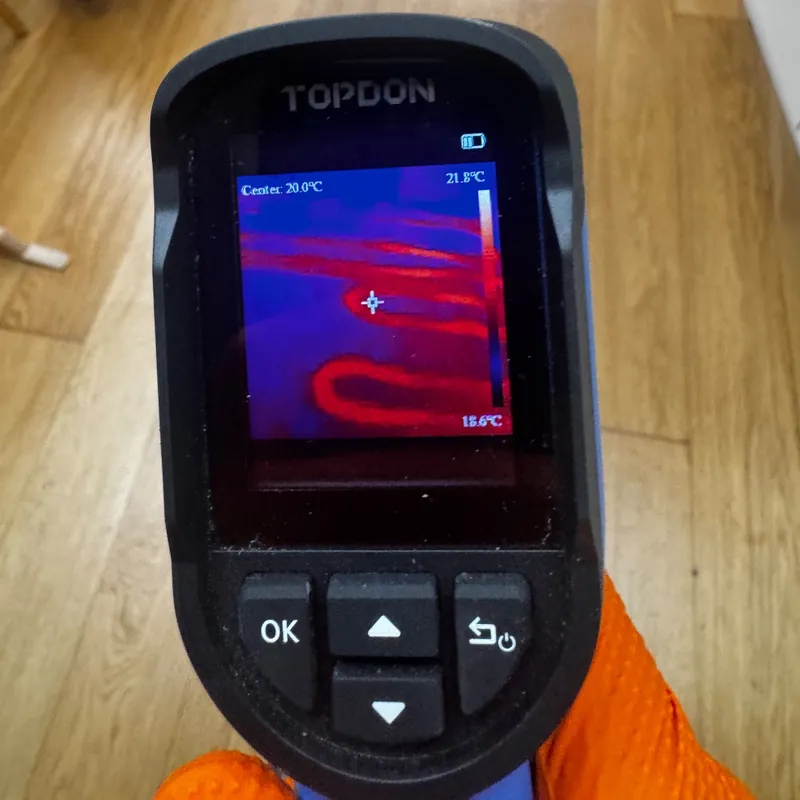
Thermal imaging
A thermal camera shows the temperature difference that wet or heated pipework leaves in a surface.
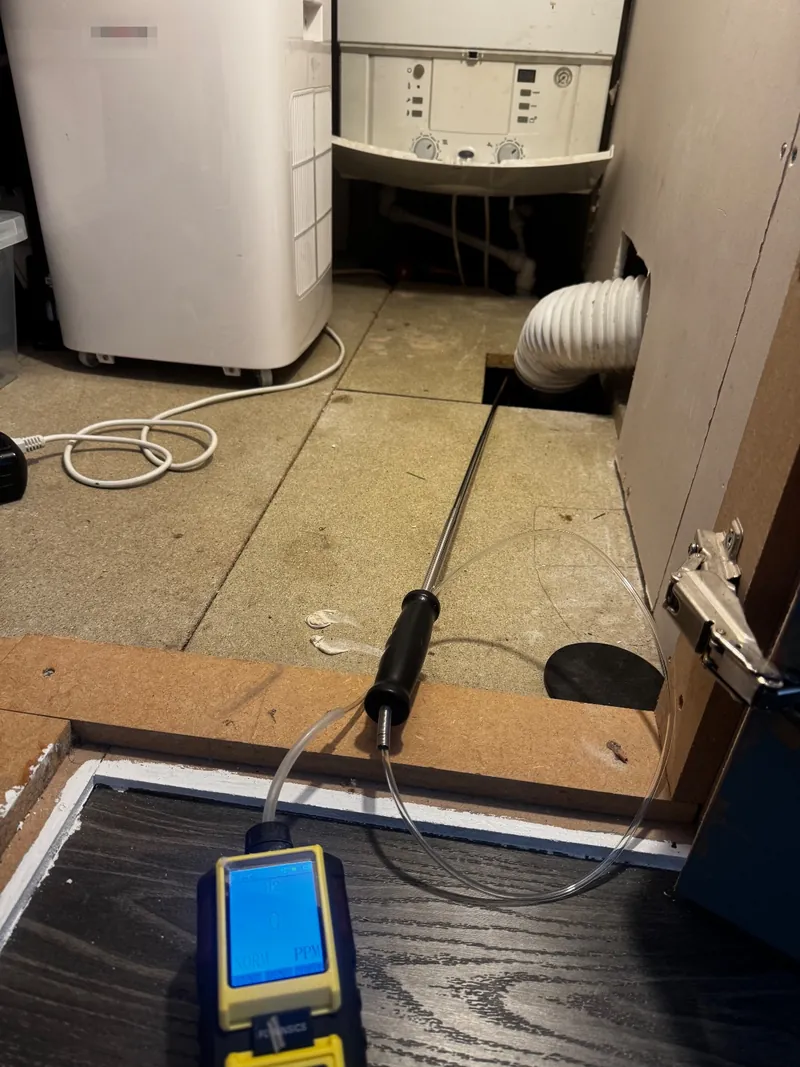
Pipe tracing
Locating the route of buried supply pipe so a leak can be pinpointed before anyone digs.
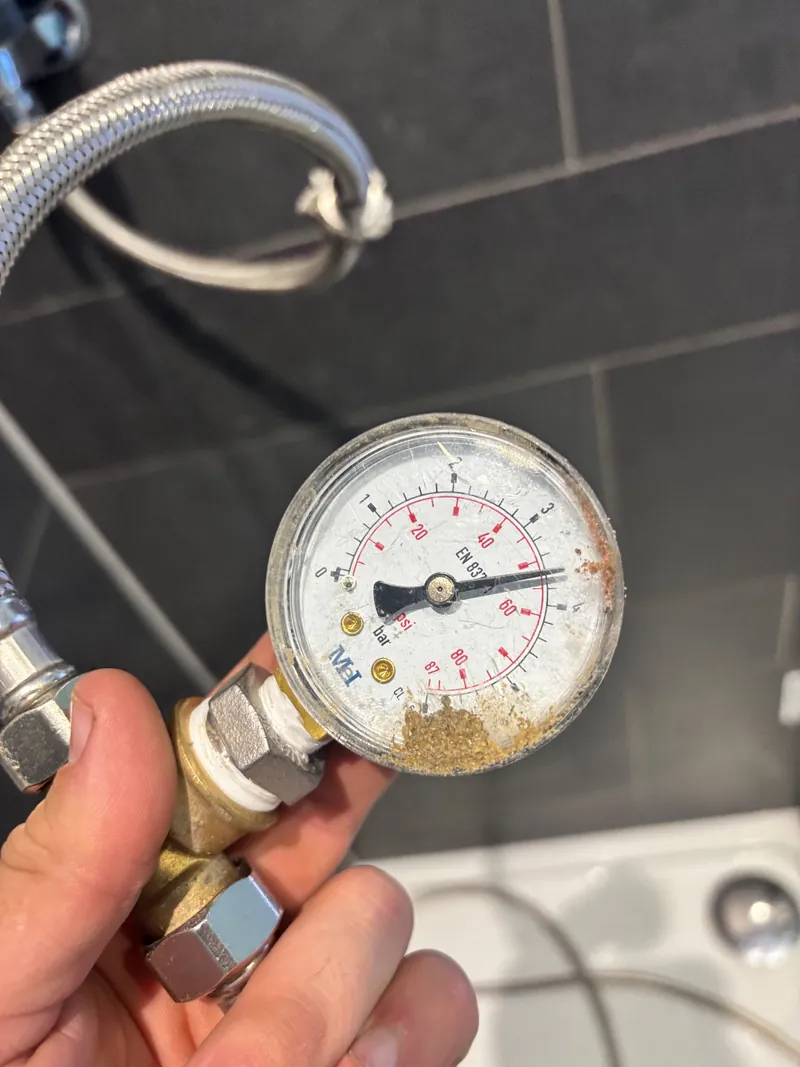
Pressure test
Isolating a section of pipe and watching whether it holds pressure confirms where the loss is.
A meter that keeps turning with everything off means water is leaving somewhere after it. We find where, on your side of the meter, with a written report and photos, then quote the repair. Standard leak detection is £160/hr, quoted first and never exceeded, and No VAT charged.
What "a water meter leak" usually is
People say "my water meter is leaking" to describe three different things, and only one of them is a job for us.
| What you see | What is likely going on | Who deals with it |
|---|---|---|
| The meter dial or numbers keep moving with every tap off | A leak somewhere on the pipework after the meter | You, as owner. This is the job we do: find it, report it, quote the repair |
| Water around or inside the meter box or chamber | A leak at the meter or its connections, or ground water | Start with the water company, because the meter is its equipment |
| A high bill but the meter is still when everything is off | Not a leak. Extra occupants, a running toilet or an estimated bill | Check readings first. See why a meter reads high |
Thames Water says the outside stop tap and the meter are its equipment, and that where the meter sits does not decide who owns the pipe. The pipe from the boundary into your home is generally the owner's. For the box full of water, see water meter box leaking or full of water, and for responsibility, who is responsible when a water meter is leaking.
Confirm it is a leak before you spend money
Thames Water's own test takes about half an hour and costs nothing:
- Switch off everything that uses water: washing machine, dishwasher, taps, anything with a cistern.
- Close the inside stop valve, usually under the kitchen sink.
- Read the meter and write the number down, with the time.
- Wait 30 minutes without using water, then read it again.
If the reading has moved, Thames Water says the leak is between the meter and the inside stop valve. If it has not moved but the meter ran before you closed the valve, the loss is likely inside the building, after the valve. A running toilet is the commonest culprit and takes a minute to rule out. The steps with photographs are in how to do a water meter leak test, and where is my water meter helps if you cannot find it.
Where the water usually goes
- On the buried run between the meter and the house: a joint, a corroded section, a spot where roots or settlement have pulled on the pipe.
- Where the pipe enters the building and passes through the wall or floor.
- Around the inside stop valve and the first fittings, which are often old.
- On the pipework inside, especially under floors and behind kitchen units.
- At a garden or outbuilding branch taken off the supply long ago and never recorded.
Because a leak can be anywhere on that path, guessing means digging in the wrong place. Leak between meter and house explains why this stretch causes so many surprises.
How we find a leak after the meter
- Run the meter test ourselves. We want the loss rate, not only a yes or no, because a slow creep and a steady flow point to different problems.
- Isolate by section. Closing valves in turn shows whether the loss is on the buried run or inside the building.
- Trace the route of the buried pipe where the loss is outside, so searching follows a line and not a lawn.
- Pressure test the isolated length to confirm it is losing pressure.
- Pinpoint with tracer gas where the pipe sits under hard surfaces, and with thermal imaging and moisture mapping where the suspect section is inside walls and floors.
- Confirm with a second method, photograph it and write the report.
We take readings at the meter chamber itself where the lid allows. We do not alter, repair or move the meter. If the problem is the meter or its connections, we tell you in the report and you contact the water company.
The methods are described in non-invasive leak detection.
What it costs
A standard survey is £160/hr, with typical totals of £320 to £640. If the leak is on the buried supply pipe and the job is a trace of that pipe, the mains and supply pipe rate of £180/hr applies, typically £360 to £540. We say which rate applies when we book. Tracer gas adds a one-off £80 bottle charge, only when it is needed. No VAT charged.
The rate is quoted before we travel and never exceeded for the survey time we agree. Typical totals are a guide and not a cap. The repair is not in these figures: it is quoted separately, in writing, after the leak is found. See the pricing page.
After the leak is found
You get a written report with photos showing where the leak is and which method found it. If you want us to mend it, we send a written repair quote. If you would rather use someone else, the report goes with you.
Thames Water says that once a leak on your property is confirmed, it expects it to be repaired within four weeks, and that metered customers can then ask for a leak allowance on the bill. Its figures are on its own page (read on 24 November 2026, check before acting). Its stated proof of repair is the plumber's details and invoice, or a Thames job number. We cannot say whether a detection report is accepted as evidence, so ask Thames Water. If you rent, tell your landlord straight away: Thames Water says the tenant can apply for the allowance once the leak is repaired.
What a meter test cannot tell you
- A very slow leak can take longer than 30 minutes to move a dial. We watch for longer when the numbers suggest it.
- A meter that moves with the valve closed does not say how many leaks there are. We keep searching after the first one if the loss does not drop.
- A leak in a shared supply may be a neighbour's. The report shows where it sits.
- If the leak is under a floor slab or under heavy paving, tracer gas may need more than one reading point.
Meter still turning? Report a leak or call 020 3961 5444. For what the supply pipe trace covers, read supply pipe leak trace and repair.
Last reviewed .
Sources
- Identifying leaks (meter test), Thames Water
- Answering water meter questions, Thames Water
- Leak allowance, Thames Water
- Pipe responsibility, Thames Water
- Leakage code of practice (PDF), Thames Water
What the price covers
- Fixed hourly rate quoted first, never exceeded.
- No VAT charged.
- Tracer gas is charged at the same rate plus a one-off £80 bottle charge, only when needed.
- Written report with photos.
No find, no fee. The only extra is a tracer gas bottle, and only if gas is used.
Found the leak? We quote the repair.
Repairs are quoted in writing once the leak is located. Every fix is different, so there is no repair price list.
We are plumbers as well as leak specialists, so we can carry out the repair once you approve the quote.
Related
- Water meter leaking: who is responsible?Water meter
- Underground supply pipe leak: trace and repairFind a leak
- Leak detection pricesPrices
- Where is my water meter?Water meter
We cover every London borough from one call-out area, so there is no separate page to find for your part of London.
Questions about this service
My meter is moving but I cannot see a leak. What now?
Run the half-hour test with appliances off and the inside stop valve closed. If the reading moves, water is leaving between the meter and the valve, and we can trace it. If it does not, check for a running toilet or a dripping appliance first.
Will you repair the meter itself?
No. Thames Water says the meter is its equipment. We find leaks on your side and report anything wrong at the meter so you can raise it with the water company.
Can a water meter leak without any damp?
Yes. Underground leaks drain into the soil and show up only as a moving meter or a higher bill. That is what the trace is for.
What if you cannot find a leak?
We tell you before booking exactly what is charged if a survey ends without a located leak, and it goes in the written quote. The hourly rate is quoted before we start and never exceeded.
How much does repairing a meter leak cost?
We do not publish repair prices, because it depends on where the leak is and how to reach it. After the leak is found you get a written repair quote.
Do you charge VAT?
No. We do not charge VAT, and the rate you are quoted is the rate you pay.
Talk to someone about your leak
Hourly rate quoted first, never exceeded. Repairs quoted in writing once the leak is found.