Moisture mapping and damp diagnosis
We map the moisture, read the temperature and tell you whether the water is from a pipe or from somewhere else.
The quick version
- What it is
- Moisture readings across walls, ceilings and floors, thermal imaging and targeted tests, to tell a plumbing leak from condensation, rising or penetrating damp or a failed seal.
- What it costs
- from £175/hr, typically £350 to £525 in total. £100 for the first hour, then £150 an hour, quoted before we start. No VAT charged.
- What you get
- Written report with photos, a stated finding and next step, and a written repair quote if a leak is found.
Signs you may need this
- A stain, tide mark or bubbling paint with no visible pipe
- Damp that returns after drying or painting
- A ceiling mark below a flat or bathroom
- Mould or a musty smell and no clear source
- A request from an insurer, landlord or agent for the cause in writing
How we find it
Thermal imaging
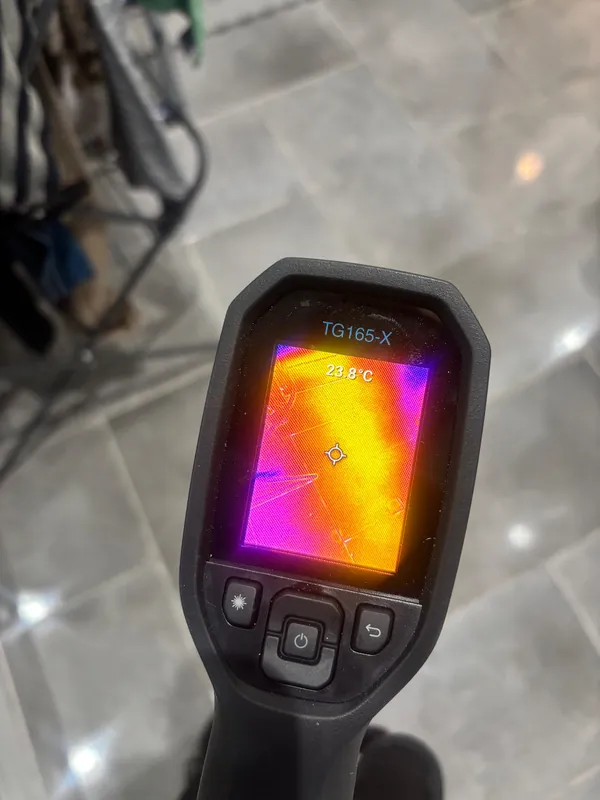
A thermal camera shows the temperature difference that wet or heated pipework leaves in a surface.
Moisture mapping
Readings across walls and floors show where water has travelled, and where it started.
Moisture mapping records how wet each part of a wall, ceiling or floor is, and with thermal imaging and a few simple tests it shows whether the water is coming from a pipe or from somewhere else, such as condensation, the ground, the weather or a failed seal. Damp diagnosis starts from £175/hr, quoted first and never exceeded, with a typical total of £350 to £525.
What moisture mapping is
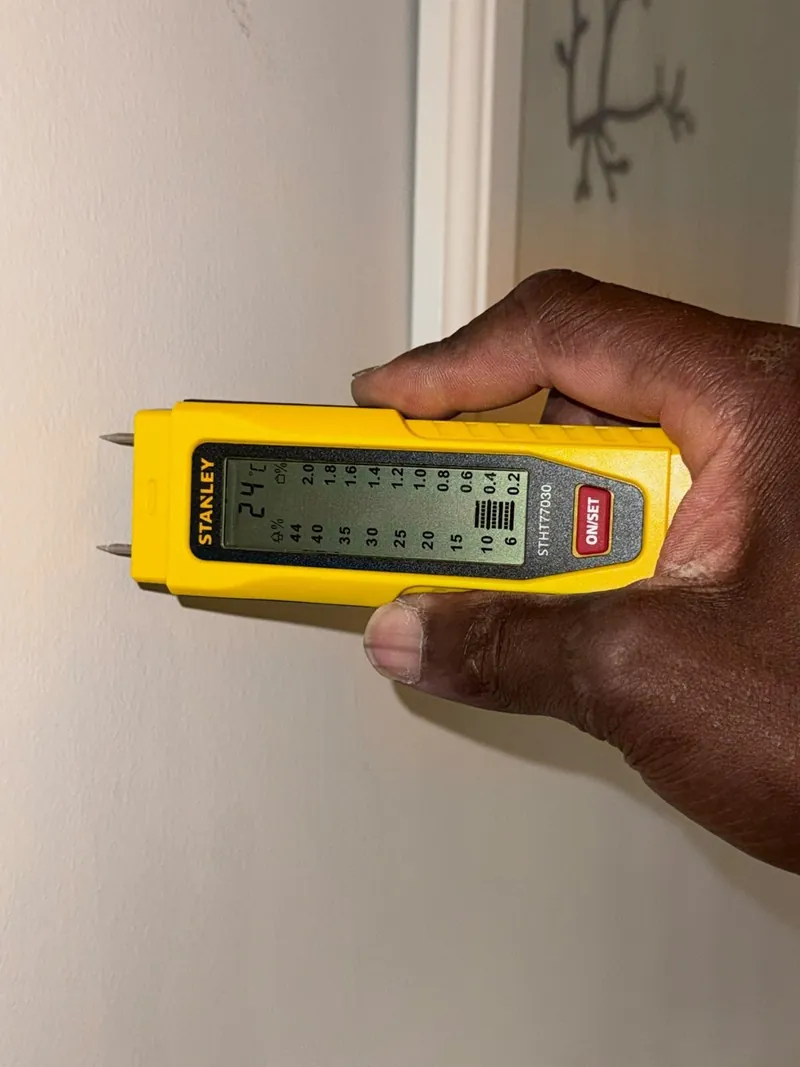
A damp patch tells you water is present. It does not tell you where it came from. Moisture mapping is how an engineer turns a stain into evidence. Readings are taken in a grid across the affected wall, ceiling or floor and the neighbouring surfaces, recorded, and plotted so the wettest areas, the edges and the direction of spread are visible. The pattern is often more useful than any single number.
It is usually the first step in non-invasive leak detection, because it costs the property nothing: no holes, no lifted boards and no stripped plaster. Readings are taken from the surface with a meter, so we also say what they cannot tell us, such as how wet a thick wall is in its core.
When it is the right service
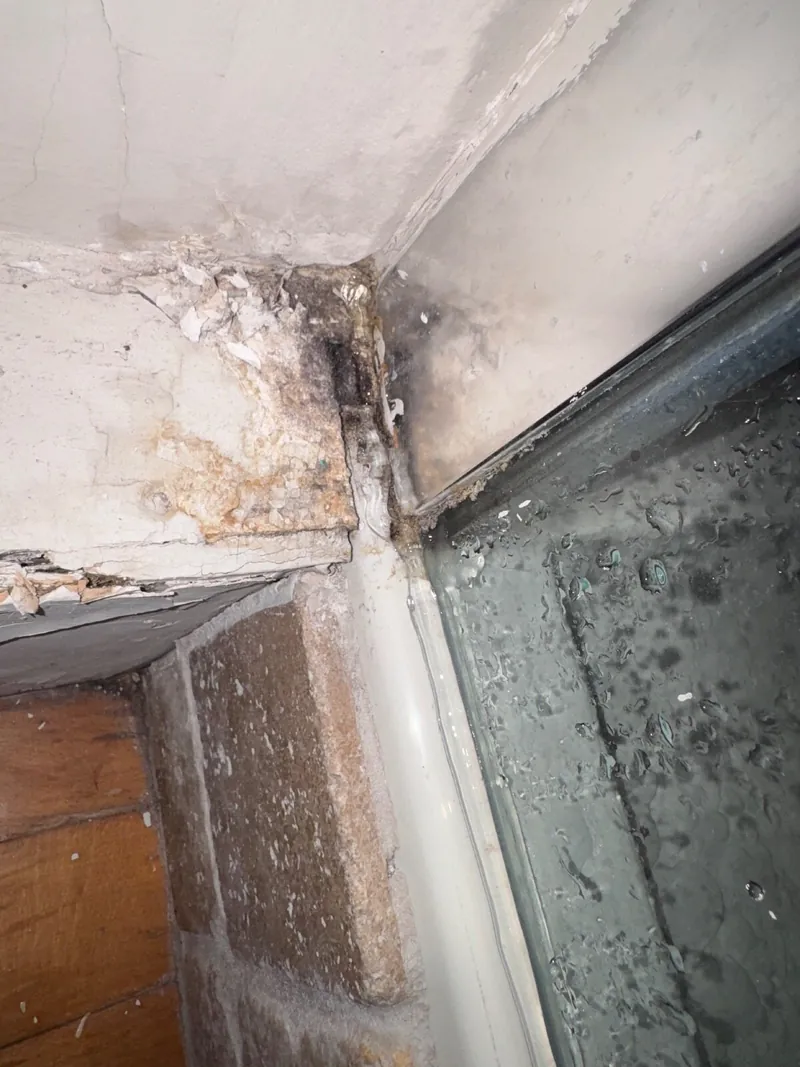
- A stain, tide mark, bubbling paint or peeling wallpaper, and nobody can see a pipe nearby.
- Damp that comes back after being dried, painted or treated.
- A ceiling mark in a flat, with a neighbour above who says nothing is wrong.
- A musty smell, mould or a cold, damp-feeling wall, and you do not know whether it is a leak or a building problem.
- A surveyor, landlord, managing agent or insurer who has asked for the cause in writing.
- A flat, house or extension you are buying, where you want to know whether a damp reading is a live problem or a historic one. See pre-purchase leak survey.
If you already know where a pipe is leaking, you need a plumber and not a diagnosis. If the meter keeps moving with everything off and there is no visible damp, you are more likely to need a supply pipe search, which is covered in supply pipe leak trace and repair.
How we separate a leak from other kinds of damp
Damp has several causes that look alike on a wall. The engineer starts with where the damp is and when it appears, then uses the readings and a few targeted tests to narrow it. This table sets out the usual differences. They are general patterns from practice, not a rule for every building, and a particular property can show a mix.
| Cause | Typical pattern | What helps confirm it |
|---|---|---|
| Plumbing leak (supply, heating or waste) | A patch that is wettest near a pipe route, is present in dry weather, and may grow even when nobody is using water. Often a single point of origin with a spreading pattern | Meter test, pressure test of the suspect pipes, thermal imaging for heating pipes, tracer gas where the pipe is hidden |
| Condensation | Surface moisture and mould on cold areas such as window reveals, external corners, the backs of wardrobes. Worse in cold weather and in rooms with showers, cooking or drying clothes. Often seasonal | Humidity and temperature readings, a surface that is dry underneath, no wet pipe, readings that change with weather and use |
| Rising damp | A tide mark or damp that stays low on ground-floor walls, usually below about a metre, often with salts. A true case is fairly rare compared with how often it is blamed | Pattern of readings by height, salts, checking for bridged damp-proof course, ground levels, and ruling out leaks and splashing first |
| Penetrating damp | Damp that follows rain and wind, shows on the side facing the weather, or sits under a window, a chimney, a flashing, a gutter or a downpipe | Readings that change after rain, an inspection of the outside, gutters, pointing, render and roof |
| Failed seal, grout or tray | Damp or staining on the wall or ceiling below or beside a shower, bath or basin, appearing or worsening with use. Can be small and slow | A shower or bath test, dye or water test on the seal, checks of the waste and the wall behind, readings that rise after use |
| Old, dried-out damp | A stain with low or falling readings, no growth and no wet material | Readings that show the area is dry, which tells you the stain is the issue and not an active source |
A leak is one possible answer among several, and sometimes the answer is that there is no leak. That is a useful result. It stops you paying for a repair that would not have cured the damp and it points to the next step: ventilation, a seal, gutters, an outside inspection or a specialist for the structure.
How thermal imaging helps
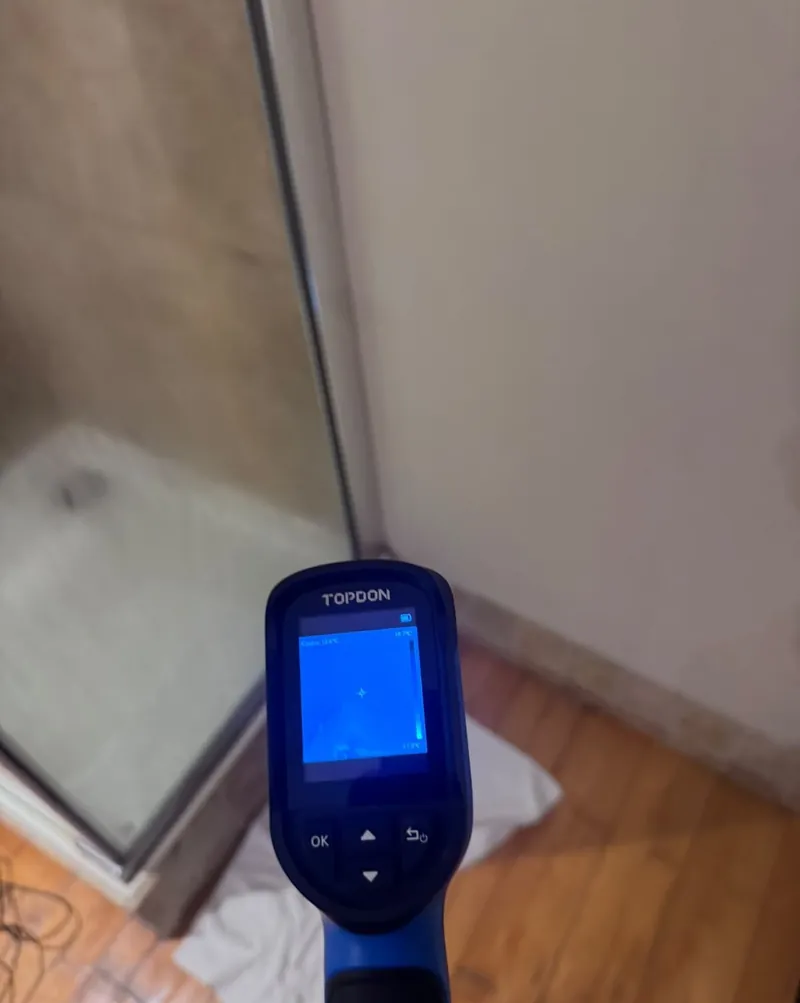
A thermal camera reads surface temperature. Wet material usually holds a different temperature from dry material around it, and a hot pipe warms the surface above it. That makes the camera good at heating and hot water leaks and at showing the outline of a wet area, which then guides where the moisture readings are taken.
- On a heating leak, a warm line or a warm patch on a floor can show the route of the pipe and the area where it is losing water.
- On a cold-water leak the contrast may be small, so the camera shows the extent of the wet area but not always the source.
- It reads surfaces. Thick finishes, insulation and tiled areas reduce what it can see, which is why we cross-check with moisture readings and a second method before marking a position.
- It needs a temperature difference to work. We may ask you to run the heating before the visit. We tell you in advance.
Thermal imaging is one tool, not a diagnosis. A cold patch can be damp, a thermal bridge, a missing piece of insulation or a draught. The camera shows where to look and the other readings explain what it is.
What happens on the visit
- We ask what you have seen, when, and whether it changes with weather, heating or water use.
- We check the water meter with everything off, where there is one, to see whether water is leaving the pipes when it should not.
- We take moisture readings across the area and its surroundings, and mark or record them.
- We use the thermal camera to show the extent of the wet area and trace heating or hot water pipes.
- We check the likely sources in order: pipes, waste and seals, then the outside of the building where the pattern points that way.
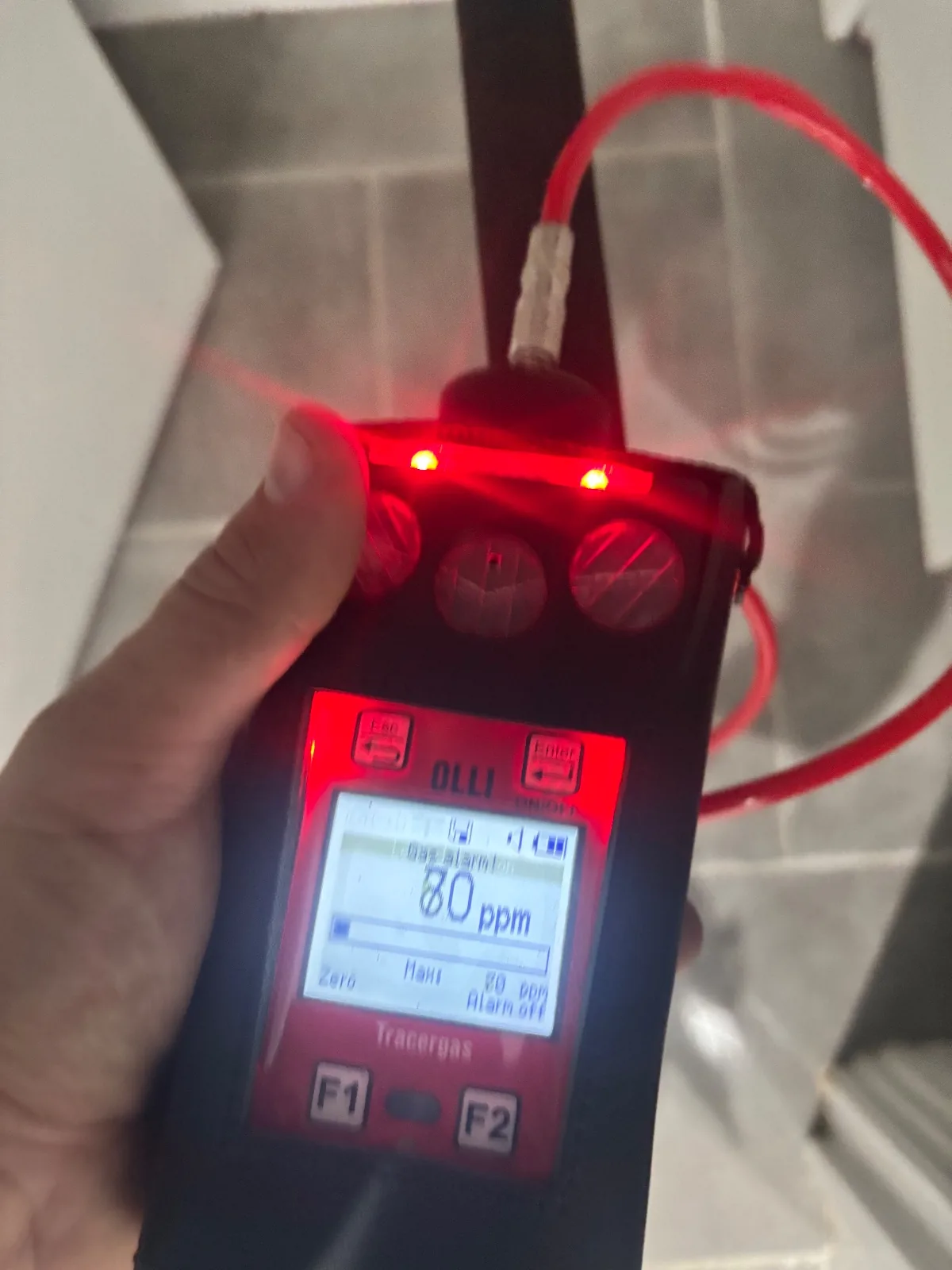
- If a pipe is suspect, we test it, and we use tracer gas where the pipe is hidden.
- We explain what we found and what we could not confirm, before we leave.
What happens on the day goes through a visit stage by stage, and how long leak detection takes explains what changes the time. A damp diagnosis normally runs about two to three hours, which is the time implied by the typical total at this hourly rate. That is a guide, and a larger property or a damp problem with several possible sources can take longer.
What you get at the end
- A written report with photos: the readings, the thermal images where they help, the areas checked and the areas that could not be reached.
- A stated finding: a leak and where, or no leak and the likely other cause, with how confident the engineer is.
- The next step, which might be a plumbing repair, a seal, ventilation, an outside inspection or a specialist.
- A written repair quote, if the cause is a leak we can fix. Repairs are quoted after detection, never priced in advance.
If you need the result for an insurer, a landlord or a managing agent, say so when you book. Leak detection report for an insurance claim explains what a useful report holds. We cannot tell you an insurer will accept any report, because that is its decision.
What it costs
Moisture mapping and damp diagnosis starts from £175/hr, with a typical total of £350 to £525. The rate is quoted before we travel and never exceeded for the survey time agreed. No VAT charged, and the written report with photos is included. Tracer gas is included in the price. Typical totals are a guide, and we call you before a survey goes past 3 hours. The full set of rates is in the pricing table.
No find, no fee: if a leak is present and we do not find it, you pay nothing. The report still records what was tested and ruled out. A finding of no leak and a likely other cause is still a result you can act on.
What it cannot do
- Surface readings do not measure the whole thickness of a wall. A damp meter can read high on salts, foil-backed plasterboard or metal fixings, and we say when a reading is unreliable.
- One visit shows the moisture on the day. A damp problem that follows weather, or a slow seal failure, may need a second look or a test that is repeated.
- Some damp has more than one cause at once. We will say which we can show and which we cannot.
- We do not claim to cure damp. Where the cause is the building, the next step belongs to a building specialist.
- Opening up is sometimes the only way to confirm a concealed leak, and it is agreed with you before it happens.
To book, report a leak or call 020 3961 5444. For a wider view of the options, see the guides hub.
Last reviewed .
Sources
- Identifying leaks (meter test), Thames Water
- CAP Code section 3: misleading advertising (price statements), ASA / CAP
Want it located, not guessed at? Call us
What the price covers
- £100 for the first hour, then £150 an hour, quoted before we start.
- No VAT charged.
- Tracer gas, acoustic detection, thermal imaging, a camera inspection and a written repair quote are included in the standard price.
- Written report with photos.
No find, no fee: if a leak is present and we do not find it, you pay nothing.
Found the leak? We quote the repair.
Repairs are quoted in writing once the leak is located. Every fix is different, so there is no repair price list.
We are plumbers as well as leak specialists, so we can carry out the repair once you approve the quote.
Related
- Non-invasive leak detectionFind a leak
- Leak detection surveyFind a leak
- Leak detection: what happens on the dayFind a leak
- How long does leak detection take?Find a leak
We cover every London borough from one call-out area, so there is no separate page to find for your part of London.
Questions about this service
What is moisture mapping?
It is a record of moisture readings taken in a grid across a wall, ceiling or floor, plotted to show where it is wettest and how the water has spread. It points to the source, but it is read alongside other tests and does not by itself name the pipe.
Can you tell condensation from a leak?
Often, yes. Condensation tends to sit on cold surfaces, shift with the weather and the use of the room, and leave the material underneath dry. A leak tends to be wetter near a pipe route and to persist in dry weather. We confirm with readings and, where a pipe is suspect, a test, and we say how sure we are.
Is it rising damp?
It is less often rising damp than people are told. Rising damp tends to be low on ground-floor walls and often carries salts, and leaks, splashing and ground levels need to be ruled out first. If the readings point that way we say so and suggest a building specialist.
Does thermal imaging show a cold-water leak?
Not always. The contrast can be small on a cold-water pipe, so the camera may show the extent of a wet area without showing the source. We use it with moisture readings and a pressure test or tracer gas.
Do you drill or open the wall?
Not for mapping. Readings are taken from the surface. If a concealed leak cannot be confirmed any other way, we discuss opening a small area with you first and quote the making good before it happens.
Will you treat the damp?
No. We find and report the cause, and we repair plumbing leaks we locate once you approve a written quote. For building-related damp we point you to the right specialist.
How long does a damp diagnosis take?
As a guide, about two to three hours, based on the typical total at the hourly rate. A bigger property or several possible sources can take longer, and we agree the time with you before we begin.
Can I use the report with my landlord or insurer?
You can send it to anyone who asks for the cause. Whether they accept it is their decision, and we do not promise that an insurer or landlord will act on it.

Talk to someone about your leak
£100
for the first hour, then £150 an hour, everything included
No find, no fee. No VAT. Repairs quoted in writing once the leak is found.