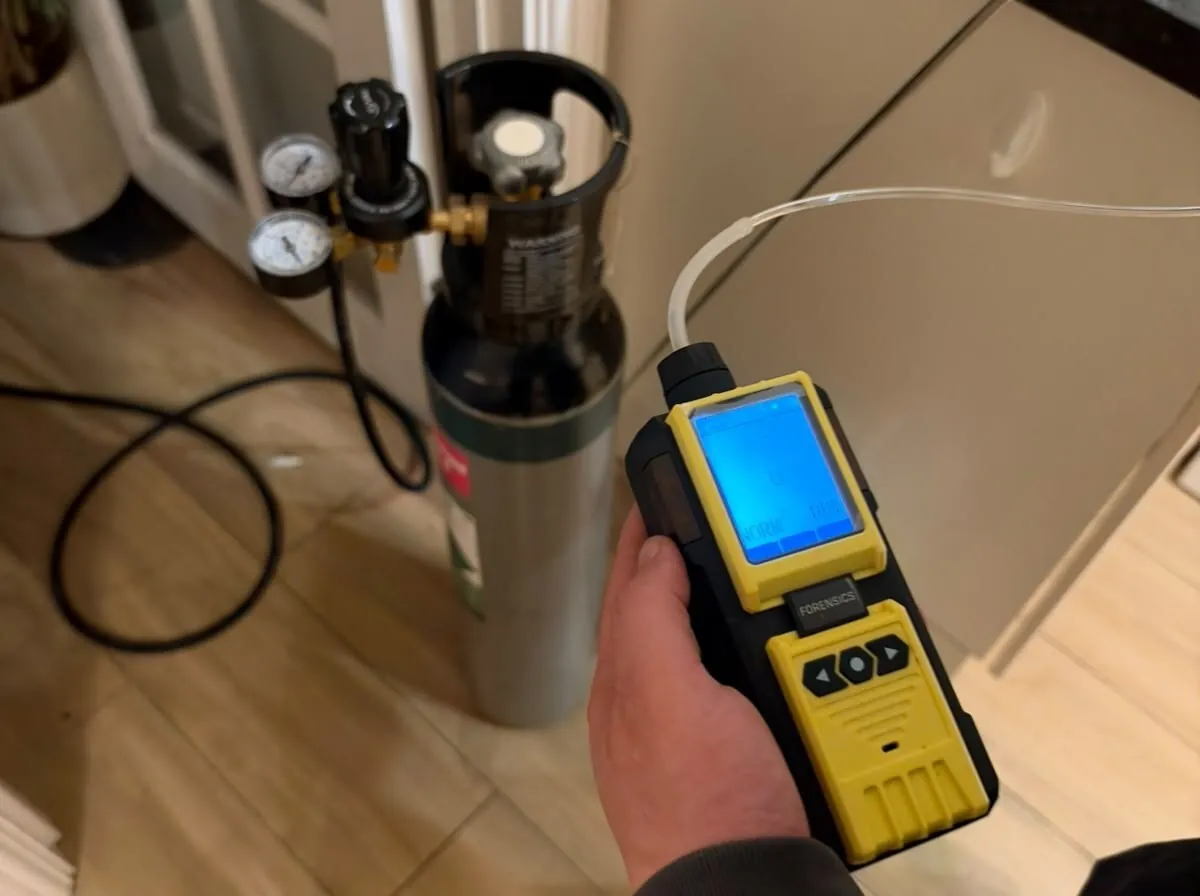
Non-invasive leak detection
We find the leak before anyone lifts a floor, and tell you plainly where opening up is still needed.
The quick version
- What it is
- Locating leaks with thermal imaging, moisture mapping, tracer gas and pipe tracing, so any later opening is small and in the right place.
- What it costs
- £160/hr, typically £320 to £640 in total. Fixed hourly rate quoted first, never exceeded. No VAT charged.
- What you get
- Written report with photos, and a written repair quote if you want the leak fixed.
Want it located, not guessed at? Call us
Signs you may need this
- A damp patch or stain with no visible pipe
- A warm spot on a floor or heating pressure that keeps dropping
- A meter that moves with every tap off
- Damp that returns after drying out
- A finished floor or paved area you do not want to open on a guess
How we find it
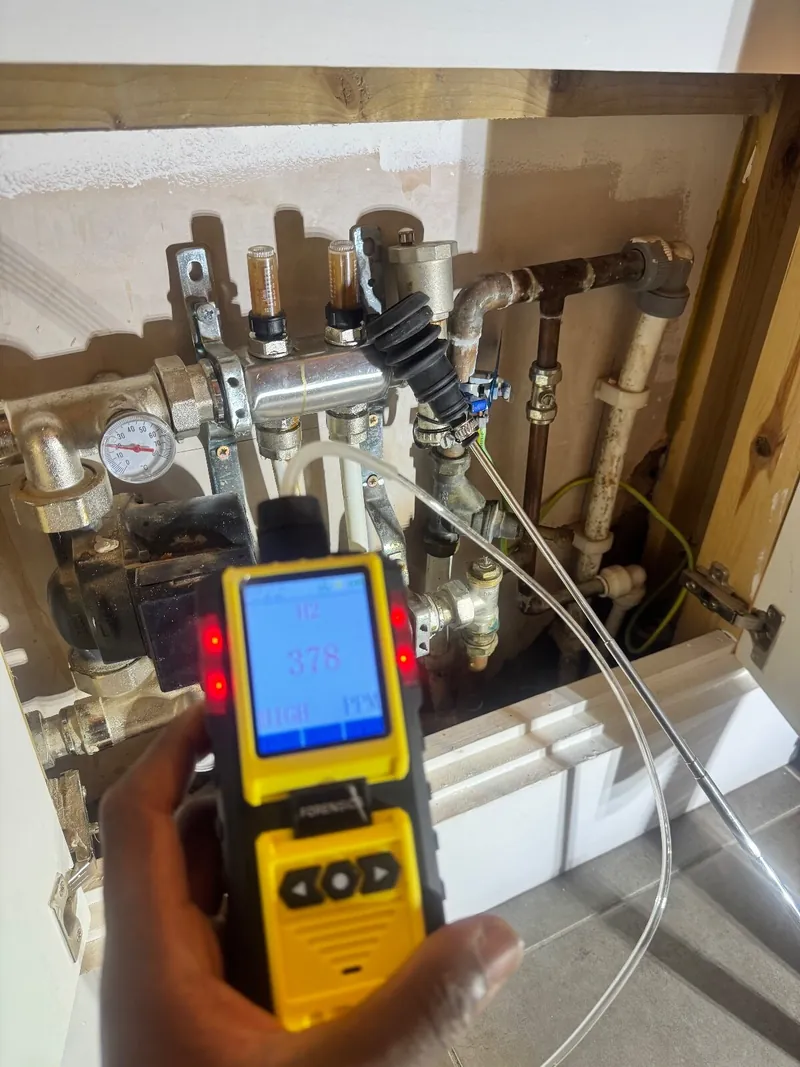
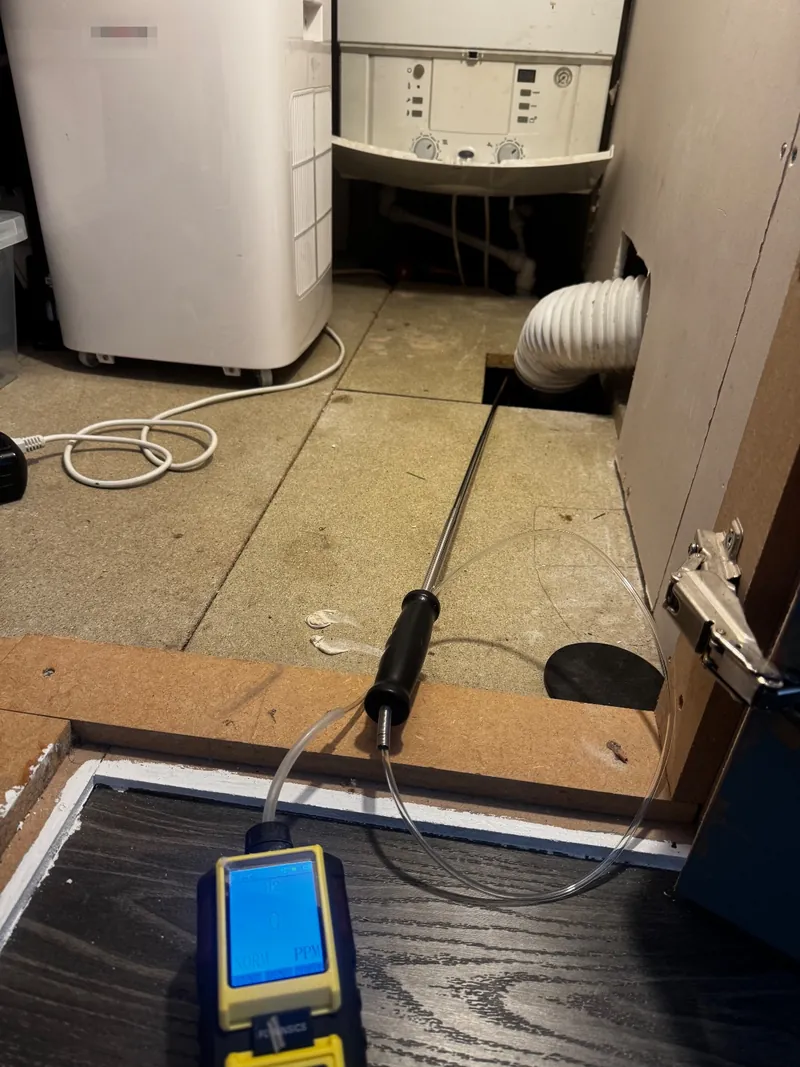
Tracer gas
A harmless gas is introduced to the pipe and detected where it escapes. Finds small leaks under floors and slabs.
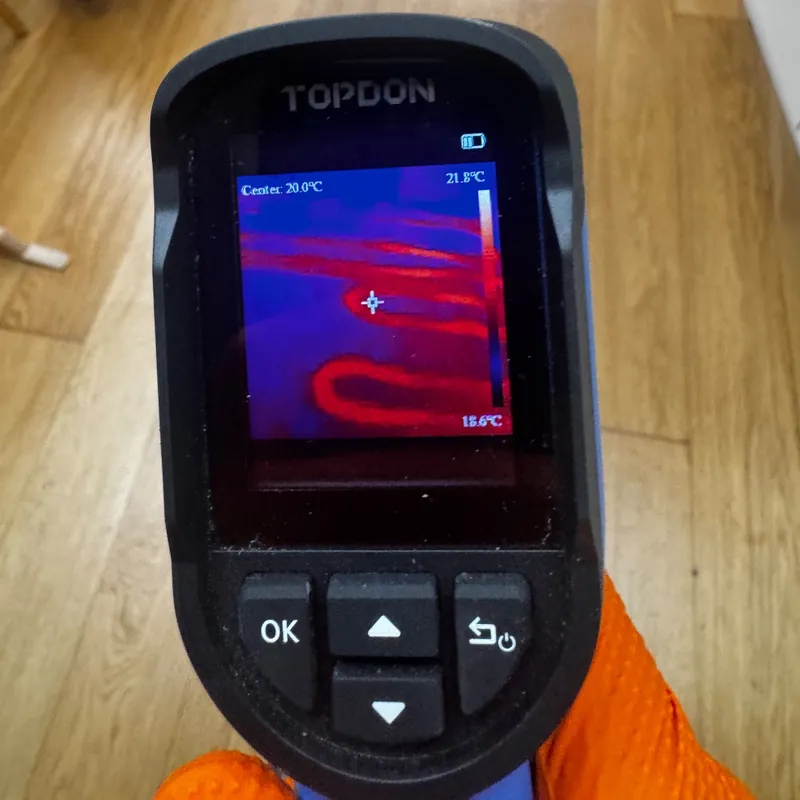
Thermal imaging
A thermal camera shows the temperature difference that wet or heated pipework leaves in a surface.
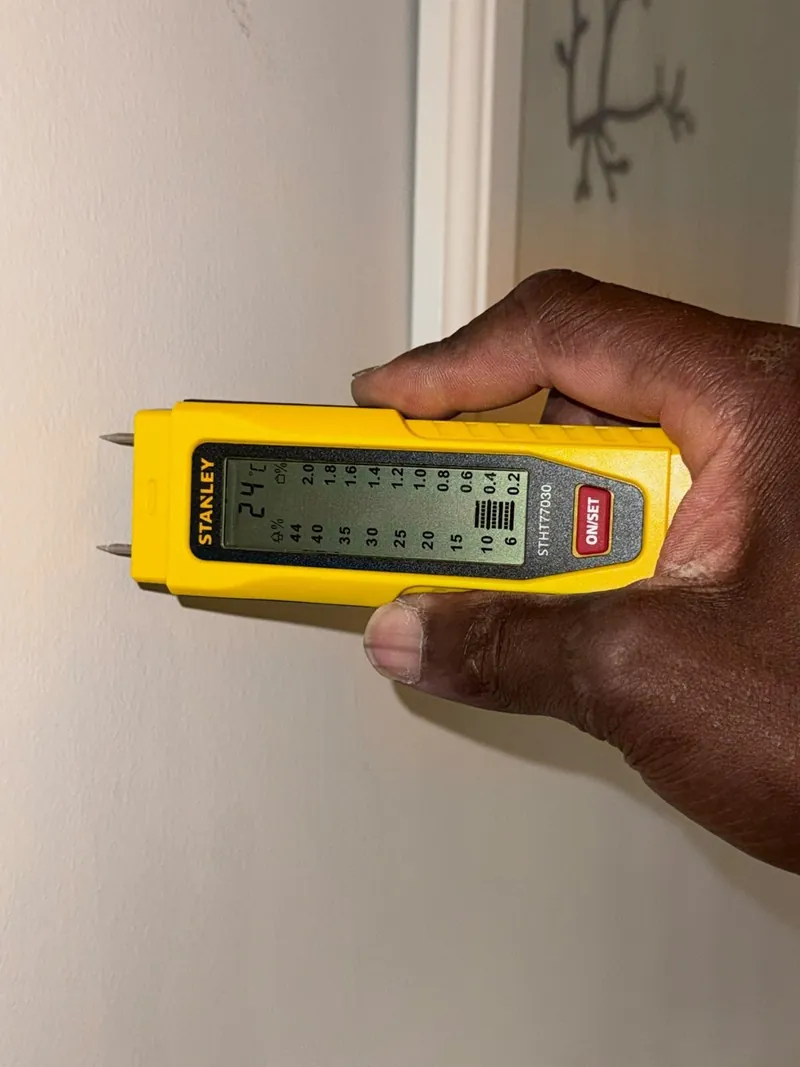
Moisture mapping
Readings across walls and floors show where water has travelled, and where it started.
Pipe tracing
Locating the route of buried supply pipe so a leak can be pinpointed before anyone digs.
Non-invasive leak detection means locating a leak with cameras, meters, gas and tracing equipment before anyone cuts into a floor, wall or garden. It narrows the opening to the exact spot but does not remove it: mending a pipe usually still means exposing it. Standard detection is £160/hr, quoted first and never exceeded.
What non-invasive means, and what it does not
It means the search for the leak does not involve breaking anything. The engineer reads surfaces and pipes from the outside: temperature, moisture, gas, pressure, signal. When the leak has been placed, the repair is a separate decision, and it is made with a position and a photograph, not a guess.
It does not mean no digging ever. A leaking pipe that sits under a screed floor or a paved drive has to be reached to be mended. What you avoid is opening up three metres of floor to find a joint that was in the fourth. If you read "leak detection without digging" on a website and it promises there will be no work to follow, be sceptical.
The five methods, and what each can find
| Method | How it works | Good at | Cannot do |
|---|---|---|---|
| Thermal imaging | A camera shows surface temperature differences | Heating and hot water pipes under floors, and wet areas that are cooler than their surroundings | See through thick or insulated layers, or find cold-water leaks with no temperature difference |
| Moisture mapping | Meter readings in a grid across walls and floors | Showing where water has travelled and where it is wettest | Say which pipe is leaking, or tell old damp from a current leak by itself |
| Tracer gas | A harmless gas is put into the pipe and a detector looks for it at the surface | Small leaks under finished floors, slabs and paving, on any pipe material | Work when the pipe cannot be isolated, or when the ground stops the gas reaching the surface |
| Pipe tracing | A locator follows a signal along buried pipe | Finding the route of an unknown supply pipe | Show a leak on its own. It shows where to look |
| Pressure test | An isolated section is pressurised and watched | Showing which length of pipe loses pressure | Pinpoint the leak within that length |
Our engineers also use an inspection camera where there is a void or access point, and listen along metal pipes where it helps. No single method is enough on its own. We choose a lead method for the situation and confirm the position with a second one.
Which method for which problem
| What you have seen | We start with | Then |
|---|---|---|
| Warm patch on a floor, or heating pressure falling | Thermal imaging | Tracer gas on the heating circuit to place the leak |
| Damp wall or ceiling stain, source unclear | Moisture mapping and thermal imaging | Pressure test of the suspect pipes, then tracer gas if needed |
| Meter moving, no visible damp | Meter test and isolation | Pipe tracing, then tracer gas along the route |
| Wet ground or a sunken patch outside | Pipe tracing | Tracer gas and pressure test on the buried run |
| Damp that returns in a shower or bath area | Moisture mapping | Dye and pressure testing of the waste and seals |
There is more on specific cases in moisture mapping and damp diagnosis, leak under house or slab and signs of a leak underground.
What the engineer does on the day
- Ask what you have seen and when, and check the meter with everything off.
- Walk the property with the thermal camera and moisture meter, and mark readings on the surface so you can see them too.
- Isolate pipework where possible and pressure test the sections.
- Use tracer gas where the pipe is under a surface we cannot read through.
- Check the leading result with a second method before we mark it.
- Photograph the readings and the marked position, and agree what happens next with you.
If the leak is on a heating or hot water pipe, we may ask you to run the heating so the camera has a temperature difference to read. We tell you beforehand. What happens on the day goes through a visit in order.
When opening up is still needed
- To mend the pipe. The report shows where, and the repair quote shows what we expect to lift and what we put back.
- To confirm a leak under a solid screed when readings from two methods do not agree. We say so in the report, not by cutting first.
- To reach a concealed fitting behind a bath panel, boxing or kitchen unit. Often this is a screwed panel and not a cut.
- To check a pipe's condition when the results hint at corrosion along its length.
The point of the survey is to make each opening small, in the right place and priced before it happens. Where a long supply pipe is failing, replacement may be cheaper than patching: see water supply pipe replacement.
What it costs
Standard leak detection, which covers thermal imaging and moisture mapping, is £160/hr, with a typical total of £320 to £640. A trace of a mains or supply pipe is £180/hr, typically £360 to £540. Moisture mapping and damp diagnosis starts from £175/hr.
- The rate is quoted before we travel and never exceeded for the survey time agreed.
- Typical totals are a guide and not a cap.
- Tracer gas adds a one-off £80 bottle charge, only when needed.
- No VAT charged. The written report with photos is included.
- The repair is quoted separately, in writing, once the leak is found.
All rates are in the pricing table.
Honest limits
Some leaks are hard. A leak that only runs when the pipe is under pressure at certain times, a pipe wrapped in insulation, or a slab with several sources of damp can all give mixed results. When that happens we say so in the report and set out what we would try next, which may be a second visit or a small, deliberate opening. We do not claim a find we cannot show you a reading for.
For a full survey, see leak detection survey. To book, report a leak or call 020 3961 5444.
Last reviewed .
Sources
- Identifying leaks (meter test), Thames Water
- CAP Code section 3: misleading advertising (price statements), ASA / CAP
What the price covers
- Fixed hourly rate quoted first, never exceeded.
- No VAT charged.
- Tracer gas is charged at the same rate plus a one-off £80 bottle charge, only when needed.
- Written report with photos.
No find, no fee. The only extra is a tracer gas bottle, and only if gas is used.
Found the leak? We quote the repair.
Repairs are quoted in writing once the leak is located. Every fix is different, so there is no repair price list.
We are plumbers as well as leak specialists, so we can carry out the repair once you approve the quote.
Related
- Leak detection surveyFind a leak
- Underground supply pipe leak: trace and repairFind a leak
- Leak detection pricesPrices
- Leak detection: what happens on the dayFind a leak
We cover every London borough from one call-out area, so there is no separate page to find for your part of London.
Questions about this service
Does non-invasive detection work on solid floors?
Often, yes. Thermal imaging and tracer gas can read through a screed or tiled floor to different degrees. Thick layers and insulation reduce what the camera sees, which is why we confirm with a second method and say in the report how confident we are.
Does the heating need to be on?
For suspected heating leaks, running it helps the thermal camera show warm lines. For cold-water leaks it matters less. We tell you before the visit.
Is the tracer gas harmful?
We use a harmless gas that is put into the pipe and detected where it escapes. We explain what is being used and what to expect before we start.
How accurate is it?
It depends on the pipe, the surface and the number of leaks. We do not publish an accuracy figure. Every finding in the report states which methods agreed and what was uncertain.
What if you cannot find the leak?
We tell you before booking exactly what is charged if a survey ends without a located leak, and it goes in the written quote. The hourly rate is quoted before we start and never exceeded.
Will you still need to dig or lift something?
Usually to mend the pipe, yes. What you avoid is opening up unknown areas to find it. The repair is quoted separately, in writing, with the opening shown.
Talk to someone about your leak
Hourly rate quoted first, never exceeded. Repairs quoted in writing once the leak is found.