
The sums, from litres to pounds
There is no single answer to what a drip costs, because it depends on how fast it drips, and on whether you pay by meter. We use published litre figures where they exist, and do the pricing ourselves from Thames Water’s tariff, so you can check the working and redo it for your own rate.
From 1 April 2026 Thames Water charges metered customers 273.46 pence per cubic metre for water and 147.21 pence per cubic metre for wastewater, read from its 2026-27 charges scheme on 24 November 2026. Together that is 4.2067 pounds per cubic metre, and a cubic metre is 1,000 litres. So one litre costs a little over 0.4 pence, and a year of any steady loss is the daily litres times 365, divided by 1,000, times 4.2067. Fixed annual charges, any wastewater adjustment and your own rate are not included.
| Loss | Litres a day | Cubic metres a year | Cost a year, about |
|---|---|---|---|
| Slow drip, about one a second (our estimate from a published drop size) | 22 | 8 | 33 pounds |
| Two drips a second (Northern Ireland government figure, an upper limit) | 26 | 9.5 | 40 pounds |
| Two drips a second (our estimate from a published drop size) | 43 | 16 | 66 pounds |
| Thin steady trickle from a tap | 100 | 36.5 | 154 pounds |
| Leaking toilet, low end (Thames Water) | 200 | 73 | 307 pounds |
| Leaking toilet, high end (Thames Water) | 400 | 146 | 614 pounds |
| Toilet with rippling water (Thames Water) | 600 | 219 | 921 pounds |
| Toilet in constant flow (Thames Water) | 8,000 | 2,920 | 12,284 pounds |
The first two rows disagree by design, and we explain why below. The thin trickle row is a round number of ours for scale, not a published figure. Every pound figure is rounded, only applies if you have a meter, and is a calculation, not a quote. Thames Water’s own leak guide prints yearly pound costs that imply a lower rate than its current tariff, so we do not use them and show litres instead.
The dripping tap: where the litres come from
We found two sources that give a number a reader can check. NI Direct, the Northern Ireland government’s public services site, says a dripping tap losing just two drips a second wastes up to 26 litres of water a day. It does not say how it got there, and the words “up to” make it a ceiling, not a typical figure.
The US Geological Survey, a federal science agency, gives the other half of the sum. It says a drop from a kitchen or bathroom tap is between one fifth and one third of a millilitre, uses a quarter of a millilitre in its own calculation, and puts that at 4,000 drips to the litre. At that size, one drip a second is 86,400 drips a day, which is 21.6 litres. Two drips a second is 43.2 litres. That is higher than the Northern Ireland figure, which implies a smaller drop of roughly 0.15 millilitres.
Both are plausible. Drop size changes with the tap, the pressure and the angle of the spout. That is why the table gives a range, and why measuring your own is better than trusting any published number. The method is below.
The running toilet: the bigger number
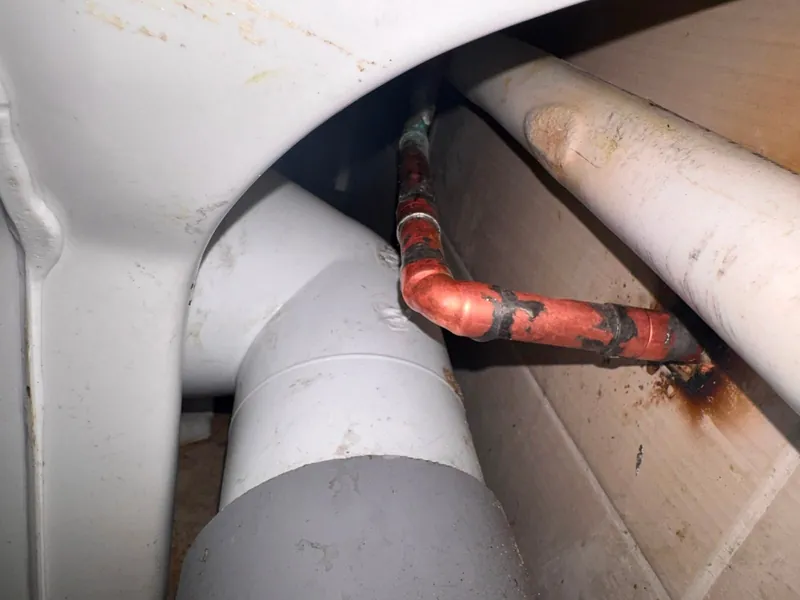
Thames Water says a leaking toilet wastes on average 200 to 400 litres a day, and that about one household in 20 has one (release of 26 June 2025). Its leak guide, read on 24 November 2026, gives a scale for toilet leaks: up to 200 litres a day for a trickle, about 600 for rippling water and about 8,000 for constant flow. It also gives around 400 litres a day for an average leaky loo.
This is where the money is. A tap is easy to see and hear. A toilet leaks silently into the pan, so it can run for months. At the low end of Thames Water’s range, a year costs roughly 307 pounds on a meter by our arithmetic, and at the high end about 614 pounds. Our page on what runs your water bill up the most compares this with showers and everyday use.
Thames Water gives two checks. For the pan, wait 30 minutes after a flush, dry the back of the bowl, lay a dry sheet of toilet paper there and leave it at least three hours, overnight is best. Wet or torn paper means water is getting through. For the cistern, mark the water level, check after 10 minutes, and a drop points to the flush valve. We would add, as our own practitioner view, that a cistern that refills by itself when nobody has flushed is also a sign, and that the overflow pipe is worth a look outside.
Who fixes it depends on whose pipe it is. Inside the home, the fittings are the owner’s, or the landlord’s in many tenancies. See who is responsible for a water leak.
Measure your own drip in five minutes
- Put a measuring jug or a small jar under the tap. Use a kitchen measuring jug marked in millilitres.
- Set a timer for five minutes and leave the tap alone.
- Read how many millilitres collected.
- Multiply by 288, which is the number of five-minute periods in a day, then divide by 1,000 to get litres a day.
- Multiply litres a day by 365, divide by 1,000 for cubic metres a year, and multiply by 4.2067 for a pounds figure at the Thames 2026-27 rate.
Worked example, invented numbers. Suppose 60 millilitres collects in five minutes. That is 60 times 288, or 17,280 millilitres, which is 17.3 litres a day. Over a year that is 6.3 cubic metres, and at 4.2067 pounds a cubic metre about 27 pounds. If the drip speeds up at night when pressure rises, the figure will be higher. Pressure can vary through the day, which is a general plumbing point we cannot attribute to Thames Water.
To check whether the drip shows up on the meter at all, use the water meter leak test. A single tap is often too small to move the main digits in 30 minutes, which is why the red digits matter. How to read a water meter explains them.
Does it cost you anything if you are not metered?
Not on the bill. Thames Water says unmetered customers pay on rateable value, or on bedrooms or single occupancy for assessed household charges, so a dripping tap does not change what you are billed. The water is still wasted, and a household on a meter would pay for it. How the figure is built is in unmetered water bill: how it is calculated.
If you are on a meter, or Thames Water is moving you to one, the maths above applies from the date you are on metered charges. Thames Water says its meter programme includes a 12-month comparison period, and the choice is covered in should I get a water meter in London. Thames Water’s FAQ says you cannot return to unmetered charges once a meter is installed, so a leak you leave running will cost real money.
A hot tap drip also wastes the energy used to heat that water. We have no source for a figure, so we give none.
Fixing a drip, and what Thames Water says about leaks you leave
A dripping tap is usually a worn washer or cartridge, or a damaged seat, and it is a quick plumber’s fix. That is our practitioner experience, not a published figure. Isolate the tap or the room first, or turn off the water at the inside stop valve, which is covered in how to turn off your mains water. Do not leave it for months.
There is a reason to hurry that goes beyond the bill. Thames Water’s leak allowance page says it does not usually pay where you knew or should have known about a leak and did not repair it. An allowance is for a leak repaired within four weeks, claimed within three months of the repair, and only for metered customers, per its page on 24 November 2026. A tap you have ignored for a year is the kind of leak that line is aimed at, though we cannot say how Thames Water would treat any case. Ask it, and see the leak allowance evidence checklist.
- Fix visible drips and a leaking toilet first. They are the cheapest savings available to a metered home.
- If the meter moves with every tap closed and no toilet running, there is a leak you cannot see. That needs a trace, not a washer.
- Outside, check the garden tap and its hose connector. See garden tap and outside supply leaks.
- More ways to cut a bill are in save money on your water bill.
When the meter still moves
Plenty of homes fix the tap and the toilet and the bill stays high. At that point the loss is somewhere you cannot see, such as a buried supply pipe, a pipe under a floor or a leak behind a wall. A meter that moves with the inside stop valve closed points to the supply pipe, usually the owner’s side of the meter. If you want it located before anyone digs, our trace is a fixed £450, however long the job takes, and tracer gas is included. No VAT charged. Repairs are quoted in writing after the leak is found. See the pricing page.
If you would rather talk it through, report a leak or ring 020 3961 5444. For more on bills and leaks in general, start at the guides.
