
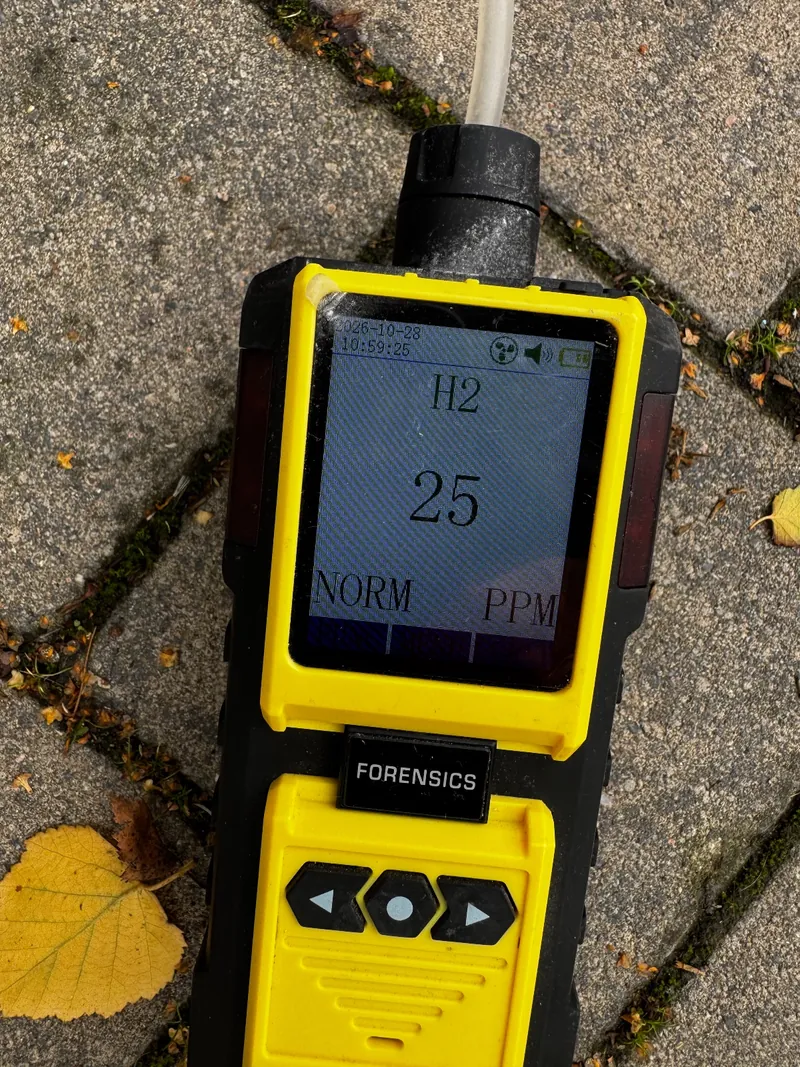
What a moving meter is telling you
A water meter counts what passes through it. If nothing in the house is using water and the dial or the display is still moving, water is going somewhere. That is the clearest sign of a leak you will get without any equipment, and it is why people who see it often call the same day.
The movement can mean several things. The leak may be on the pipes inside the property: a toilet, a tap, a hose or a joint. It may be on the supply pipe that runs from the boundary into the house, which for most homes is the owner's responsibility. Or something is quietly using water that you did not think of, such as a cistern, an outside tap, a timer on a garden system or an automatic fill on a header tank.
Which of those it is decides who fixes it and what it costs. Thames Water says the supply pipe from your property boundary into the home, and all the plumbing inside, is generally the property owner's responsibility. It also says that where the meter sits does not decide who owns the pipe. Our guides on who owns the water supply pipe and who is responsible for a water leak cover it.
Safe checks you can do first
You can do the first and most useful check yourself, with no tools.
- Find the meter. Thames Water says meters are most often outside, under a small cover in a driveway, garden or footpath near the outside stop valve, and sometimes indoors under the kitchen sink. Our guide on where is my water meter helps, and how to read a water meter explains the dials.
- Switch off every water-using appliance and make sure nobody uses a tap or flushes a toilet.
- Close the inside stop valve, which is usually under the kitchen sink.
- Take a meter reading and write it down. Wait 30 minutes and read it again. This is the test Thames Water describes.
- If the readings match, there is no leak between the meter and the inside stop valve. If they differ, there is a leak between the meter and the inside stop valve.
Then repeat it with the inside stop valve open and everything still off. If the meter moves only now, the water is leaving through the pipes inside, past the stop valve. That is an inference from the two readings, not a certainty, but it tells you where to point the search.
Check the obvious first. A toilet that is silently refilling is one of the most common reasons for a meter that moves. See running toilet fixed in one hour. Check outside taps and any irrigation too. Our guide to how to do a water meter leak test goes through the steps with the reading table.
Do not open the outside stop valve or the meter box unless you need to in an emergency. Thames Water describes how customers can use the outside stop valve in an emergency, and the equipment is Thames Water's. If the meter box is full of water, see water meter box leaking or full of water.
What we do in the first hour
The first hour costs £100. On a spinning meter it usually goes like this.
- We take the meter readings ourselves, with appliances off and the inside stop valve closed and open, so the result does not rest on a single reading.
- We isolate fittings one at a time where valves allow, such as toilets, outside taps and appliances, and watch whether the meter slows.
- We use acoustic listening on accessible pipework and at the stop valve to hear whether water is moving where it should not be.
- We use thermal imaging and moisture readings over the likely pipe runs and rooms.
- Where the signs point to the buried supply pipe, we say so and explain what the trace involves.
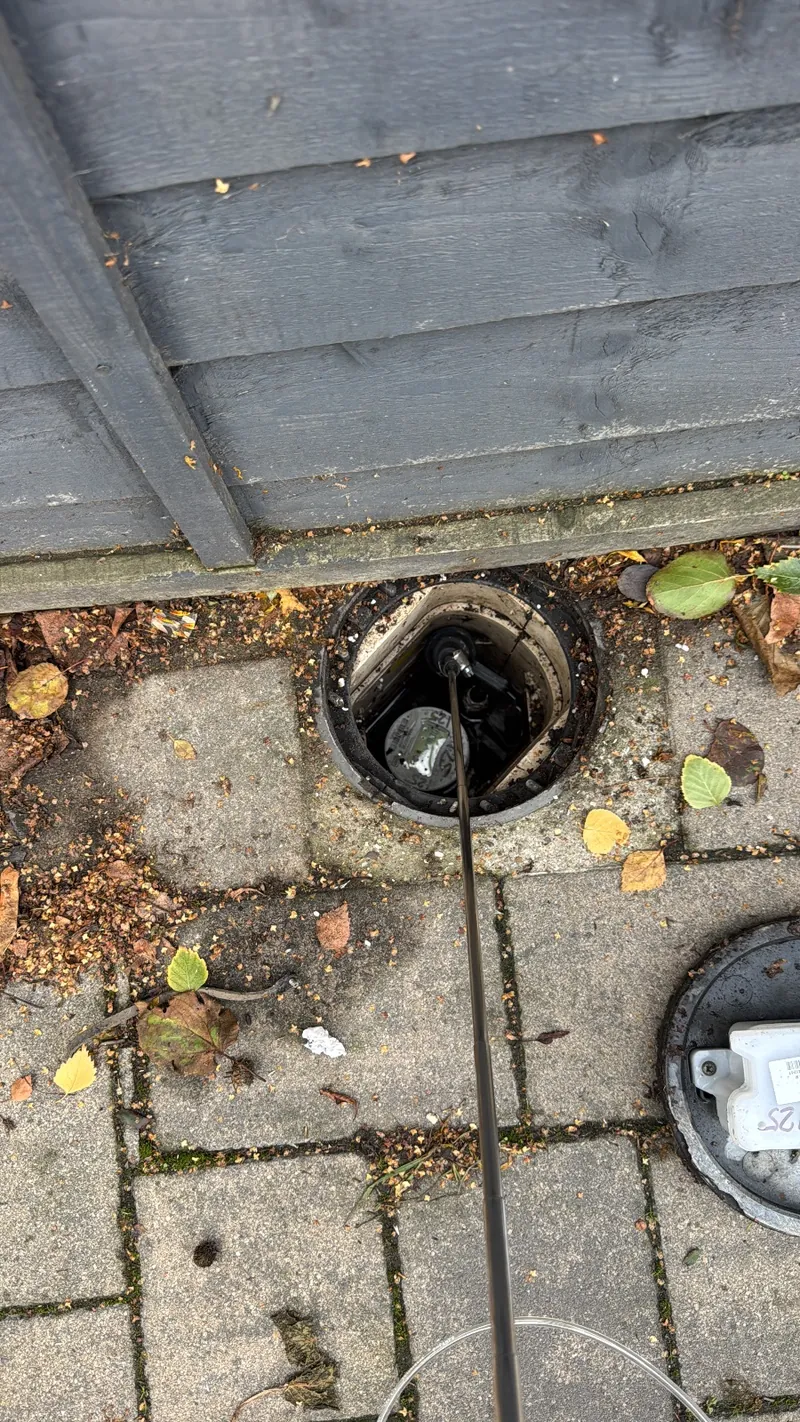
At the end of the hour you should know one of three things: that a particular fitting was the cause, that the leak is inside and the search needs to go further, or that the leak is on the buried supply pipe. Each one has a clear next step. Read what happens on the day for the full visit.
The standard rate includes tracer gas, acoustic detection, thermal imaging, an endoscopic camera inspection, a trace and access report for your insurer and a written quote for the remedial works. Where the meter points inside, thermal imaging and the camera usually matter more. Where it points outside, acoustic and tracer gas are more likely.
What usually needs more than an hour
- A leak on the buried supply pipe, which means tracing the pipe route across a garden or drive.
- A leak under a slab or a finished floor, where a method has to be confirmed by a second one.
- More than one leak, so that isolating one fitting only slows the meter.
- An intermittent leak that stops and starts, such as a failing float valve or a pressure change.
- Shared supply pipes, where one pipe feeds several homes and the leak sits in a section serving more than one.
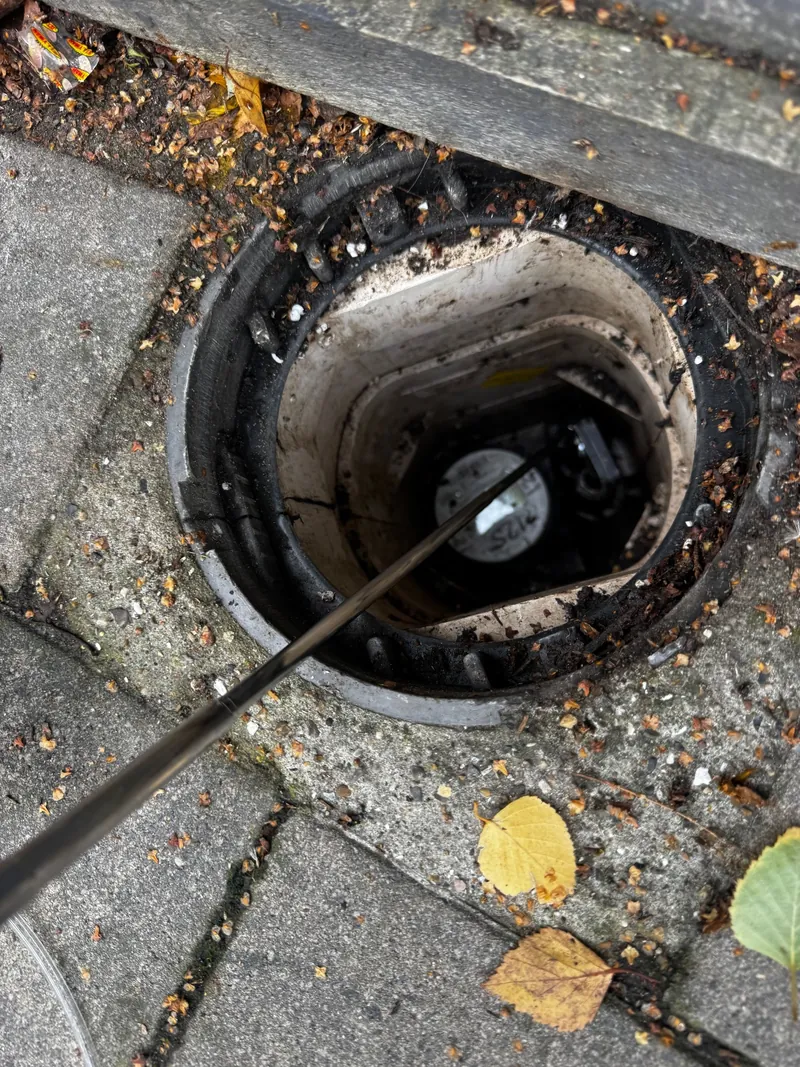
For a buried leak, the detection is priced differently. Mains and supply pipe leak detection is a fixed £450, however long the job takes, however long it takes. It covers acoustic and ground-microphone detection, tracer gas, pipe route tracing, a trace and access report for the insurer and a written quote for the remedial works. Excavation and the repair itself are quoted separately. See supply pipe leak trace and repair, leak between meter and house and water leak under a driveway.
If the meter reading is high but does not move now, the cause may be a past leak, an estimated reading or a different use pattern. See why is my water meter reading so high.
What it would cost under the pricing
Standard leak detection is £100 for the first hour, then £150 an hour, billed in half hours after the first hour. No VAT charged, and there is no parking charge. If the first hour answers the question, for example because a toilet was the cause, the survey part is £100.
| Where the leak turns out to be | Which price applies |
|---|---|
| A fitting or pipe inside the property | The standard rate: £100 for the first hour, then half hours at £75 |
| Inside, but hard to find | The standard rate. A typical 2.5 to 3 hour survey is £325 to £400 |
| On the buried supply pipe or mains | Mains and supply pipe leak detection: a fixed £450, however long the job takes |
| No leak, a meter or reading question | We tell you what we ruled out, and the agreed survey time is charged |
| Time on site | Total |
|---|---|
| 1 hour | £100 |
| 1.5 hours | 175 pounds |
| 2 hours | £250 |
| 3 hours | £400 |
These totals are worked out from the rate, not taken from past jobs. We call you before the survey goes past 3 hours. Repairs are not in the prices. They are quoted separately in writing once the leak is found. The pricing page has the full rate card.
Why not leave it
A moving meter can mean a bill that keeps rising. Thames Water says it expects a confirmed leak on your property to be repaired within four weeks, and its leak allowance page sets out when a metered customer can ask for help with a bill after a repair. The page says the proof it asks for is the plumber's invoice or a Thames job number. Whether a detection report is accepted is something Thames Water has not said, so check its page for what it wants before you rely on one.
Tenants should tell the landlord straight away and check who must repair under the tenancy. If you are a landlord or agent, water bill help for tenants and landlords explains how the bill and the leak fit together. If you want the evidence organised, see the leak allowance evidence checklist.
When to call
- the meter moves with every appliance off and the inside stop valve closed, which points to the supply side
- the meter moves only with the inside stop valve open, and the toilet and taps are not the cause
- a stretch of garden or driveway is soft, wet or sunken
- you hear running water with everything off
- your usage has risen on the bill and you do not know why
Book through report a leak or call 020 3961 5444. We confirm the rate and the time before anyone travels. The wider offer is leak detection for £100 for the first hour, the other one hour jobs are on leak jobs that can be solved in one hour, and the guides cover the rest. No find, no fee: if a leak is present and we do not find it, you pay nothing. That includes the first hour.
