
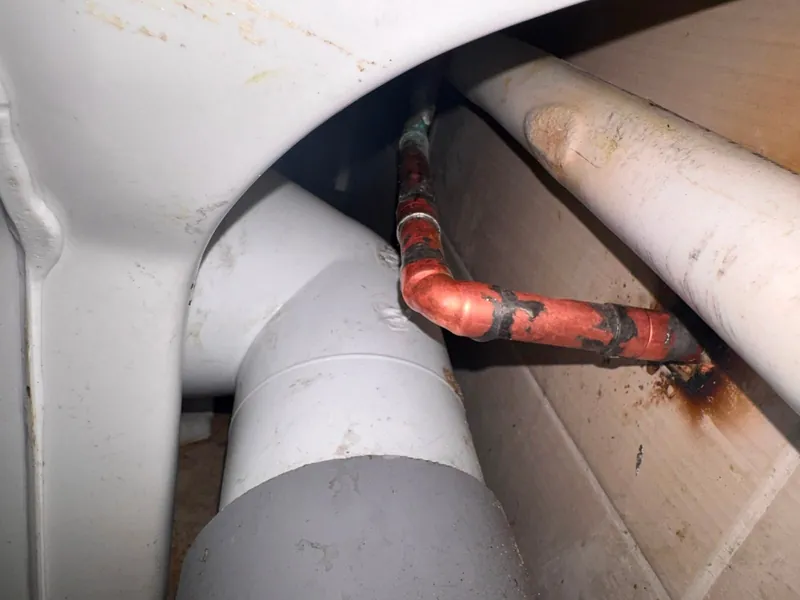
What is usually wrong with a running toilet
A toilet that runs or keeps refilling is letting water through somewhere it should not. There are two common routes. Either water trickles from the cistern into the pan, down the back of the bowl, or the cistern keeps topping itself up and spills out through the overflow. They have different causes and different fixes, which is why the first job is to see which one you have.
When water leaks from the cistern into the pan, the usual suspect is the flush seal: the valve at the bottom of the cistern that is meant to hold the water in. It can wear, warp or collect limescale, and then it lets a slow stream past. When the cistern overfills, the inlet valve, the float or the float arm is usually not shutting the incoming water off at the right level.
That is a practitioner description of the common faults, not a complete list. A crack in the cistern, a failing connector to the supply pipe, or a leak at the base of the pan are rarer and look different. A toilet can also be silent and still waste water, because a slow trickle down the pan makes little noise.
Safe checks you can do first
None of these needs tools, and none of them opens a pipe.
- Listen. A hiss or trickle after the flush has finished means water is still entering the cistern or leaking past a seal.
- Lift the cistern lid carefully and look at the water level. If water is close to the top of the overflow pipe, or you can see it running into it, the inlet valve is not shutting off.
- Look at the back of the pan, below the rim. A thin, continuous trickle of water down the china points to the flush seal.
- Do the paper test Thames Water describes. Wait 30 minutes after flushing, dry the back of the pan with toilet paper, place a new dry sheet on the back of the pan and leave it for at least three hours, overnight if you can, without using the toilet. If the paper is wet or torn, the toilet is leaking.
- Check the connection from the wall to the cistern, and the floor around the base of the pan, for damp. A wet floor is a different problem from a running cistern.
There is also a way to tell whether the toilet is behind a high meter reading. The water meter leak test follows the same method Thames Water describes. If the meter moves with everything off and the toilet is the only suspect, the toilet is probably it, though that is an inference, not proof.
If water is escaping steadily from the cistern or the supply connection, close the small isolation valve on the pipe to the cistern, usually a slot-headed valve that turns a quarter turn. Do not force a stiff valve. If it will not close, shut the inside stop valve instead, and read how to turn off your mains water.
What we do in the first hour
The first hour costs £100. On a running toilet it often runs like this.
- We ask how long it has been running, whether it is silent or noisy, and whether anyone has changed any part recently.
- We check the meter with everything else off, where we can, to see whether this toilet is the thing moving it.
- We look inside the cistern and test the seal and the inlet valve. We confirm whether the water is escaping to the pan, to the overflow, or both.
- We check the connections, the cistern, the pan and the floor for damp, with a moisture meter where it helps.
- We tell you what has failed and write up the repair and its quote.

A flush seal or an inlet valve is a standard part on many toilets. Some cisterns, especially older ones or concealed cisterns behind a panel, use parts that are harder to match or reach. We say so when we quote.
The standard rate includes tracer gas, acoustic detection, thermal imaging, an endoscopic camera inspection, a trace and access report for your insurer and a written quote for the remedial works. A running toilet seldom needs tracer gas. The camera and the moisture meter are more likely to matter, and only where we suspect damp.
What usually needs more than an hour
We would rather tell you now than surprise you later. A running toilet may need longer when:
- The cistern is concealed behind a panel or in a boxed-in frame, so reaching the parts means opening a finish.
- The cistern is old and the correct parts are hard to find, or the cistern itself is cracked.
- The toilet is only part of the problem, and the meter keeps moving after the toilet is isolated.
- There is damp at the floor or the base of the pan, which suggests a leak on the pan connection or the waste, not the cistern.
- The supply connection or the isolation valve is corroded, seized or leaking, so the toilet cannot be isolated safely.
A leaking cistern that cannot be isolated is covered in toilet leak and running cistern repair. If the meter test points to something beyond the toilet, find a hidden leak in one hour describes what the first hour of detection does, and meter spinning leak check in one hour covers the meter side.
What it would cost under the pricing
Standard leak detection is £100 for the first hour, then £150 an hour, billed in half hours after the first hour. No VAT charged, and there is no parking charge. If the toilet is clearly the source and the visit stays inside the first hour, the survey part is £100.
| Time on site | Total |
|---|---|
| 1 hour | £100 |
| 1.5 hours | 175 pounds |
| 2 hours | £250 |
| 3 hours | £400 |
These are totals worked out from the rate, not the price of any past job. The repair is not in them. A new flush seal, inlet valve or cistern is quoted separately in writing, with the parts and the work set out, so you can accept it or take it to another plumber. We do not put repair prices on the site because the fix depends on the cistern.
We call you before the survey goes past 3 hours. See the pricing page for the full rate card.
Why a quiet running toilet is worth fixing
A toilet that trickles all day is easy to ignore. It is also one of the places where a household can waste water without anyone noticing, and the cost lands on the bill if you are metered. Thames Water's identifying-leaks page lists a leaking toilet among its reference examples. Check the current figures on that page and on your latest bill, because we do not publish a cost here that could age.
Our page on what a dripping tap and a running toilet cost per year explains how to price it from your own meter readings. If you are not on a meter, see should I get a water meter in London.
The Water Supply (Water Fittings) Regulations 1999 bar installing or using fittings in a way that wastes or misuses water. That is the background for why a water company may expect a leak to be fixed. Thames Water says it expects a confirmed leak on your property to be repaired within four weeks. Check the page for the current wording before you act.
When to call
Call when:
- the paper test shows the toilet is leaking and you want the cause confirmed and quoted
- the toilet keeps refilling and you cannot isolate it
- there is damp at the base of the pan or on the floor
- the meter moves with everything off and the toilet is not the only suspect
- you manage a flat or let a property, and you need a written finding, see who is responsible for a water leak
Book through report a leak or call 020 3961 5444. We confirm the rate and the time before anyone travels. The wider offer is leak detection for £100 for the first hour, the other jobs are in leak jobs that can be solved in one hour, and the guides cover the rest.
