
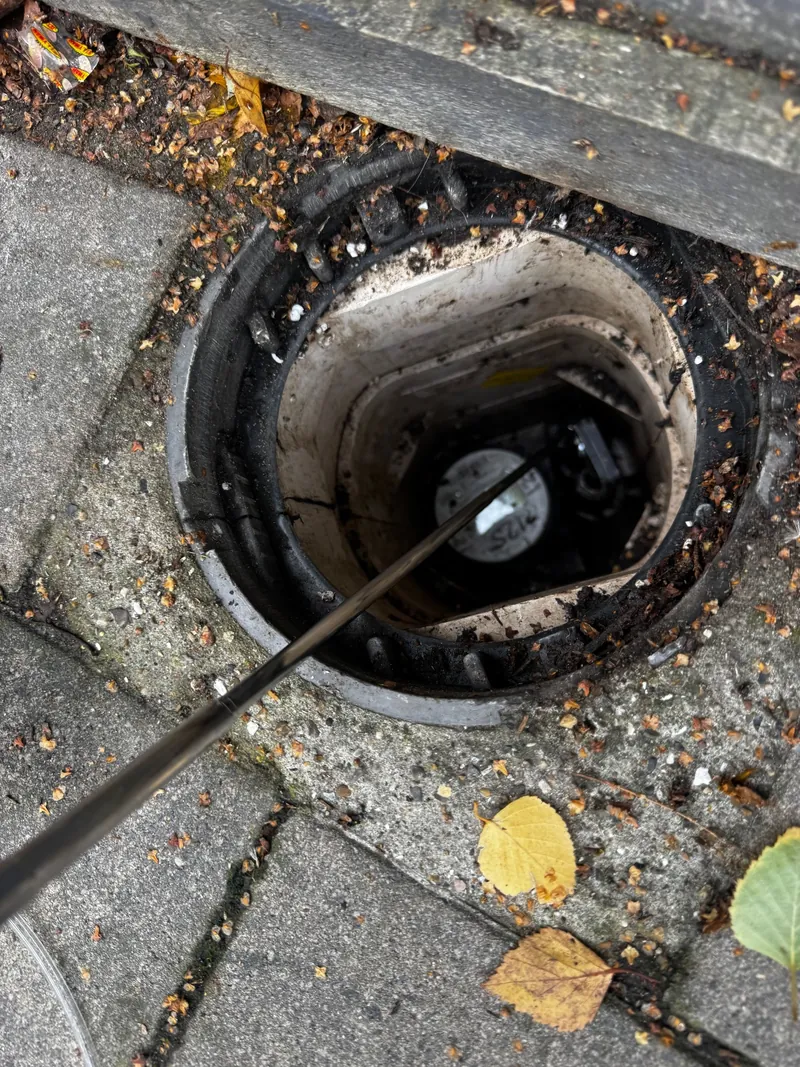
A reading is a running total, not a verdict
People usually ask this question after looking at the dial and seeing a number that feels huge. The number is cumulative. A meter adds up the water that has gone through it, and it keeps adding until it is replaced. A meter fitted years ago will show a bigger total than one fitted last spring, and neither number says anything about whether you are using too much.
The figure that can be “too high” is the difference between two readings. Take one today, take another a week or a month later, and subtract. That gap is the water used in between. Everything on this page is a way of checking that gap: is it what the household should use, is it being counted correctly, and if it is more than expected, is the extra going down a drain or out of a pipe.
This page is about the reading itself. How to find and write down the digits is in how to read a water meter. If your worry is the bill rather than the dial, water bill too high: how to dispute it covers that route, and what runs your water bill up the most lists the everyday causes in more detail than we repeat here.
First, check you read the right thing
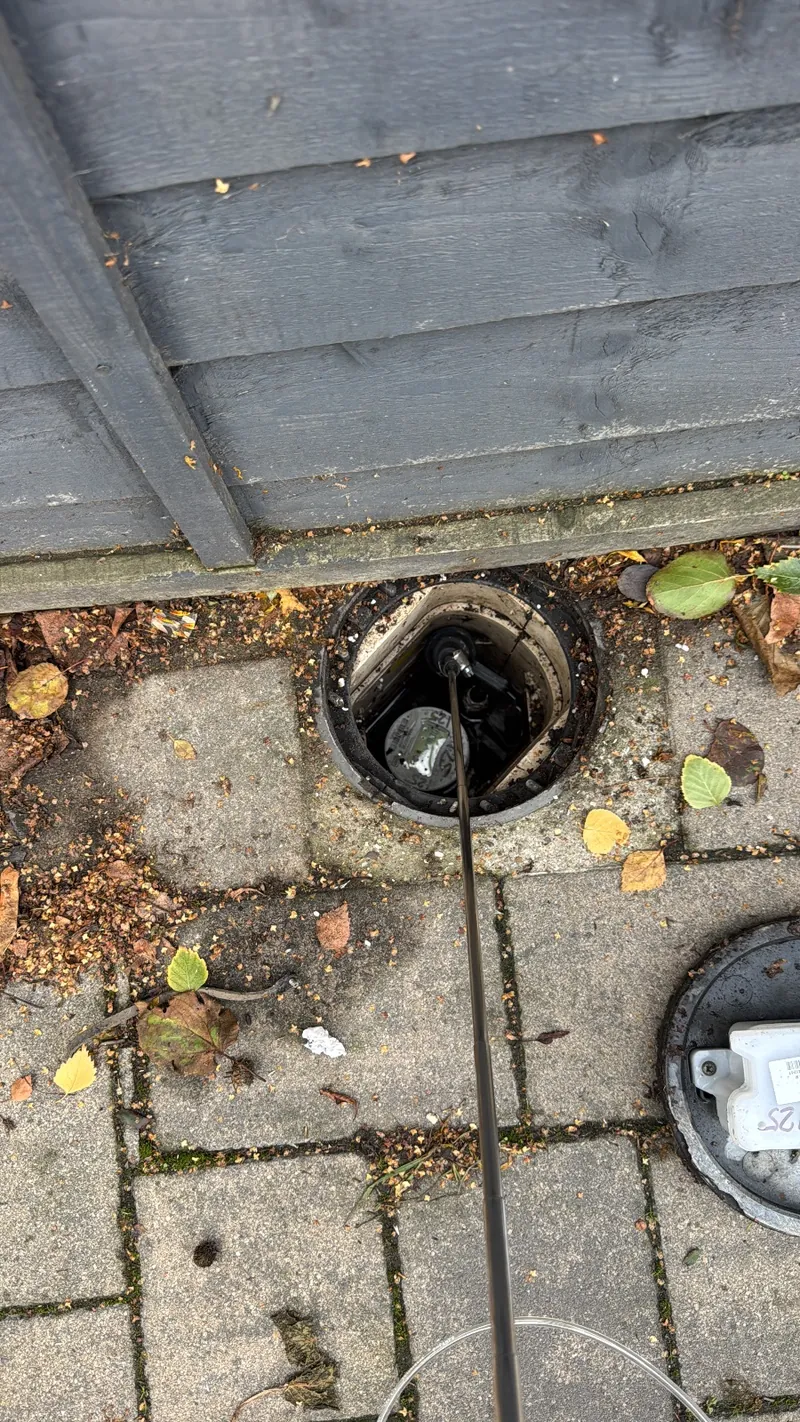
A surprising share of “impossible” readings are misreadings. Before you suspect a leak, rule out these four.
| Mistake | What it looks like | How to check |
|---|---|---|
| Reading the wrong digits | You included the red digits or dials, or digits after a decimal point, so the number is far bigger than your last one | WaterSafe says the black numbers show cubic metres and are the ones to record, red numbers or dials show litres and are not needed to submit a reading, and on digital meters you record only the numbers before the decimal point |
| Mixing up units | You compared a figure in cubic metres with one in litres, so one reading seems a thousand times bigger | One cubic metre is 1,000 litres. Write the unit next to every reading you note down |
| Reading a neighbour’s meter | In a shared pit or a row of meters, you photographed the one next to yours | Thames Water says to match the serial number on the meter with the one on your bill |
| Reading an old number | You compared today’s dial with a figure copied from an estimated bill rather than a real reading | Check whether your last bill said the reading was an estimate. See the estimated bill section below |
WaterSafe also notes that the serial number may include letters, digits, hyphens or slashes, so copy it exactly. Photograph the dial with the serial in the frame and the date on your phone. That one picture settles most arguments later, with a landlord, a neighbour or the water company.
Turn two readings into litres a day
Once you have two clean readings, the sum is short. Subtract the first from the second to get cubic metres. Multiply by 1,000 to get litres. Divide by the number of days between the readings. The result is your average daily use, and you can compare it with what the household would be expected to use.
Thames Water said on 19 June 2026 that average use in its region is around 140 litres per person per day. That is an average across everyone, so treat it as a rough yardstick rather than a target. Here are two invented households, to show how the arithmetic behaves.
| Step | Household A: four people | Household B: one person |
|---|---|---|
| First reading | 412 cubic metres on 1 March | 88 cubic metres on 1 March |
| Second reading | 431 cubic metres on 1 April | 107 cubic metres on 1 April |
| Difference | 19 cubic metres, which is 19,000 litres | 19 cubic metres, which is 19,000 litres |
| Days between | 31 | 31 |
| Litres a day | About 613 | About 613 |
| At 140 litres a person | Four people would be about 560 a day, so this is a little above average and unremarkable | One person would be about 140 a day, so this is roughly four times the average and worth investigating |
Same dial movement, opposite conclusions. That is why a reading in isolation is useless, and why the number of people in the home matters more than the number on the dial.
To see what the movement costs on a metered Thames Water bill, our arithmetic uses its 2026-27 charges: 273.46 pence per cubic metre for water and 147.21 pence for wastewater, which together come to about 4.21 pounds per cubic metre before fixed charges. Nineteen cubic metres is therefore about 80 pounds of volume charge. A leak of 400 litres a day, the upper figure Thames Water gives for a leaking toilet, adds 12,400 litres, or 12.4 cubic metres, over a 31-day month, which is roughly 52 pounds on the same rates. Those are illustrations of the method. Your bill is what Thames Water issues.
Ordinary reasons the gap is bigger than you expected
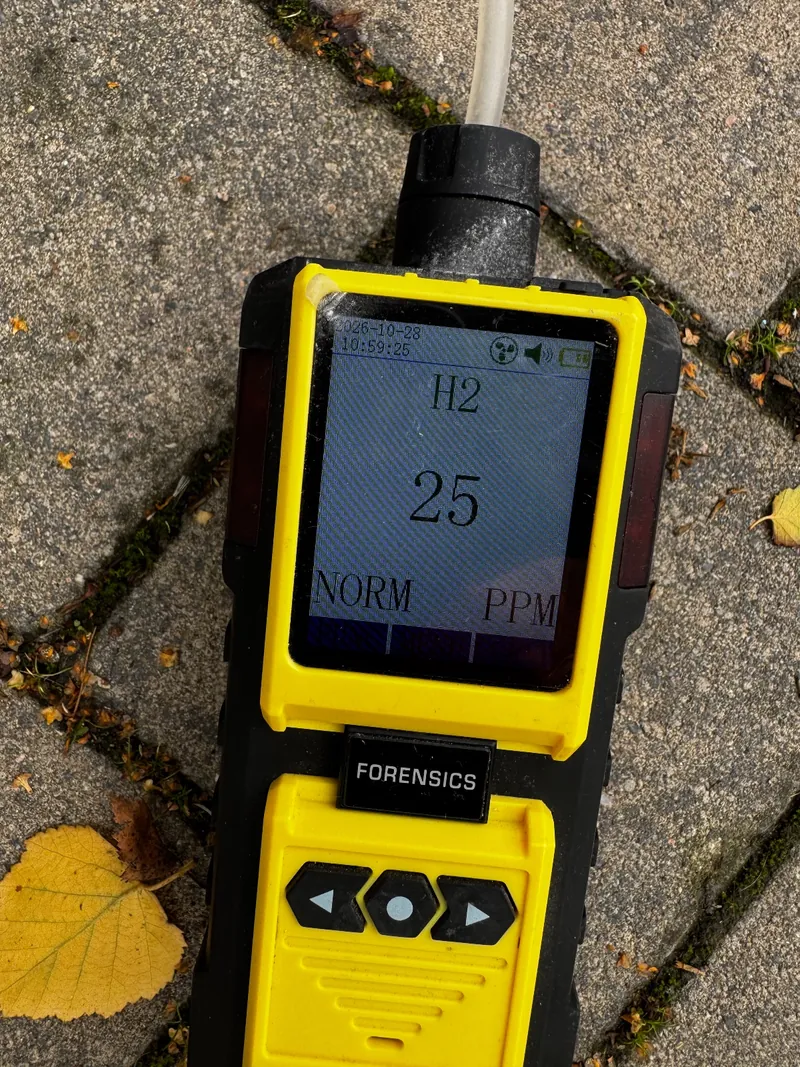
Thames Water lists extra occupants, weather, renovations and leaks as reasons for a higher bill. CCW gives a similar list: more people at home than usual, new appliances such as a power shower or a garden sprinkler, a previous estimated bill, leaks from pipes, toilets, taps or appliances, and home renovations. Two of those are about the reading itself, not about water use.
- Guests, a new baby, a lodger or a teenager who has discovered long showers. People are the biggest variable in a household.
- A hot spell, a paddling pool, or watering the garden. Thames Water points out that weather changes use.
- Building work. Plasterers, tilers and decorators use water, and a flat being renovated can show a one-off jump.
- A catch-up after an estimate. If the previous figure on your bill was estimated and too low, the next real reading includes the water that estimate missed. The reading is not wrong. It is finally accurate.
- A different measuring period. Comparing a 28-day gap with a 90-day gap makes the longer one look worse until you divide by days.
Work through those first. If the litres a day make sense for the people living there and the weather, the reading is probably telling the truth. If they do not, move on to the leak checks.
The quiet-house check: is it use or a leak?
Two bodies describe the same idea with different waiting times, and it helps to know both. CCW says to turn off all taps and water-using appliances, note the reading, wait a few hours and read again. If the second reading is higher and you are certain no water was used, you may have a leak. Thames Water’s version is shorter. It says to switch off appliances, close the inside stop valve, read the meter, wait 30 minutes and read again, and that a changed reading means a leak between the meter and the inside stop valve.
We use the half hour when we attribute the test to Thames Water, and the longer wait when a leak is slow, because a tiny leak may not move the last digit in 30 minutes. The full method, with the reading log, is in how to do a water meter leak test. A matching pair of readings tells you there is no leak on that stretch of pipe. It does not clear the pipe between the meter and the street, and it does not clear your internal plumbing if you test with the inside valve closed.
CCW adds a useful second step. If the dial moves with everything off, close the inside stop valve and check again. Movement then points to the supply pipe outside. If it stops, reopen the valve and recheck, and movement then points to a leak inside. That split saves a lot of guessing about where to look.
| What you see | What it suggests | Where to look next |
|---|---|---|
| Dial still, litres a day match the household | Use rather than a leak | Review habits, guests, appliances, garden |
| Dial moves with everything off and the inside valve open, stops when the valve is closed | A leak inside the property | Toilets first, then taps, appliances, hidden pipework |
| Dial moves even with the inside stop valve closed | A leak between the meter and the inside stop valve, which is the supply pipe | See leak between meter and house and signs of a mains water leak |
| Dial moves only at certain times of day | Something automatic, such as a cistern refilling, a softener, a garden system or a toilet that runs after use | Check what is on a timer or float valve |
The toilet is the usual suspect. Thames Water says a leaky toilet wastes 200 to 400 litres a day on average and that 1 in 20 households has one. Its pan test is to dry the back of the pan, wait 30 minutes after a flush, lay a dry sheet of toilet paper and leave it at least three hours or overnight. Wet or torn paper means a leak. For the cistern, mark the water level and check after 10 minutes, and a drop points to the flush valve.
Could the meter itself be wrong?
It is the question everyone eventually asks, and the honest answer is that we cannot tell you from the dial. CCW says the water company owns the meter and is responsible for maintaining it. If you think the meter is damaged, not working correctly or showing incorrect readings, CCW says to contact the company and then use its complaints process.
We have not found a page on Thames Water’s site that describes a meter accuracy test, what it costs or how you would ask for one, so we do not describe one here and we cannot say what Thames Water would do. What you can do is bring evidence. Dated photographs of the dial and serial number, your log of readings, and the result of the quiet-house check show whether the dial turns when no water is used. If it turns with every tap shut and the inside valve closed, the likeliest explanation is water leaving the pipework, and a leak on your side is far more common than a faulty meter. If it does not turn but your bill says you used a lot, that mismatch is exactly what you want to put to Thames Water in writing.
Thames Water says it takes its own meter readings at least every two years, partly to check for leaks and overcharging. Its pages differ on how often it aims to read, so rely only on the two-year minimum. If a visit is overdue, send your own reading through your online account.
If you have a smart meter
Thames Water says smart meters send readings each hour and that customers with an online account can track their use. That is useful here because a pattern shows what a monthly total hides. A steady flow through the night, when nobody is awake, looks different from a spike at breakfast. The pages we read do not describe alerts sent to households, so do not wait for one. Look at the usage chart yourself, and if you cannot see it, ask Thames Water what your account shows.
The rollout, what a smart meter can and cannot do, and what Thames Water says about the data are in Thames Water smart meter explained.
When the number on the bill was never a real reading
Thames Water says it sends an estimated bill if your meter has not been read, based on your previous readings or, with none, on the average of homes with a similar number of people. When it next receives a reading it adjusts the bill. If you have been surprised by a bill that suddenly jumped, an estimate catching up is one of the most common reasons, and the fix is to send a real reading rather than argue about the old one. Estimated water bill: what to do sets out the steps.
What to do next, in order
- Photograph the dial and the serial number today, with the date visible.
- Check the units and that the serial matches your bill.
- Work out litres a day from two readings and compare with the household.
- Run the quiet-house check, then the toilet checks.
- If the dial still moves with the inside valve closed, the leak is on the supply pipe outside. Read who owns the water supply pipe before you ring anyone, because the owner is generally responsible from the property boundary into the home.
- If you only have a high reading and no leak, contact Thames Water with your evidence and keep the replies.
If the checks point to a hidden leak, we find it with non-invasive methods before anything is dug up. Standard leak detection is £150/hr, with a typical visit at £325 to £400, and tracing a mains or supply pipe is a fixed £450, however long the job takes. Tracer gas is included in the price. No VAT charged. Repairs are quoted in writing after the leak is found and are not part of those figures. The pricing page explains the method, and you can report a leak to book. More bill and meter guides are in the guides hub.
