
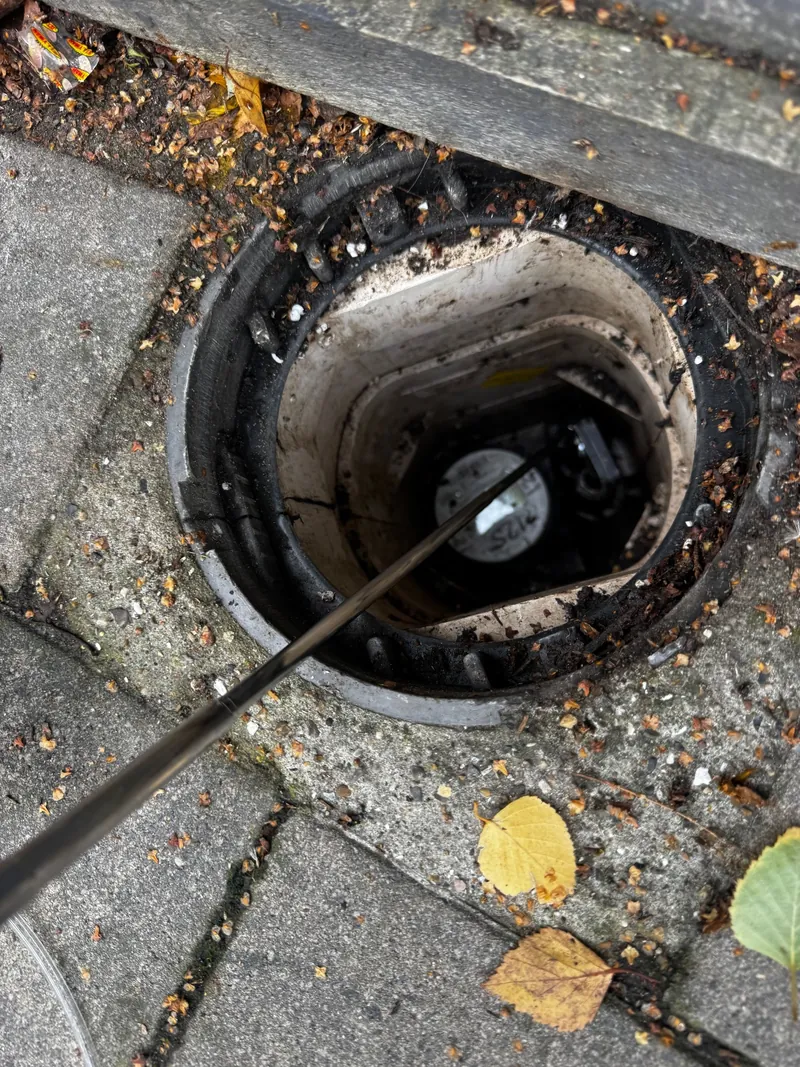
What the numbers on a meter mean
A water meter is a counter. It adds up every litre that passes through it and never goes backwards, so the figure on its face is the total since it was fitted, not what you used this week. To find your use over a period you subtract an earlier reading from a later one.
The unit is the cubic metre, written m³. One cubic metre is 1,000 litres, which is roughly five full baths. Thames Water’s meter page, read on 24 November 2026, says a metered bill shows charges for every cubic metre of water used, worked out from your two most recent readings, or a reading and an estimate.
If you are not sure you have a meter at all, or you cannot find it, start with where is my water meter. If your home is not metered, there is nothing to read, and how an unmetered bill is calculated explains what you pay instead.
Which digits to write down

Thames Water’s own help page on reading a meter does not explain the digits. It sends you to a video and does not describe colours or dials, so we cannot quote it on that point. WaterSafe, the industry register of plumbers, does set it out. Its advice, read on 24 November 2026, is below.
| What you see | What it means | What to record |
|---|---|---|
| Black numbers | Cubic metres used | Record these |
| Red numbers or red dials | Litres, the fractions of a cubic metre | Not needed when you submit a reading |
| Digital display | The same count shown on a screen | Record only the numbers before the decimal point |
| Serial number | Identifies the meter, may include letters, digits, hyphens or slashes, usually at the top of the case | Check it against your bill |
Meter faces vary between makes and between old and new meters, so treat this as the common pattern and check yours. If the layout on your meter does not match, take a clear photo and use the video Thames Water links from its page, or ask Thames Water.
How to take a reading, step by step
- Find the meter. Outside, it is usually under a small cover near the outside stop valve. Inside, it is usually under the kitchen sink next to the inside stop valve. Thames Water says to check the serial number against your bill so you read the right one.
- Open it safely, as described in the next section. Do not force a cover that will not lift.
- Clear the face. Outdoor meters may have a foam or polystyrene disc under the lid that you move aside to see the dial. Put it back afterwards. On a smart meter, a small antenna can block the view, and WaterSafe says to move it aside and put it back.
- Read the black digits from left to right, including any leading zeros. If the face has a decimal point, stop at the point.
- Write the reading down with the date. Take a photo with the serial number in view, so you can prove the date and the figure later.
- Close and replace the cover, then submit the reading through your online account if you want the bill to reflect it.
Read the digits as they are, not as you expect them to be. A rolling digit caught halfway between two numbers is the usual cause of a wrong figure. When a digit is between two numbers, take the lower one and read the next digit to the right to confirm. That is our own tip, not a Thames Water instruction.
Lifting the cover without hurting yourself

Thames Water warns that meter covers can be heavy. The Consumer Council for Water, the watchdog for water customers, warns against lifting a heavy metal cover and suggests using a screwdriver on the small inspection cover instead.
- Never lift a lid in a road or a busy pavement. A cover in the footway is also a trip hazard once opened.
- Lift straight up with a proper key or a large flat screwdriver, wearing gloves, and keep your fingers clear of the rim.
- Do not lift a lid that is cracked, sunk or rocking, because the chamber below may not be safe.
- Look before you reach in. Chambers collect mud and insects, and water after rain. If the chamber is full of water, see water meter box leaking or full of water.
- Put the lid back when you finish, and keep children and pets away while it is open.
If you cannot do it safely, do not do it. A plumber can read it for you, and an inside meter is far easier. We would also rather you wait for your next scheduled reading than risk a back injury for a figure.
Worked example: turning two readings into litres and a rough bill
The readings below are invented, not from a real property. They show the arithmetic. The rate used is Thames Water’s 2026-27 metered tariff from its charges scheme: 273.46 pence per cubic metre for water plus 147.21 pence per cubic metre for wastewater, which together make 4.2067 pounds per cubic metre. Fixed annual charges, any surface water drainage rebate and any wastewater adjustment are not included, so this is an illustration of the usage part only.
| Item | Figure | Working |
|---|---|---|
| Earlier reading, 1 May | 01482 | Black digits only |
| Later reading, 1 November | 01560 | Black digits only |
| Used in six months | 78 cubic metres | 1560 minus 1482 |
| In litres | 78,000 litres | 78 times 1,000 |
| Per day, about | 424 litres | 78,000 divided by 184 days; for the whole household |
| Usage charge, about | 328 pounds | 78 times 4.2067, before fixed charges |
Thames Water says average use in its region is around 140 litres per person per day (release of 19 June 2026). For a household of three, that average is 420 litres a day, so the invented figure sits right on it. If the same household had been using 900 litres a day with no change in habits, that gap is a reason to look for a leak. See what runs your water bill up the most for the usual causes, and average water bill in London for how Thames Water prices a bill.
Sending the reading to Thames Water
Thames Water says you can submit a reading online through your account, and that doing so helps keep the bill accurate for customers with mechanical meters. It says metered customers are billed every six months, and that if it cannot read your meter you get an estimated bill unless you provide a reading.
How often it reads the meter itself is stated differently on different Thames pages, so we quote the one fixed figure: it says it must take its own reading at least every two years. It also recommends taking your own readings a few times a year, to check for leaks and that you are not overcharged.
- Estimates use your historical use, or the average for similar homes if there is no history. When an actual reading arrives, the bill is adjusted.
- If an estimate looks wrong, Thames Water’s own page for estimated bills says to submit a reading. Our estimated water bill page covers what happens next.
- Smart meters send readings each hour, so there is nothing to submit unless you want to check the figure.
Keep a note of each reading you send, and the date. If a bill is disputed later, a dated list of photos is the best evidence you can have. See water bill too high: how to dispute it.
Using a reading to spot a leak
A meter is also the cheapest leak detector in the house, and two quick checks need nothing beyond a reading.
- The quiet-house check. With every tap and appliance off, read the meter, wait, and read again. The Consumer Council for Water says to wait a few hours, and that a higher second reading when you are certain no water was used may mean a leak.
- The 30-minute test. Thames Water’s version closes the inside stop valve first, then compares readings 30 minutes apart. If they differ, the leak is between the meter and that valve. The method and the results table are on our leak test page.
Matching readings mean no leak on the stretch of pipe the water passed through. They do not clear the water company’s side of the meter or a leak that only runs at certain times. A reading that moves with the inside valve closed points to the supply pipe, which is usually the owner’s to repair. Who owns what is set out in who owns the water supply pipe.
If the number does not look right
| What you notice | Likely explanation | What to do |
|---|---|---|
| Reading is lower than the last bill | You are reading a different meter, or a digit is misread | Check the serial number and reread, then photograph both |
| Reading is far higher than the bill implies | The bill was an estimate, or there is a leak | Submit the reading, then do the leak test |
| Dial or digits move with everything off | A leak, a refilling cistern or an appliance | Run the 30-minute test |
| Display is blank, cracked or fogged | A damaged meter | Photograph it and contact Thames Water |
| Meter will not move at all in a full house | Possibly not your meter, or a fault | Check the serial, then contact Thames Water |
The Consumer Council for Water says the water company owns the meter and maintains it, and that if you think it is damaged, not working or showing incorrect readings you should contact the company. The pages we read do not describe a meter accuracy test or its cost, so we do not describe one. For more on a high reading see why is my water meter reading so high.
When a reading says there is a leak
If the reading keeps climbing with everything off, the water is going somewhere. Our trace of the supply pipe is a fixed £450, however long the job takes, and tracer gas included in the price. No VAT charged. A repair is quoted in writing once the leak is found. The pricing page explains the method, and our guides cover the next questions.
To book, report a leak or ring 020 3961 5444.
