
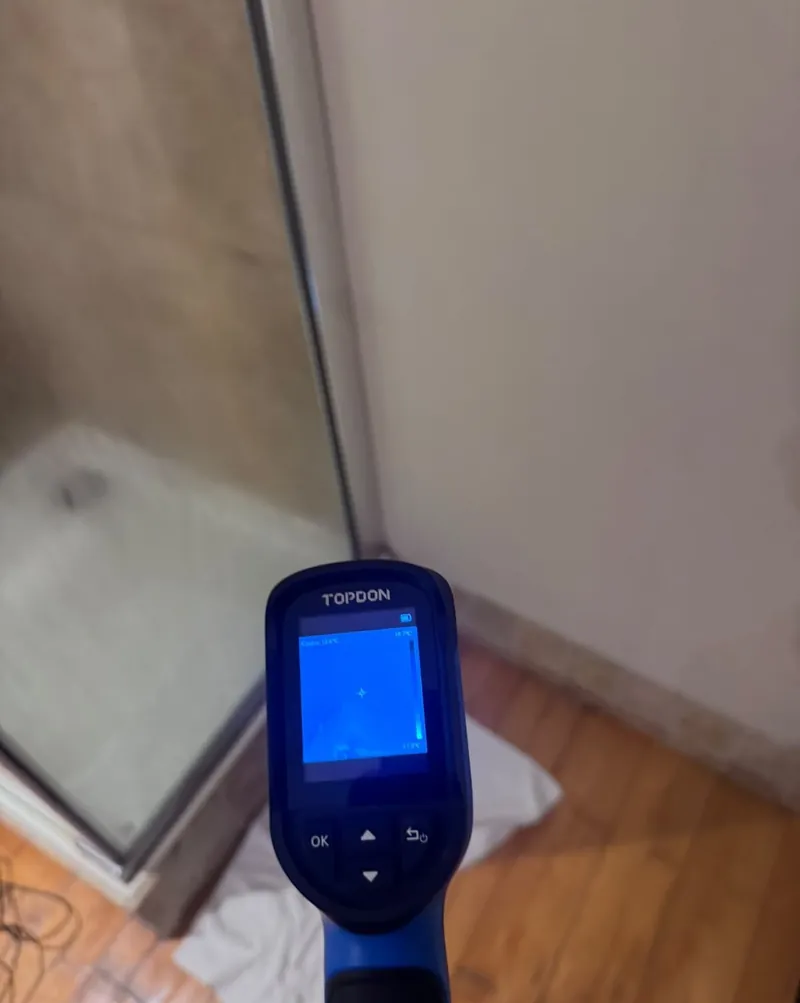
Why a shower is a hard place to find a leak
A shower puts a lot of water into a small area, and that water has several ways out of the visible space. It can run off the tray into the waste, seep under the tray edge, pass through a cracked or failed seal, leak from the waste connection beneath the tray, or escape from the hot and cold pipes feeding the shower. Each looks much the same from the outside: a stained ceiling below, a soft patch on the bathroom floor, or damp on the wall behind the enclosure.
The problem is that those routes have different fixes. Re-sealing a tray edge is a small job. A leaking waste may mean getting under the tray. A leaking supply pipe may mean opening a wall. Paying for the wrong repair means the damp comes back, so it is worth establishing which route the water takes before anyone starts removing things.
That is what a dye test is for. It does not look for a leak with equipment. It makes the water path visible.
What a dye test shows
A dye test adds a harmless coloured liquid to water on the surface being tested, so you can see where that water goes. In a shower, the dye is introduced onto the tray or along a seal while water runs, and we watch where it travels: down the waste, along the tray edge, into a joint or under the enclosure. If dye then appears somewhere it should not, such as at a ceiling below or inside an access hatch, the water path is confirmed.
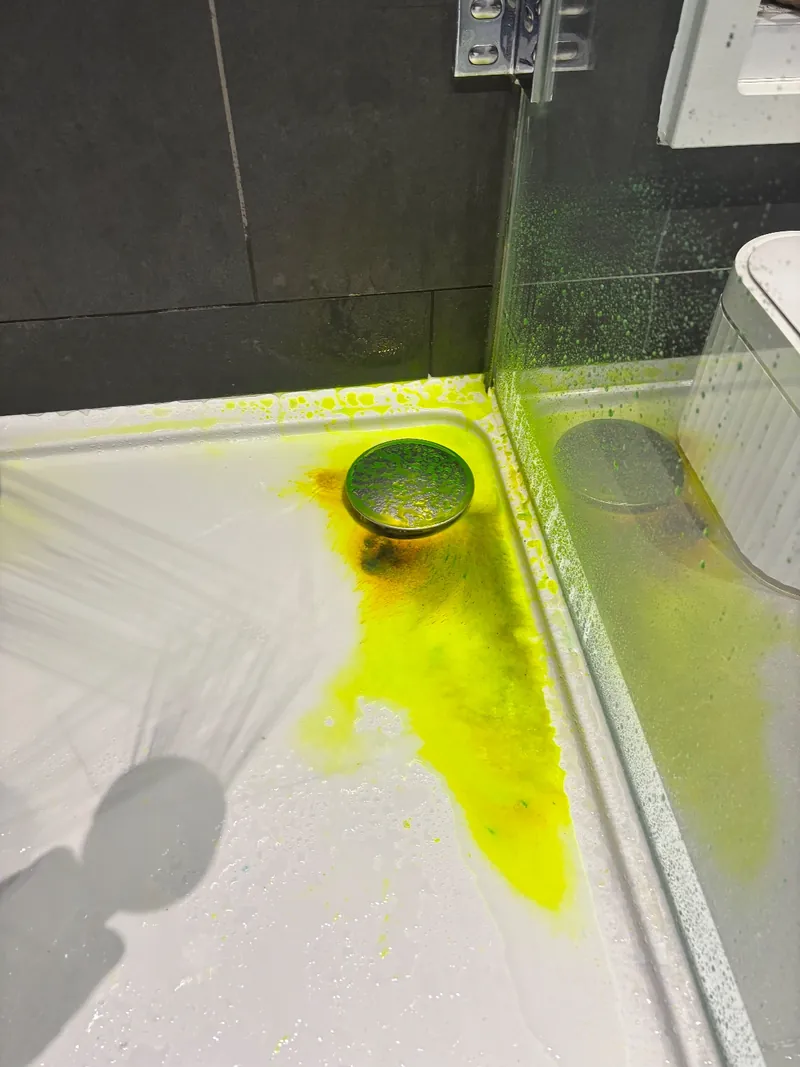
The advantage is that it ties a symptom to a route. A damp patch tells you water has been somewhere. A dye test can show that water entering at a particular point arrives at the damp patch. The limit is that it only tests the route you test. A clear dye test on the tray does not mean the supply pipes are sound, and a result that shows dye at one point does not exclude a second leak elsewhere.
We describe a similar job on the Islington shower dye test case study. It is one job in London and every bathroom is different.
Safe checks before a visit
These need no tools and do not damage anything.
- Look at the silicone or sealant around the tray and the enclosure. Gaps, black mould, peeling or a joint that feels spongy are all worth noting.
- Run the shower for a few minutes with the screen shut and check the outside of the enclosure and the floor at its foot for water.
- Look at the bathroom ceiling, or the ceiling of the room below, for stains and note whether they spread after a shower.
- Check the wall beside the enclosure and the skirting for damp or lifting paint.
- Take a few dated photographs, so you can show the damp is changing over days.
If the damp appears only after showers, the shower area is the first suspect. If it appears with no one using the shower, the supply pipes or the heating are more likely. The water meter leak test helps tell the difference: if the meter moves with everything off, the water is leaking under pressure.
Stop using the shower if water is clearly coming through a ceiling, and keep clear of any water near light fittings. Turn the lighting circuit off at the consumer unit only if you can reach it safely.
What we do in the first hour
The first hour costs £100. On a suspected shower tray leak a visit often runs like this.
- We ask where the damp is, when it appears and whether it follows shower use.
- We inspect the tray edge, the seals and the enclosure, and take moisture readings on the walls, floor and any accessible ceiling.
- We run a dye test on the tray and along the seals while watching the likely exit points.
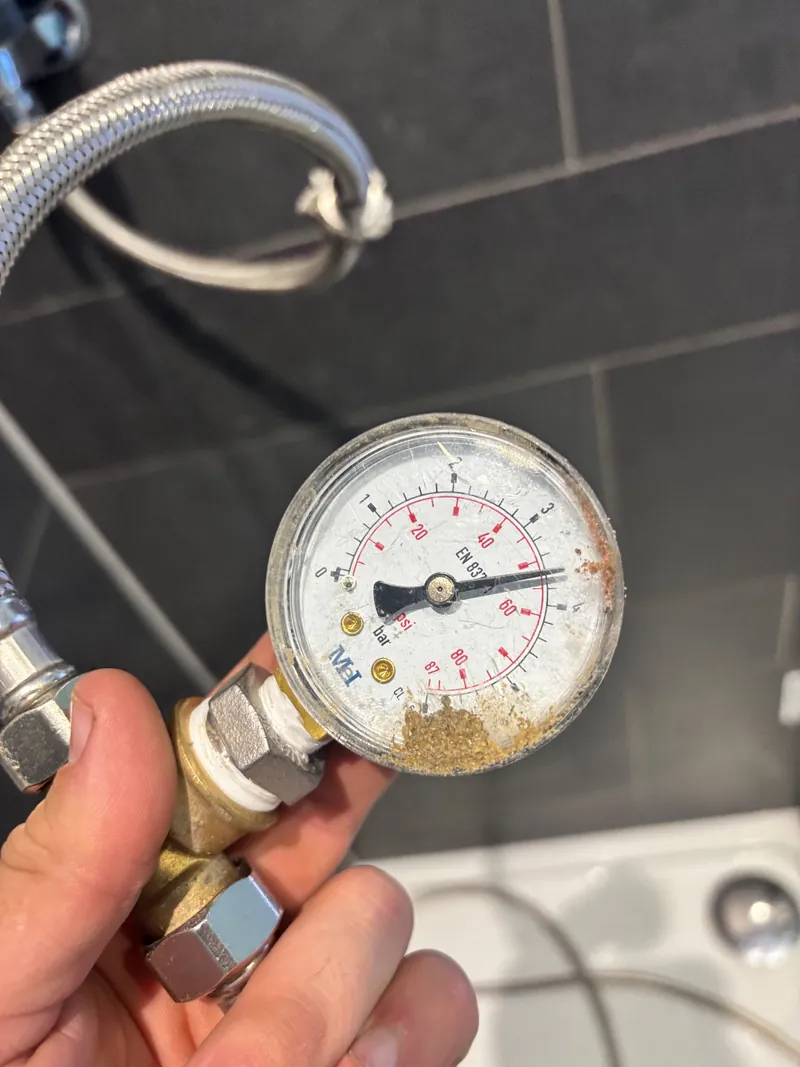
- We pressure test the hot and cold feeds to the shower, to see whether the supply is holding. A gauge is fitted to a connection and the pressure is watched over time.
- We tell you what the dye and the gauge showed, which routes are ruled out and which are not, and we write up the repair and its quote.
The standard rate includes tracer gas, acoustic detection, thermal imaging, an endoscopic camera inspection, a trace and access report for your insurer and a written quote for the remedial works. A thermal camera or a moisture meter often helps where the damp is hidden. Tracer gas or acoustic work is held back for cases where the dye and pressure tests point away from the tray. Our pressure test pipework page explains the gauge test in more detail.
What a first hour can achieve
| Outcome | What it means for you |
|---|---|
| Find it | The dye or the damp pattern points to the edge, the seal, the waste or the supply. |
| Confirm it | The route is watched, repeated and checked against the pressure result, so it is not a guess. |
| Quote the fix | A written repair quote, in parts and work, which you can accept or take elsewhere. |
| Sometimes fix it | A failed seal on an accessible tray can sometimes be dealt with in the same visit once the quote is approved. A tray, a waste or a supply repair usually takes longer. |
Fixes like re-sealing need the surfaces to be dry before the new sealant goes on, and sealant needs time to cure before the shower is used. We say what is needed when we quote.
What usually needs more than an hour
We would rather tell you now than surprise you later. A shower tray job may take longer, or need a return visit, when:
- The tray is boxed in, tiled to the tray edge or has no access panel, so seeing the waste means taking something apart.
- The dye result is unclear, because the water has been soaking into a floor or wall for a long time and shows up in several places.
- The leak comes from the waste pipe under the tray rather than the tray surface. That is covered in a waste pipe leak under a shower.
- The tray edge has rotted the floor or the surround. See rotten shower tray edge leak in one hour.
- The pressure test shows a drop, which means a supply pipe needs tracing, and that can take longer than a first hour.
- The ceiling below is badly damaged and drying, access and repair of the finish are needed before the leak repair can be judged.
- The shower is in a flat and the repair needs consent from the managing agent or the neighbour below.
A ceiling stain below a shower can come from the shower or from something else entirely. The shower waste leak case study and the thermal imaging scan in one hour page show how other checks fit in.
What it would cost under the pricing
Standard leak detection is £100 for the first hour, then £150 an hour, billed in half hours after the first hour. Everything is included: tracer gas, acoustic detection, thermal imaging, an endoscopic camera inspection, a trace and access report for your insurer and a written quote for the remedial works. No VAT charged, and there is no parking charge.
| Time on site | Total |
|---|---|
| 1 hour | £100 |
| 2 hours | £250 |
| 3 hours | £400 |
These are totals worked out from the rate, not the price of any past job. A typical survey of two and a half to three hours is £325 to £400. We call you before the survey goes past 3 hours. No find, no fee: if a leak is present and we do not find it, you pay nothing.
The repair is separate. Re-sealing, a new tray, a waste repair or a pipe repair is quoted in writing after the leak is located, with the work set out. We do not publish repair prices on the site because the fix depends on the bathroom. See the pricing page for the full rate card and the plumbing leak repair page for how repairs work alongside detection.
What you get in writing
A shower leak often involves a neighbour, a landlord or an insurer, so the written finding matters as much as the fix. Our report says what was tested, what each test showed, including the routes that were ruled out, and what we recommend, with photographs. You can see the layout in the sample report.
We do not say what a landlord, managing agent or insurer will accept. If a claim is possible, the escape of water claim checklist lists what to gather, and your own policy wording decides what applies.
When to call
Call when:
- a ceiling below a shower is stained and you need the source confirmed
- the seal looks failed but you are not sure the seal is the whole problem
- a floor beside the shower is soft or damp
- you have re-sealed the tray and the damp keeps returning
- you let a property or manage a block and need a written finding
Book through report a leak or call 020 3961 5444. We confirm the rate and the time before anyone travels. The wider offer is leak detection for £100 for the first hour, the other jobs are in leak jobs that can be solved in one hour, and the guides cover the rest.
