
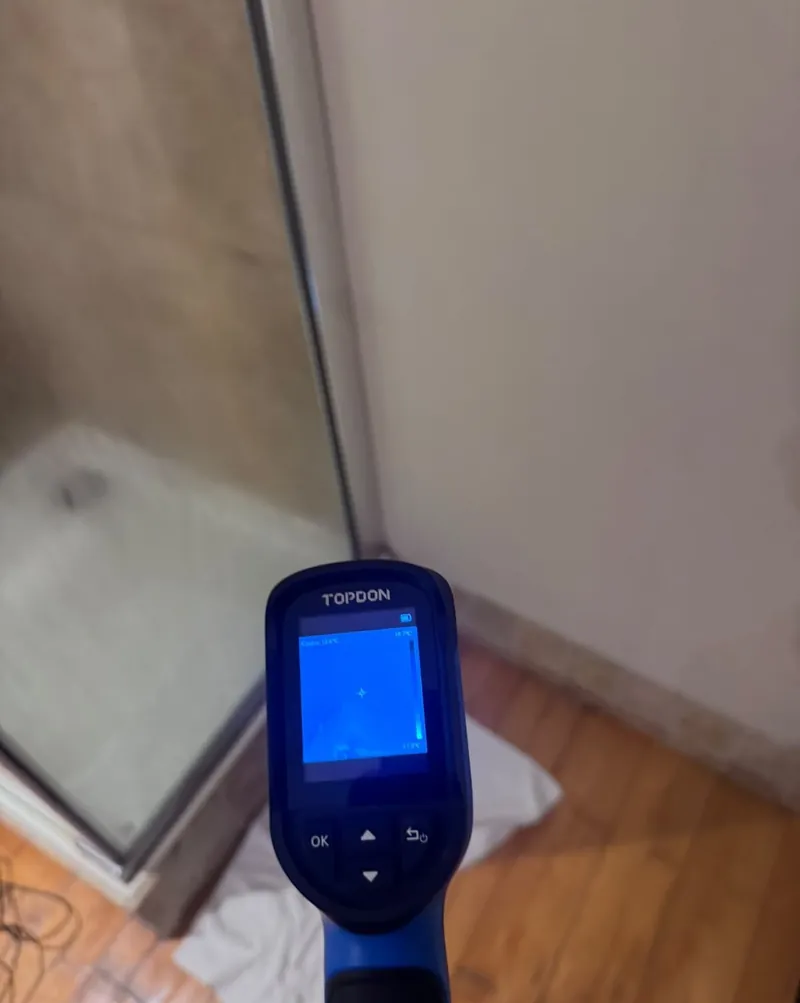
The problem
A flat in Islington had water coming up through the bedroom floor. The bedroom sat next to the bathroom, and the occupant wanted to know whether a pipe had failed. A failed pipe under a floor is the version of this problem that people fear, because it means lifting boards and it means a repair bill.
Water that appears in a bedroom is easy to blame on the plumbing. It is also easy to blame wrongly. A shower can be the real cause with no pipe at fault at all, and the only way to tell is to test in a sensible order, cheapest and least disruptive first.
What we checked
We went to the pressurised pipework first, because a leak there is the serious one and a clean result lets you move on. A pressure gauge was fitted at the shower valve connection so that the test would include the fittings used every day, not just the pipes behind a wall. The aim was to replicate the shower in use.
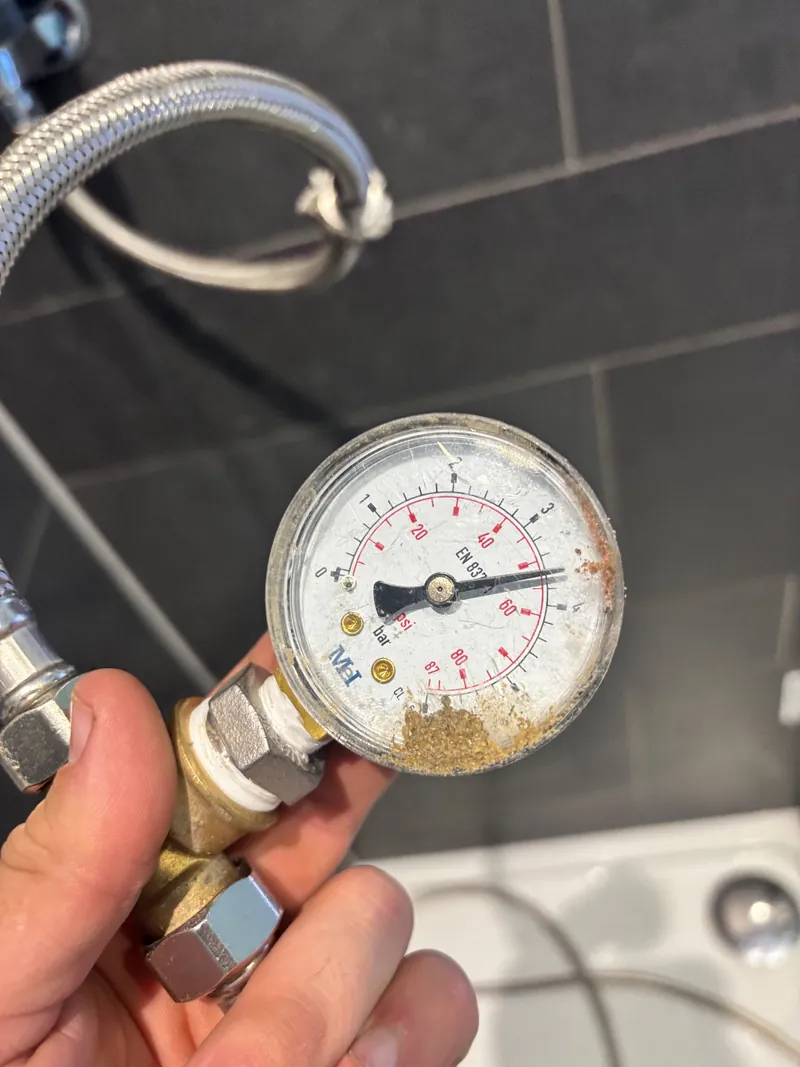
There was no drop in pressure. That is the useful result in this case: whatever was putting water in the bedroom, it was not a pressurised pipe losing water while under test.
When the pipes are clear, the next suspect is water that escapes after it has been used, through the surfaces around the shower. So we ran a dye test.
- Fit a pressure gauge at the shower connection and test the supply as it would be used.
- If pressure holds, stop looking for a pipe leak and look at the shower surfaces instead.
- Put coloured dye into the water on the shower tray and watch where it goes, and where it does not go.
- Look at every joint, seal and grout line the dye touches.
- Tell the occupant what to watch for afterwards.
A dye test is blunt and it works. Coloured water is easy to see, it does not need any equipment to interpret, and if coloured water later turns up on the other side of a floor, you know the route. We have a longer explanation of the methods on the what leak detection does and does not include page.
What we found
We identified three points in the shower where water could get through. One was damaged grout. The other two were faulty mastic, the flexible sealant at the edges of the tray and the walls.
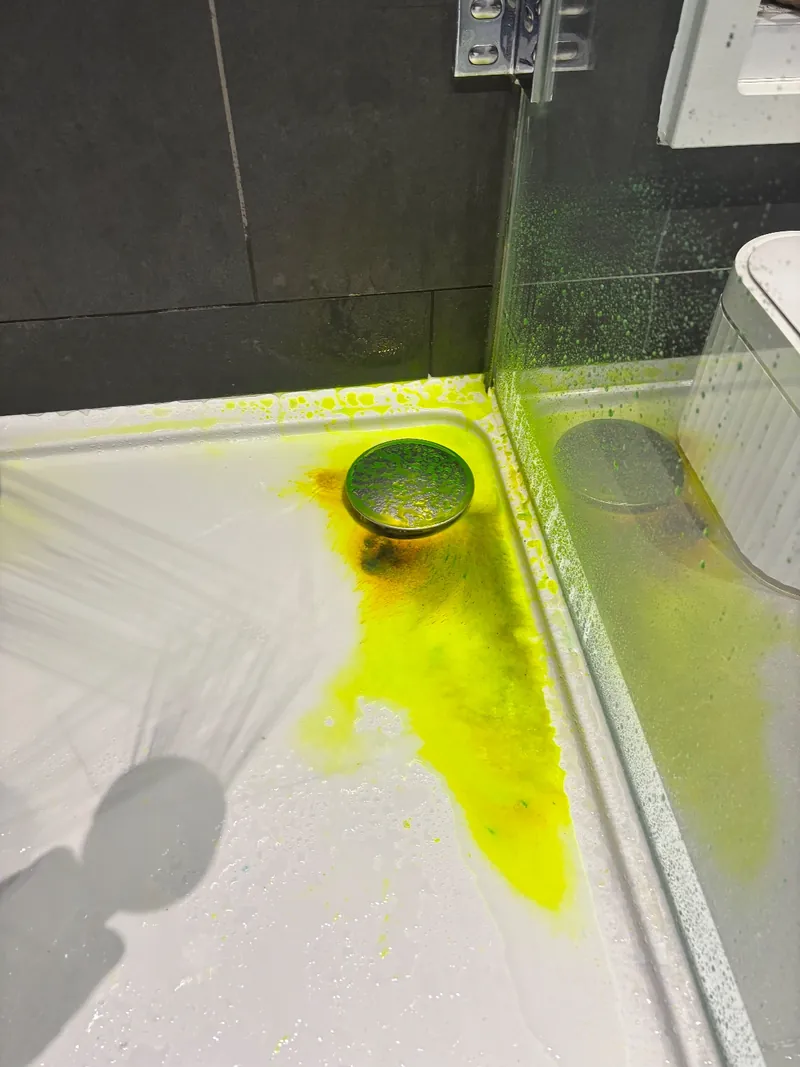
Neither of those is a pipe. Both are the sort of defect that gets worse slowly. A shower with a failed seal still works, nobody notices anything wrong, and a small amount of water escapes with each use. Over time that water finds the floor, then the ceiling, or a bedroom.
The record does not say whether the three points were resealed on the visit. What it does say is that the occupant was told to get in touch if green water came up through the floor. That instruction matters: it turns the dye into a check that carries on after we have left.
What we did on the visit
The visit was short on equipment and long on method. A gauge, a dye and careful looking found a cause that a pressure test alone would have missed. We have not put a time on it, because the job record does not say how long it took.
This is the kind of job that suits a first hour. The tests are quick, they are cheap to run, and the answer fits in a sentence. A job like this is small. Others are not, and nobody can honestly promise a fixed duration before they have looked.
If you have damp or water in a room next to a bathroom, our page on moisture mapping and damp diagnosis explains how we separate a leaking pipe from a failing seal from condensation.
What a visit like this costs under our pricing
We have not reprinted what this customer paid, and none of this is a quote for your property. Here is how our current pricing would treat a visit of this kind.
Standard leak detection is £100 for the first hour, then £150 an hour. After the first hour, time is billed in half hours at £75 each. The first hour is the minimum charge, so a short visit costs £100. Two hours is £250 and three hours is £400. A typical survey is £325 to £400. Everything included: tracer gas, acoustic, thermal imaging, camera inspection, insurer report and a written repair quote, no parking charge
- tracer gas, acoustic detection, thermal imaging, an endoscopic camera inspection, a trace and access report for your insurer and a written quote for the remedial works
- We call you before the survey goes past 3 hours
- No VAT charged
- No find, no fee: if a leak is present and we do not find it, you pay nothing
Resealing a shower is repair work, quoted in writing and kept apart from the survey. The pricing page shows how it fits.
What to take from this
- If the pipes hold pressure, the leak is usually somewhere water goes after it has been used.
- Failing grout and mastic can let water reach a floor without any pipe being at fault, and they are cheap to check.
- A dye test costs little and shows the route in colour.
- Ask what to watch for after the visit. If water stays away, the cause is probably resolved. If green water comes up, you have your answer and your evidence.
- Do not lift boards or hire a plumber to chase a pipe until the pressure test says there is a pipe to chase.
To arrange a check, report the leak. If the damage may become an insurance claim, our escape of water claim checklist lists what to keep, and the guides hub covers the rest.
