
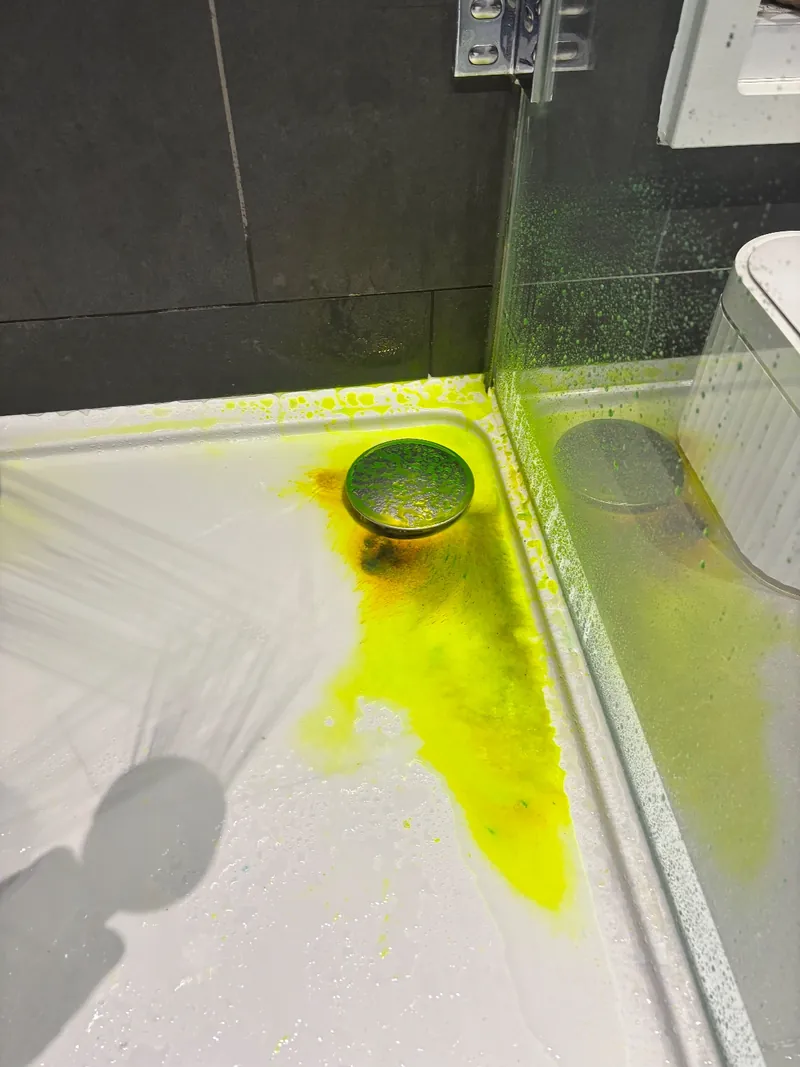
The problem
The call came from a maisonette in Croydon. Water was dripping through the ceiling of the flat below, and the people living there needed to know where it was coming from. A plumber had already looked and given an opinion: the bathroom waste pipe in the flat above, fixed by getting in from the neighbour's side downstairs.
That is a reasonable guess, and it was close. But a guess is not a diagnosis, and getting into a neighbour's ceiling is a big ask. The brief we were given was simple: confirm the source, and give a fixed price to put it right.
This is the most common shape of an escape of water in London flats. The damage shows up in one home and the cause sits in another. Nobody in the flat below can see the pipe, and nobody in the flat above can see the damp. If you are in that position, our page on what happens on the day of a leak detection visit covers what to expect before anyone arrives.
What we checked
We started with a plain look at the damaged ceiling and at the bathroom above. Before any equipment comes out, the room usually tells you where to point it. The shower was the obvious suspect, since the leak was in the ceiling below the bathroom, but a suspect is only a suspect.
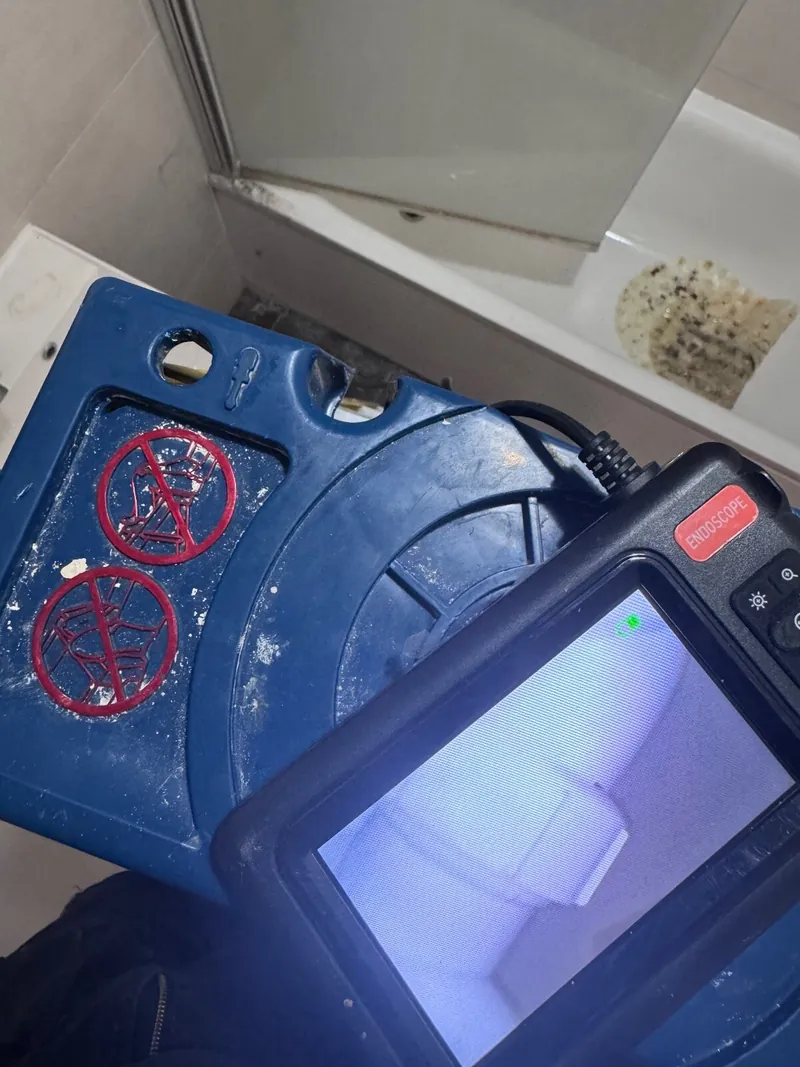
Next came an endoscopic camera, a thin inspection camera on a flexible lead, to look at concealed pipework without lifting anything. It is a good first tool because it costs the property nothing. Then the test that mattered most: we ran the shower under controlled conditions and watched the ceiling below.
- A visual inspection of the damaged ceiling and the bathroom above.
- An endoscopic camera inspection of concealed pipework.
- The shower run on purpose, with someone watching the ceiling below, to see whether the leak depended on the shower being used.
- An access opening in the ceiling below, once the shower had been linked to the leak, so the underside of the bathroom floor could be seen directly.
Running the shower and watching for water is the opposite of clever. It is also the test that turns "probably the bathroom" into "it is the shower". Water began to come through the ceiling while the shower ran. That tied the leak to the shower installation and ruled out a leak that was just sitting there on its own.
What we found
With the ceiling opened up, the underside of the bathroom floor and the shower waste pipework were in view. The shower waste pipe had come loose from the shower trap. Whenever the shower ran, water that should have gone down the drain escaped at that joint, collected in the void between floor and ceiling, and then tracked through to the flat below.
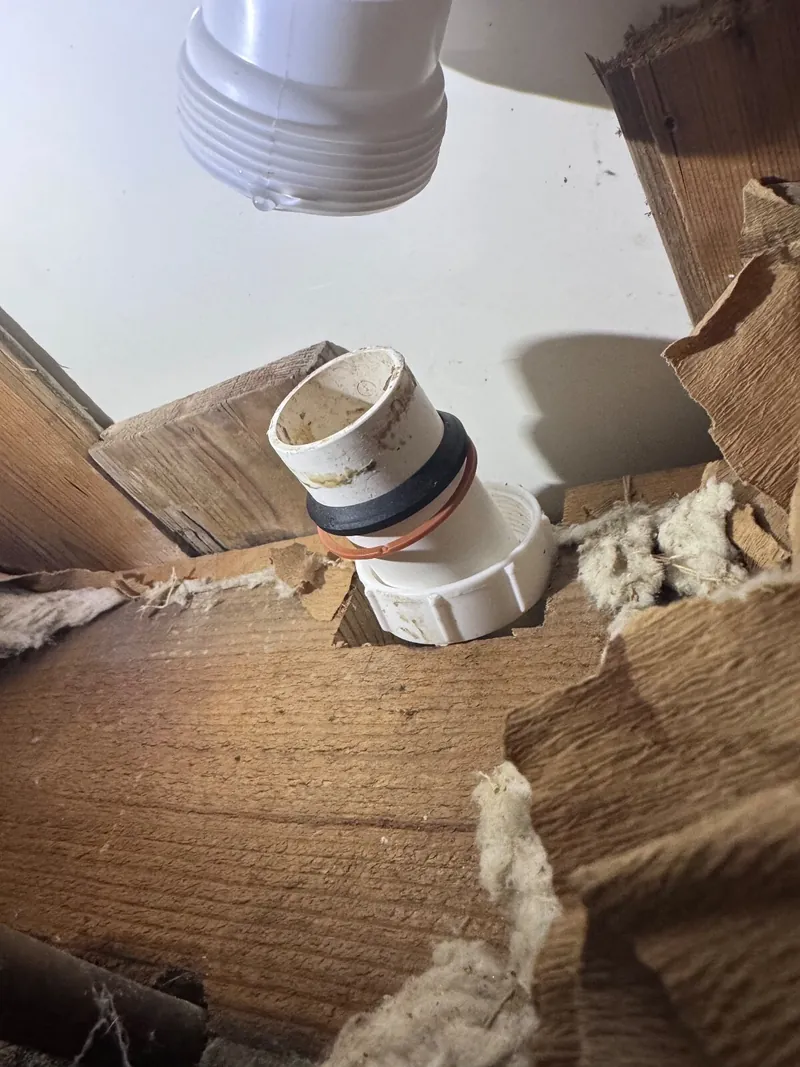
It is worth being clear about what this was not. It was not a burst pipe, and it was not a hidden leak on the pressurised supply. It was a waste connection that had worked loose, which only leaks when water is poured down it. That is why it can go unnoticed: no meter spins, no bill jumps, and the leak stops the moment the shower is switched off.
What we did on the visit
Once the joint was in sight, the fix was small. The existing washers were replaced, the connecting nuts were put back where they belonged and tightened, and the connection was checked to confirm it was seated properly.
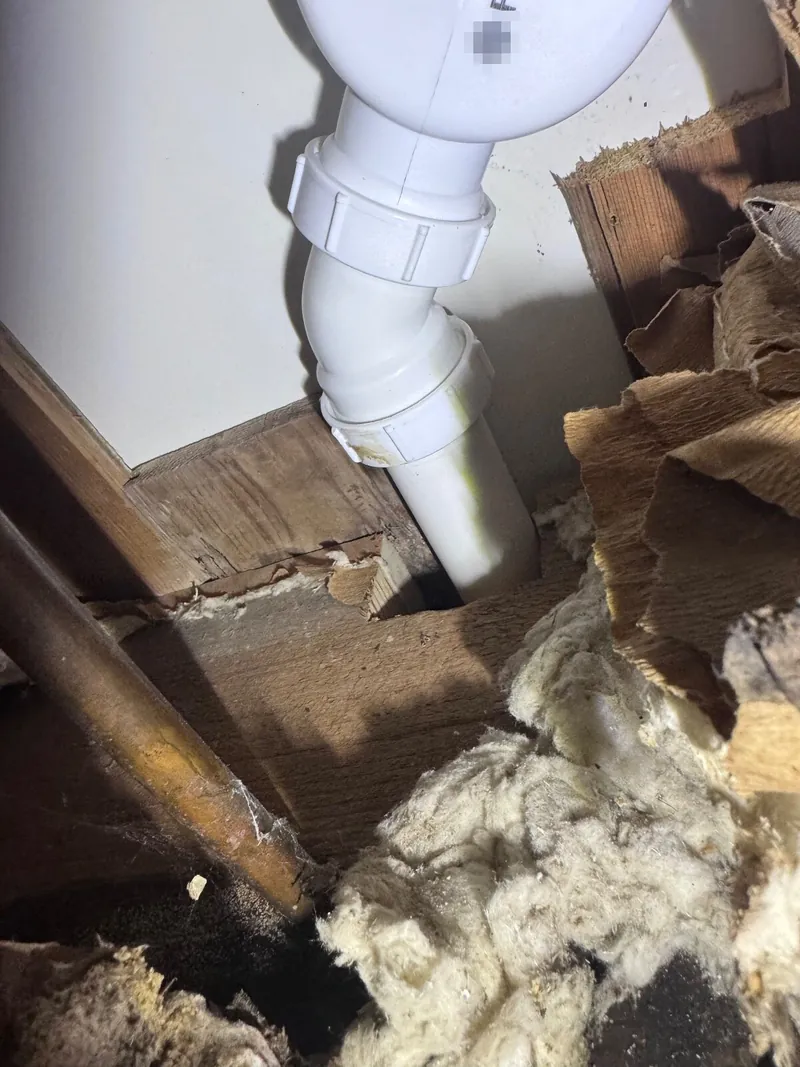
Then we tested it, because a repair nobody has tested is only a hope. The shower was run continuously for around 15 to 20 minutes while we watched the repaired connection, the surrounding pipework and the ceiling below. No water escaped from the joint and no more water came through the ceiling. Based on that test, the original leak was stopped on the day.
We have not put a time on the whole visit, because the job record does not give one. What the record does show is the order of work, and that order is the useful part: look, confirm with the shower, open up only where the evidence points, repair, retest.
One thing the visit did not do was dry out or redecorate the damaged ceiling below. Repair of the stopped leak and repair of the damage it caused are separate pieces of work, and the second one needs the ceiling to dry first.
What a visit like this costs under our pricing
We have not repeated what the customer in this case paid, and you should not read any figure here as a quote for your own property. What follows is how our current pricing would apply to a job of this kind.
Standard leak detection is £100 for the first hour, then £150 an hour, billed in half hours after the first hour (£75 per half hour). The first hour is the minimum charge. A visit that runs to two hours is £250, and three hours is £400. A typical survey comes to £325 to £400 in total. Everything included: tracer gas, acoustic, thermal imaging, camera inspection, insurer report and a written repair quote, no parking charge
- tracer gas, acoustic detection, thermal imaging, an endoscopic camera inspection, a trace and access report for your insurer and a written quote for the remedial works
- We call you before the survey goes past 3 hours
- No VAT charged
- No find, no fee: if a leak is present and we do not find it, you pay nothing
The repair in a case like this is separate. Repairs are quoted in writing and never priced on this site, because the right fix depends on what is behind the panel. You find out the cost before any repair starts. The full breakdown is on the pricing page.
What to take from this
- Say when the leak happens. "Only when the shower runs" is more useful to an engineer than any amount of damp photographs.
- A plumber's guess about where the leak is can be right and still need confirming before anyone opens a ceiling.
- Test the cause before you repair it, then test the repair. Both tests here were the shower, run on purpose.
- Ask whether the access opening is in the right place before it is made. Here it was cut in the flat below, with the leak already confirmed.
- If you are the one with the damaged ceiling, report the leak early and keep the evidence for your insurer. The escape of water claim checklist lists what to gather.
If you want to know how a visit like this is written up for an insurer, see the leak detection report for an insurance claim. For the wider range of methods we use, the guides hub has the rest.
