
What MDPE is, and why the pipe is blue
MDPE stands for medium-density polyethylene. It is a flexible plastic that comes in long coils, which is why one length can run a long way under a garden without a joint. If you have seen a blue pipe at the bottom of a trench or poking out of the ground beside a stop tap, there is a good chance it was MDPE.
The Drinking Water Inspectorate (DWI), the regulator for drinking water quality in England and Wales, says plastic water pipe is typically blue, and that older plastic pipe may be grey or black. We read that on 25 November 2026. The same page describes copper as bright, hard and dull brown, and iron as dark and very hard, possibly rusty. Colour is a clue, not proof. In our experience blue is the usual colour for pipe carrying drinking water underground, but we found no primary source that sets out the colour code, so do not treat a blue pipe as certain evidence of what is inside it or what it is made from.
This page explains the pipe itself: where it turns up, how to recognise it, how it fails and what that means for finding a leak. For all the materials side by side, see water supply pipe materials in the UK. For ownership of the pipe, see who owns the water supply pipe.
Where you will find blue pipe in a London home
Thames Water’s lead pipe replacement page, which we read on 25 November 2026, says the pipe Thames Water installs when it replaces a lead communication pipe is 25mm plastic. It also says smaller existing pipes of 12 to 15mm are replaced with the standard 25mm size. That tells you plastic is in current use in London under the street. It does not tell you what is under your own garden, because the pipe you own may have been laid by a previous owner or a plumber decades ago.
Thames Water’s pipe responsibility page, read the same day, describes the supply pipe as the pipe that runs from your property boundary into your home, usually under land such as a garden or driveway. DWI describes the section from the street main to the outside stop valve as the water company’s communication pipe. So blue pipe can appear in two ownership zones: the water company’s section near the boundary and your own supply pipe beyond it. Where one stops and the other starts is set by the boundary, not by what colour the pipe is. Boundary box and stop tap: who owns it covers that line.
- Under the garden or drive, running from near the boundary to the house. This is the classic place, and the one our surveys most often involve.
- Coming up through the floor or a wall where the supply enters the house, often near the inside stop valve. Where is my stopcock in a house helps you find that point.
- Running on to a detached garage, a shed, a studio or a garden tap. The branch is often smaller than the main supply pipe. Water leak in a garage or outbuilding supply covers those runs.
- Inside some homes, though in our experience internal pipework is more often copper or a different plastic, and we cannot give a London-wide proportion.
A house can have several materials at once. A lead or old iron pipe replaced in sections often ends up with blue plastic for the new run, joined to the old pipe at a fitting. That junction is worth knowing about, and we come back to it below.
How to recognise it, and what to rule out
You can often see MDPE where the supply enters the building or at the outside stop tap chamber. Use a torch, keep your hands clear of any sharp fitting edges, and do not cut, scrape or heat a pipe to find out what it is.
| Material | What DWI says it looks like | Our working note, not a published rule |
|---|---|---|
| Plastic, blue | Typically blue. Older plastic may be grey or black | Flexible when you press it, light, no ring when tapped. Joints are usually a bulky fitting, not a soldered neck |
| Copper | Bright, hard, dull brown | Rings when tapped, neat solder or compression joints |
| Iron or steel | Dark, very hard, may be rusty | Heavy, magnetic, often threaded joints |
| Lead | Dull grey, soft, shiny silver when scraped | Not blue. See how to tell if you have a lead water pipe before touching it |
Two cautions. First, a short blue stub at the stop tap does not prove the run behind it is plastic, because a replaced section is often joined to older pipe. Second, some other blue or coloured plastic exists in homes: waste pipe, gas pipe and electrical conduit can all be coloured. If you are not sure that the pipe carries water, ask a plumber, and never assume a buried blue pipe is a water pipe before you dig.
How blue pipe fails

We could not find a primary source, from a water company, a regulator or a standards body that we could open, that gives failure rates or causes for household plastic supply pipe, and we give no percentages. What follows is what we see on jobs, and it should be read as practitioner experience. An engineer who sees your pipe may tell you something more specific.
- Joints and fittings. In our experience most leaks on blue pipe are at a joint, a connection to older pipe, or a fitting that was not fully made, not along the length of a coil. Where plastic meets metal is a common place to look.
- Pressure from the ground. A pipe laid on sharp stones, rubble or a hard edge can wear or dent over time. Settlement, tree roots and later digging can also press on the pipe. See tree roots damaging a water supply pipe.
- Damage from later work. A spade, a post hole, a patio base or a trench for another service can nick the pipe, and the leak may start months later.
- Kinks and tight bends. Flexible pipe forced round a tight corner can be stressed there. A kink can also restrict flow, so low pressure is sometimes a pipe problem and not a supply problem.
- Frost. Plastic can still freeze and split if it is too shallow or exposed. The Water Supply (Water Fittings) Regulations 1999 say a buried fitting needs enough cover to prevent freezing. That is a requirement to protect the pipe, and it does not give a depth for yours. See how deep is a water supply pipe in the UK.
We do not say blue pipe is more or less reliable than copper. Plastic does not rust, which is a real difference from iron and some copper failures, and manufacturers make strong claims about service life. We found no regulator figure for how long any household pipe lasts, so we publish none. How long do water pipes last in the UK explains what to do instead: judge the pipe by its history and condition.
Why a leaking plastic pipe is harder to find
In our experience, a leak on plastic pipe can be harder to trace than one on metal, and the reasons are about physics, not about our equipment.
- Metal pipe carries sound well. A leak on a metal pipe often makes a noise that travels along the pipe, which acoustic listening can pick up at fittings or the stop tap. Plastic tends to damp that noise, so the sound may be fainter and may not reach the places we can listen. Treat that as a general tendency, not a rule.
- A cable locator needs something to follow. A metal pipe can often be located by putting a signal on it. A plastic pipe has nothing to carry the signal unless it was laid with a tracer wire beside it, and many older installations were not.
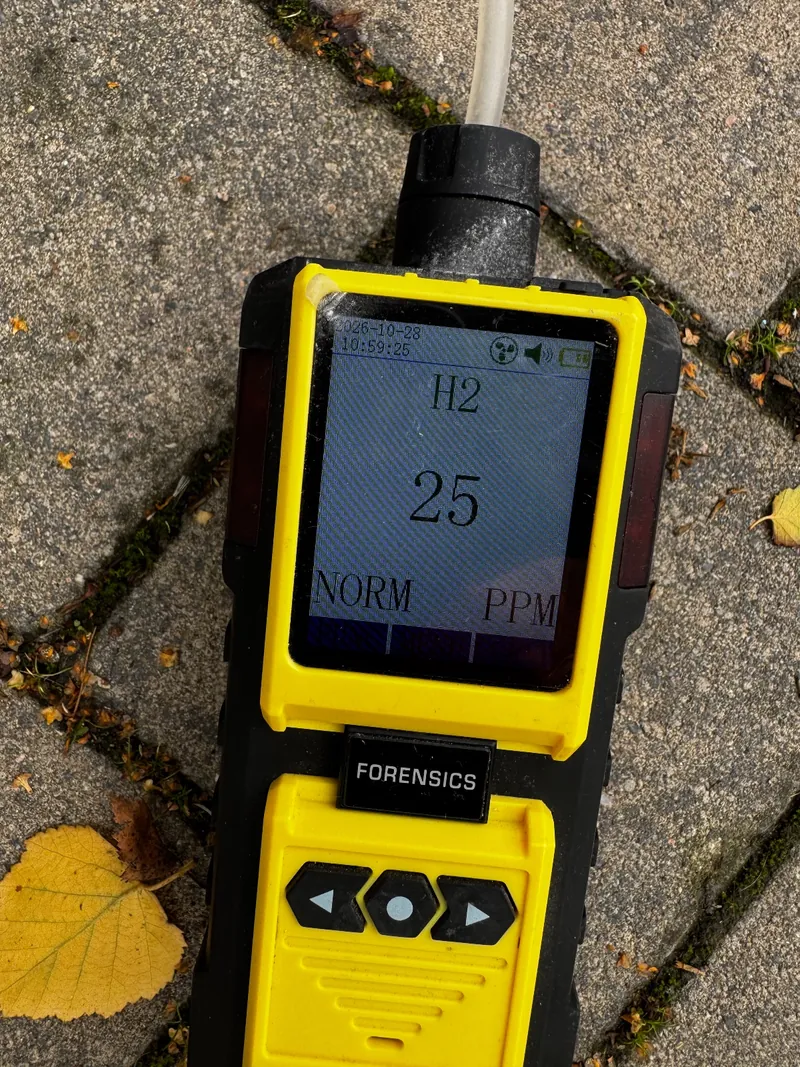
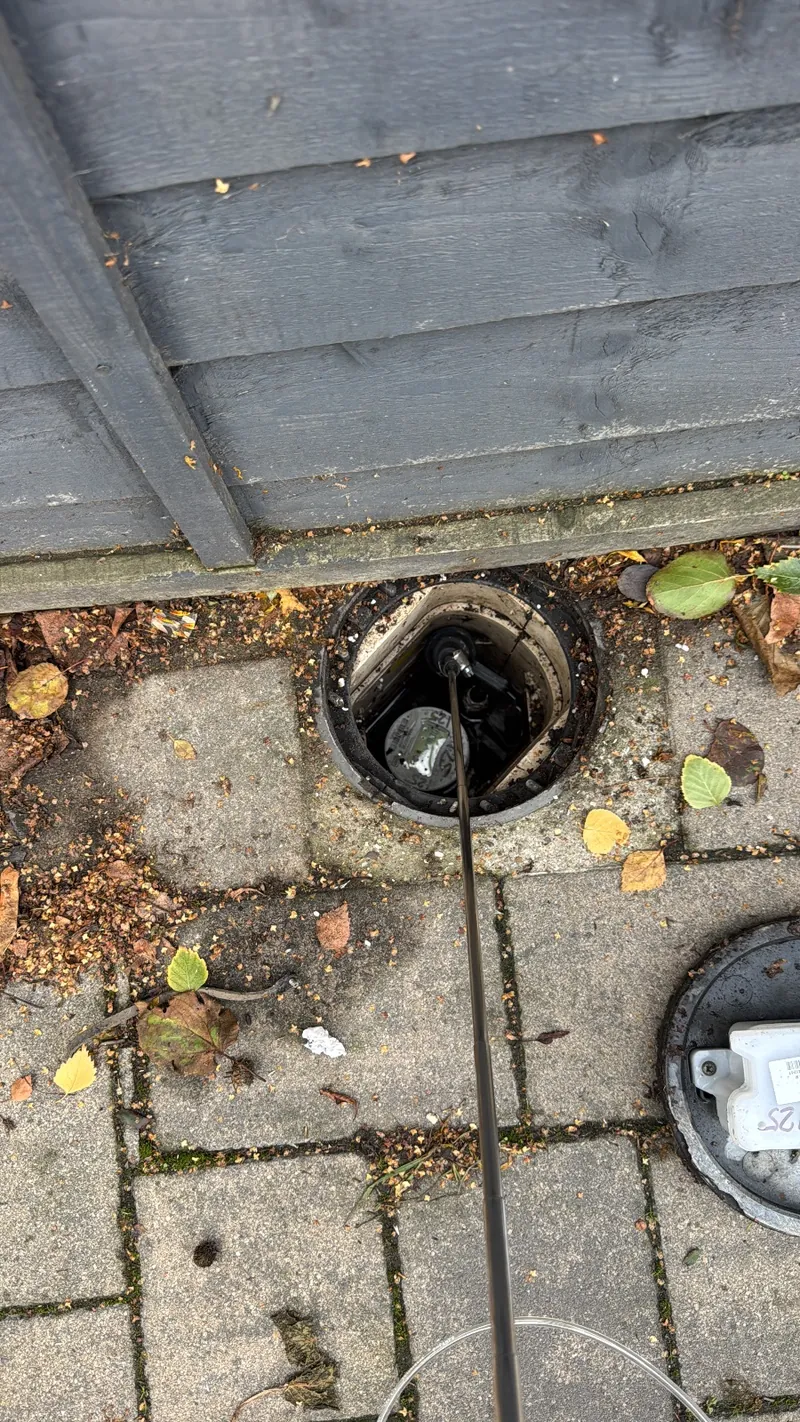
- Where a pipe cannot be traced by signal, we may need to put gas or another method into it, or work from the meter, the stop tap and ground clues. Tracer gas is included in the price.
- Soil matters. In our experience, water from a leak on a deep plastic pipe can travel along the trench or surface a long way from the hole, especially in clay, so the wet patch is not the leak.
None of this makes a find impossible, but we use more than one method and report what each one showed. Thermal imaging and moisture mapping help on surfaces, acoustic listening helps where sound carries, and tracer gas helps when the others leave a zone and not a point. Each has limits, and a very slow leak may give little signal. Signs of a leak underground lists what you might see, and non-invasive leak detection explains the methods.
Who deals with it, and who pays
Thames Water’s pipe responsibility page, read on 25 November 2026, says you are responsible for the water supply pipe that runs from the boundary of your property into your home. It says shared supply pipes carry joint responsibility for the shared part. DWI says the owner is responsible for the supply pipe from the outside stop valve to the building and for the plumbing inside up to the kitchen tap. The colour of the pipe does not change who owns it, and nor does the position of the meter.
Thames Water’s page on arranging a leak repair says it is the customer’s responsibility to arrange repair within four weeks. It adds that if the leak is not fixed in that time, Thames Water may serve a notice allowing it to do the repair and charge you. It recommends a WaterSafe approved contractor for hidden or outside leaks. We are independent of Thames Water and we are not on the WaterSafe register, so if that matters to you, check the register at watersafe.org.uk before you choose anyone. Thames Water also says to ask for a certificate of water regulations compliance after the work. Pages change, so check the current wording.
Thames Water says to check your home insurance first, because some policies cover supply pipe leaks. Whether yours does depends on the wording, and nothing here says what an insurer will pay. See does home insurance cover water leaks. Does Thames Water fix my supply pipe for free explains the help Thames Water currently describes.
Repair or replace a blue pipe
Repairs to water fittings should be done in a workmanlike way, which regulation 4 of the Water Supply (Water Fittings) Regulations 1999 describes as to a relevant British Standard or an approved method. In practice that means the pipe and the fittings should be suitable for drinking water and the joint should be properly made. We do not name a standard for plastic pipe here, because we have not opened the standard itself. Ask whoever repairs it which pipe and fittings they are using and why.
- One leak at a joint, on a pipe that is otherwise sound, is often a repair at that point. A good survey says whether there is only one.
- Several leaks, damaged sections or a pipe laid shallow or on poor ground point towards replacing the run. Water supply pipe: repair or replace sets out how to weigh that.
- If the pipe is replaced, the route can be dug or pulled through by moling. Moling vs digging a water supply pipe explains both.
- Underground pipe laid shallower than 750mm or deeper than 1350mm is a listed work in regulation 5 of the 1999 Regulations, which means notice to the water company. The regulation gives the water company ten working days to refuse consent or set conditions. Ask your plumber to confirm whether it applies. We read the regulation as made, and a revised version may differ.
We quote repairs in writing after detection, never from a price list, because the cost depends on depth, surface, access and what has to be made good. Be wary of anyone who gives a repair price for a buried pipe before it has been located. Water supply pipe replacement describes what goes into a replacement quote.
Before you dig, or let anyone dig
Plastic pipe is easy to cut with a spade, and a nicked pipe may not leak until later. Do not dig on a guess. A blue pipe in one trench does not tell you where the rest runs, and old pipes can cross a garden in a line nobody expects. Where does my water supply pipe run explains how to find the route safely before any ground work.
- If you suspect a leak, close the inside stop valve and do the meter leak test. Thames Water’s identifying leaks page describes a 30 minute version.
- Turn the water off if it is running or surfacing. How to turn off your mains water shows how.
- Photograph any wet ground, the meter reading and the stop tap with the date.
- Do not dig along the line of the pipe or hammer in stakes near it.
- Have the leak located first, then the opening is small and in the right place.
What finding a leak on blue pipe costs us
Tracing a supply pipe leak is a fixed £450, however long the job takes, with tracer gas and the written report included. No VAT charged. The price is fixed, although the time on site depends on the route and the access. You get a written report with photos. Repairs are quoted separately. The pricing page explains how we quote, and supply pipe leak trace and repair walks through a job.
If you want the leak found, report a leak or ring 020 3961 5444. More guides are in the guides hub.
