

Before you dispute it: the three usual explanations
Most high bills are not billing errors, and a dispute built on the wrong explanation goes nowhere. Thames Water’s page on common metered bill questions, read on 24 November 2026, lists the ordinary causes: more people living at the property, extra water use from weather or renovations, a leak, or a longer gap between bills. The Consumer Council for Water (CCW), the watchdog for water customers, adds new appliances such as a power shower or garden sprinkler, and a previous bill based on an estimate.
So the first job is to work out which of these fits. The three that produce a genuine complaint are an estimate that was wrong, a meter reading that was wrong, and a leak that you could not have known about.
| Explanation | How to tell | Where it goes next |
|---|---|---|
| The last bill was an estimate that was too low | The bill says estimated, and this one jumps once a real reading arrives | Thames Water says estimates are adjusted when an actual reading is received, so this is usually a catch-up, not an error. See estimated water bill |
| This bill was an estimate that is too high | The bill says estimated and your own reading is lower | Submit your reading, which Thames Water says leads to a revised bill |
| A meter or reading fault | The reading on the bill does not match your photos or the serial number is wrong | Contact Thames Water and, if it will not resolve it, complain in stages (below) |
| A leak on your side | The meter moves with everything off and the inside stop valve closed | Fix it, then ask about the leak allowance. See leak allowance evidence checklist |
| A longer billing period | The bill covers more than the usual six months | Thames Water says late bills cover a longer period, so check the dates |
Step 1: read the bill properly

Thames Water says metered customers are billed every six months, from readings or estimates. Charges are calculated per cubic metre from the two most recent readings, or a reading and an estimate. Look at four things on the bill itself.
- The dates the bill covers. A bill for nine months looks like a spike.
- Whether each reading is marked actual or estimated. If either is an estimate, the whole figure rests on a guess.
- The meter serial number, which Thames Water says should match your meter.
- The tariff. Thames Water’s 2026-27 metered rates are 273.46 pence per cubic metre for water and 147.21 pence for wastewater, plus annual fixed charges. Our page on average water bill in London shows how to rebuild a bill from them.
Thames Water’s scheme says you must pay an estimated bill where it has not obtained a reading, that estimates use historical readings or other relevant information, and that if you give your own reading it recalculates and sends a revised bill. So submit a reading early.
Step 2: take your own reading, and keep proof
Read the meter, photograph it with the serial number in frame, and note the date and time. How to read a water meter explains which digits to use. Submit it through your online account, and keep the confirmation.
Thames Water recommends taking your own readings a few times a year to check for leaks and that it is not overcharging you. A run of dated photos is the best evidence you can bring to any dispute, because it shows what the meter said on the day. If you have not done this before, do it now and again in two weeks, so there is a trend to point to.
Step 3: rule out a leak, because it changes what you ask for
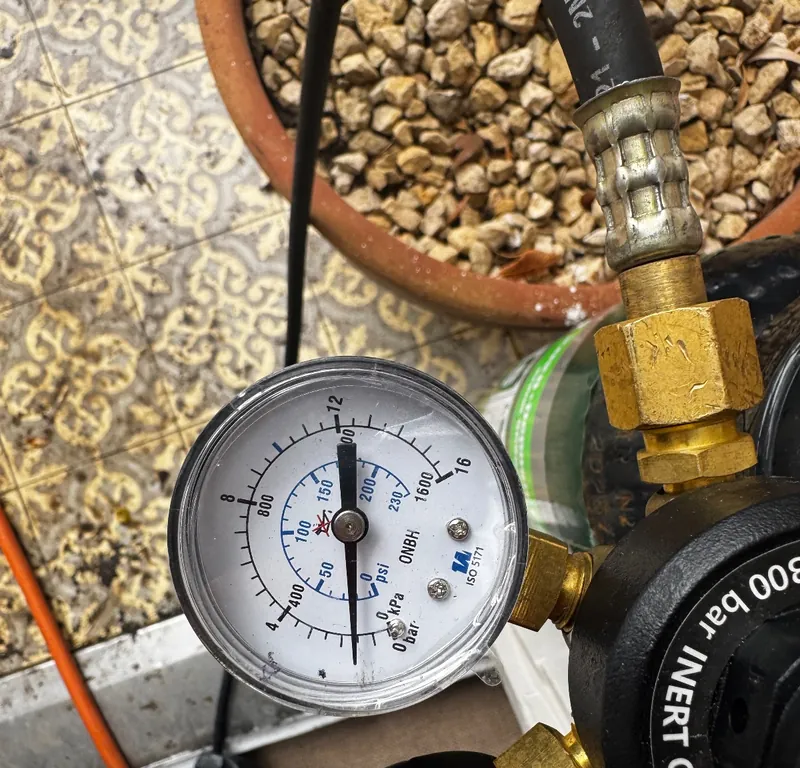
If the meter is right and your use really is up, a leak is the next suspect. The test takes half an hour. Thames Water’s version: switch off everything that uses water, close the inside stop valve, read the meter, wait 30 minutes and read again. If the reading has moved, the leak is between the meter and that valve. Our water meter leak test shows the full method and what each result means.
A leak changes the conversation. A dispute about the meter is about whether Thames Water got the number right. A leak is the owner’s to repair, on Thames Water’s published position, and the claim is for an allowance on the water lost. Its leak allowance page, read on 24 November 2026, says to repair within four weeks and claim within three months of the repair date, and it is for metered customers. It asks for the plumber’s invoice or a Thames job number, plus meter readings and a description. Check the current page, and note that we cannot say whether it will accept any particular report.
Step 4: raise it with Thames Water, in writing
Thames Water’s pages on a bill that seems too high direct you to its contact channels, which include WhatsApp and phone, and say that for complex billing issues a case management team gives next steps and a timescale. We do not print its phone numbers, because the numbers on its pages differ, so use the contact page it links for bill queries.
A call is quick. A written message gives you a record. Whichever you use, make it easy to act on.
- Say what you disagree with and the figure you think is right, with your reading and the date.
- Attach your photos and the serial number.
- List the bill dates and whether each reading was actual or estimated.
- Say whether you have done a leak test and the result.
- Ask for the reasons in writing and say when you expect a reply.
- Keep a note of every call: date, time, name if given, and what was said. CCW says emails, bills and call notes are the evidence to keep.
If you want the formal route to start, say it is a complaint. That is our practitioner advice, not a Thames Water rule, but it makes the date the clock starts easier to prove.
If you think the meter is wrong
CCW says the water company owns the meter and is responsible for maintaining it, and that if you think it is damaged, not working correctly or showing incorrect readings you should contact the company. Thames Water says to contact it if a meter looks broken or damaged, and it takes its own readings at least every two years, partly to check for leaks and overcharging.
We could not find a Thames Water page that sets out a meter accuracy test, how you ask for one or what it costs, so we do not describe one. Ask directly, and ask for the answer in writing. If the meter box is full of water or looks damaged, see water meter box leaking or full of water and water meter leaking: who is responsible.
Step 5: if Thames Water does not put it right
CCW’s complaints page, read on 24 November 2026, sets out the stages. Thames Water’s own charges scheme names its complaints procedure, CCW and Ofwat, the regulator, in clauses 3.3 to 3.5. We could not open Ofwat’s own pages, so we do not describe them.
| Stage | What CCW says | Timescale it gives |
|---|---|---|
| One | Contact your water company and explain what went wrong, giving it a chance to fix it | A reply within 10 working days |
| Payment for a slow reply | If there is no reply in that time you may be entitled to a payment under the Guaranteed Standards Scheme | After 10 working days |
| Two | Ask for stage two, a review of the complaint | A further reply within another 10 working days |
| CCW | Bring the case to CCW once you have a final response (a letter or verbal confirmation) or have waited eight weeks | CCW says it replies within two working days of contact |
CCW says it can help with disputes over metered or unmeasured bills, estimated bills, bills that do not match your use, sudden increases, too many or too few readings and leakage allowance decisions. It says its service is free and that it reviews your case independently. The Guaranteed Standards Scheme is covered on our page about Thames Water compensation and guaranteed standards.
What about paying while you dispute it?
We could not find a Thames Water page that says whether you may withhold part of a bill in dispute, so we will not guess. Ask Thames Water what happens to the disputed amount and to your payment plan, and get the answer in writing. Do not stop paying without checking.
If the problem is affording a large bill, tell Thames Water before you fall behind. Help paying your water bill in London covers its payment plans and support. Thames Water also lists WaterSure for some metered households and WaterHelp where a bill is a large share of income, with details in WaterSure: who qualifies and Thames Water social tariff and WaterHelp. CCW says water companies cannot disconnect household customers for unpaid water bills.
Tenants should know that Thames Water says bills go in the occupier’s name unless the landlord confirms in writing that they take responsibility. Water bill help for tenants and landlords covers who disputes what.
When the dispute turns out to be a leak
If the meter test moves, you have a repair to arrange and evidence to keep. We locate the leak without digging first. Our mains and supply pipe trace is a fixed £450, however long the job takes, and tracer gas is included in the rate. No VAT charged. Repairs are quoted in writing after the leak is found. The pricing page gives the method.
To book, report a leak or ring 020 3961 5444. For related questions, browse the guides.
