
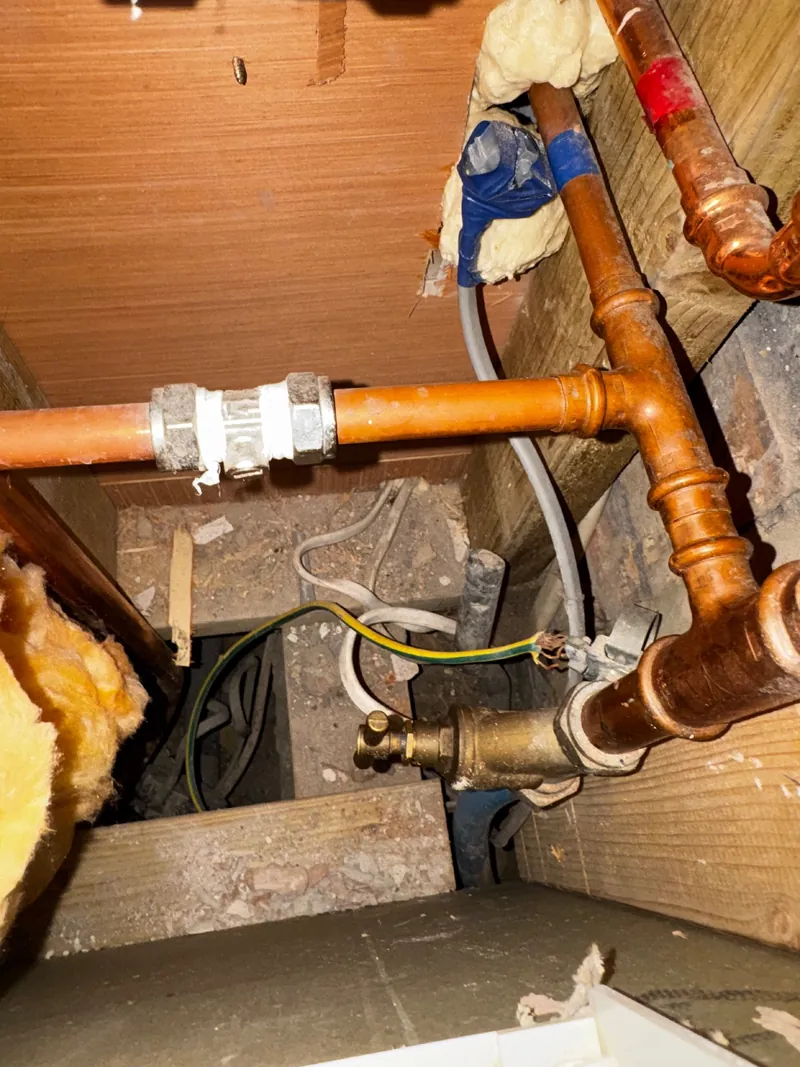
Why people ask
People rarely ask “who can turn off the stop tap in the street?” on a quiet afternoon. They ask it while water is coming through a ceiling, the inside valve will not budge and they can see a small metal cover in the pavement that must, surely, be the answer. This page is for that moment and for the calm weekend before it.
There is a gap in the sources. The ones we read describe how a customer can use the outside valve in an emergency. None of them says who is permitted to operate it, and the water company’s own code calls it the water company’s equipment. So this page covers what the sources say, when reaching for the street valve makes sense, how to do it without hurting yourself or your neighbours, and who to ring when it does not work. It does not hand out a legal permission that nobody has published.
The ownership of the stop tap, the meter and the pipe either side of them is covered in boundary box and outside stop tap: who owns it. We do not repeat that here. This page is about the act of turning the water off, and about the decision that comes before it.
What the sources say, and what they leave out
| Question | What Thames Water’s pages say | What they leave out |
|---|---|---|
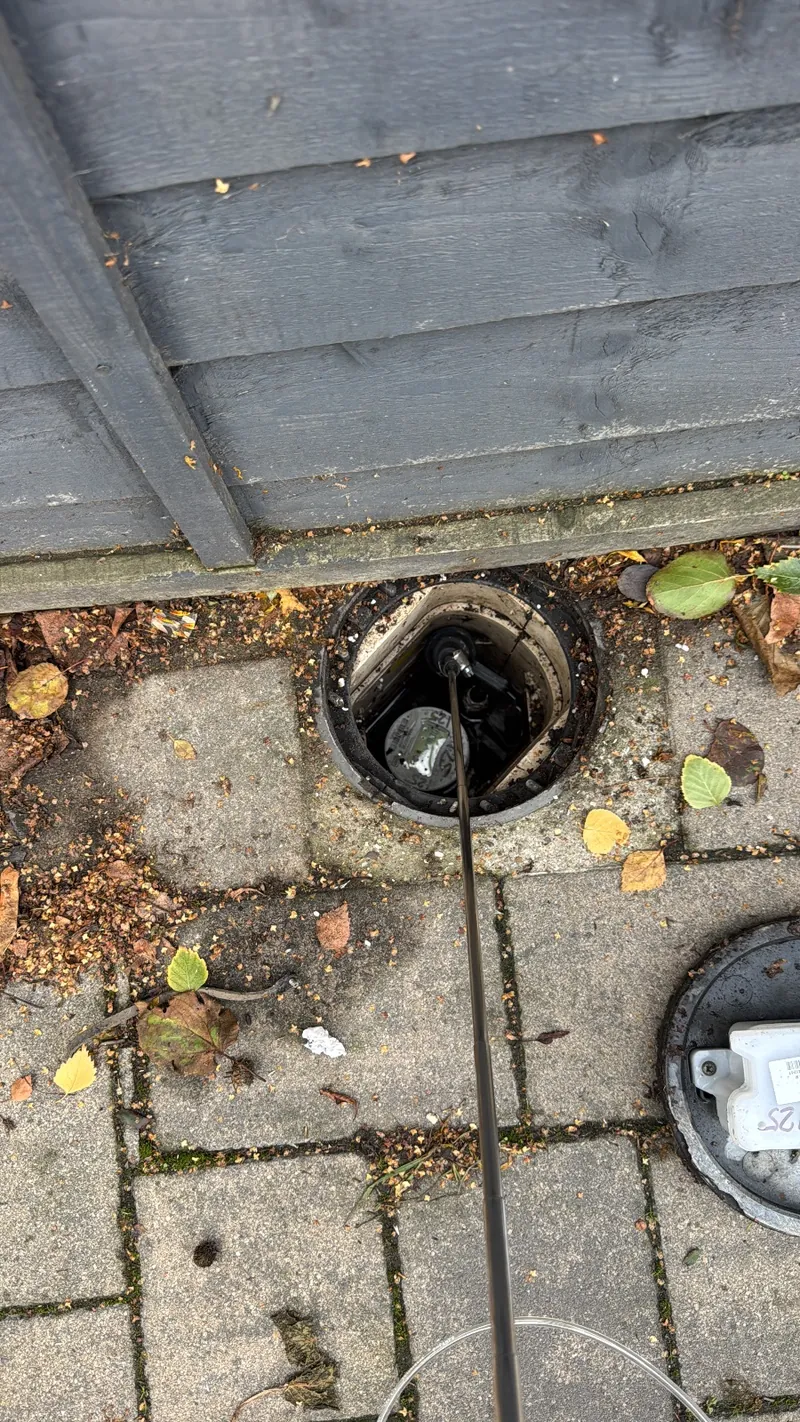
| Where is the outside valve? | Normally under a cover on the path or the road. It can be near the meter. For older houses that share a supply it may be at the end of the road. | Whether yours is on public or private land. Check your own situation. |
| When should I use it? | In an emergency, for example a leak on the supply pipe between the inside and outside valves. The inside stop valve is the main way to turn the water off. | Any list of other emergencies. |
| How do I turn it? | Clockwise, and it may take several turns. Water may keep running from taps for a few minutes. You may need a valve key sold for the job. Do not use force once it stops turning. | Which key suits which valve. Different valve heads exist. |
| Does it affect anyone else? | On a shared supply, turning your water off turns the neighbours’ off too, so tell them before you start. | How to find out whether you share a supply. |
| What if neither valve works? | The quickest way to turn the water off is to contact a plumber. | How long a plumber might take to arrive. |
| Who is allowed to operate it? | Silent. The page describes “your” outside stop valve and tells customers how to use it. | Whether customers are formally permitted. The 2025 leakage code calls the stop tap Thames Water’s equipment. |
Thames Water’s code of practice also says it has a legal power to fit a stop tap on a service pipe at its own expense, as near as reasonably practicable to the street boundary. We have not read the statute behind that statement, so we repeat it as Thames Water’s description of its own power and no more.
The consumer magazine Which?, in its advice on a stopcock that will not work, says that if the one in the home is completely stuck you can use the street or garden stop tap, and that an old-style one may need the water company, which is responsible for it. That is Which?’s statement, not Thames Water’s, and we cannot tell you which type yours is. It is a reason to ring Thames Water if the valve in your pavement does not behave like the ones in the photographs.
Which valve, in which situation
The decision is simpler than it feels in the moment. Work down this table and stop at the first row that fits.
| What is happening | Try first | Street valve? | Also do |
|---|---|---|---|
| A tap, hose or appliance is leaking, and the leak is on one fitting | The small isolation valve on that fitting | No | Leave the rest of the house running while you fix or replace it |
| A pipe has burst inside and the inside stop valve turns | The inside stop valve, clockwise, by hand | No | Turn off the heating and open the taps. Switch off at the mains if water is near the electrics, as Thames Water advises |
| The inside valve is stiff, will not close fully or drips at the spindle | Stop turning. Do not force it | Possible, if water is still running into the home | Call a plumber at once. See stopcock and isolation valve maintenance |
| The leak is on the supply pipe between the street and the house | The inside valve, then the outside valve if the leak is upstream of the inside one | Yes, this is the case Thames Water gives | Run the meter test once the water is off |
| Water is flowing in the road or pavement, not in your property | Nothing of yours | Not your job | Report it to Thames Water through its report-a-problem page |
| You are in a flat and the supply enters the building elsewhere | The valve in your own flat, if there is one | Probably not yours | Ring the managing agent or the emergency contact for the building |
The row that people get wrong is the third. A stiff inside valve is the most common reason someone ends up kneeling at a pavement cover. It is a valid reason, and it is also the situation where force makes things worse. A spindle that snaps leaves you with no valve and a longer emergency. Our page on where to find your stopcock in a house will help you find the inside one before you need it.
If you decide to use the street valve
These steps combine Thames Water’s instructions with plain safety sense. Anything that is our own judgement is marked.
- Close the inside valve first if it will turn, and open a cold tap to see whether the flow slows. If the water is still coming in from the supply pipe, go to the outside valve.
- Tell anyone you may share the supply with. Thames Water says turning your water off turns the neighbours’ off too. A knock on the door takes a minute.
- Check the traffic before you kneel. Our own advice: on a busy road, do not lift a cover or work in the carriageway in the dark. Ring a plumber or Thames Water instead of risking it.
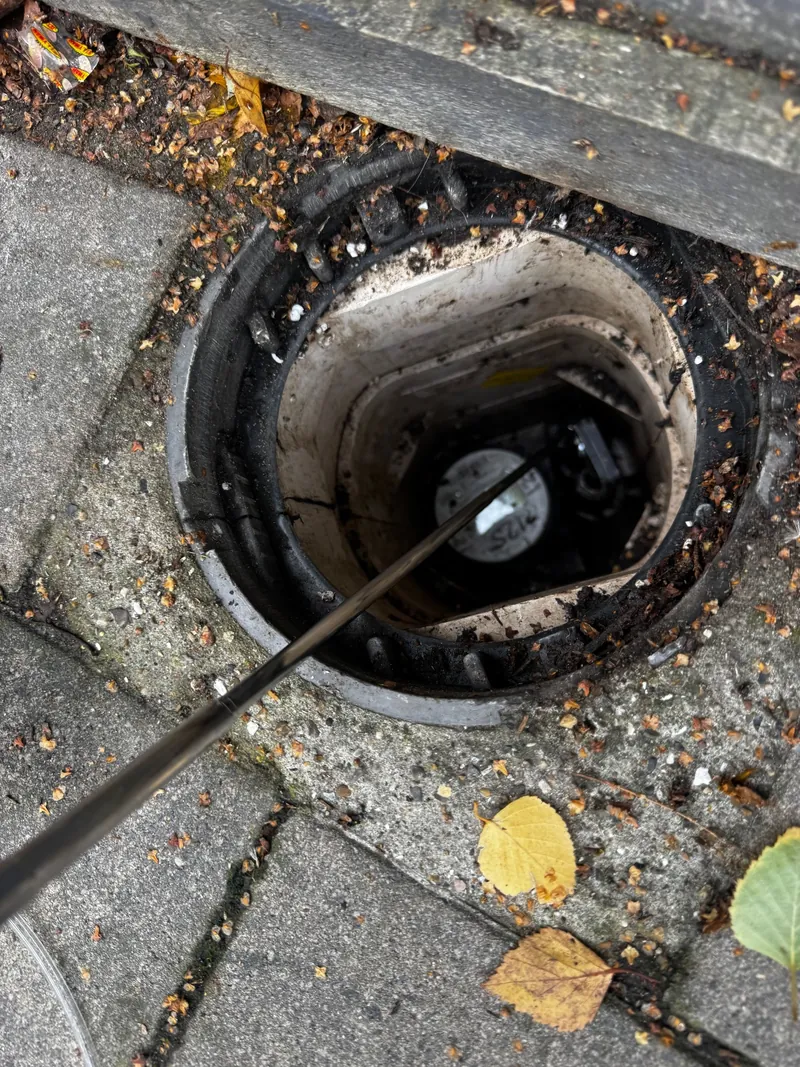
- Open the cover only if it lifts easily. Our own advice: use a proper lifting tool or a stout screwdriver, keep your fingers away from the edge and put the cover back afterwards so nobody falls in the hole.
- Look at what is in the chamber. A valve head, often with a square top, is the stop tap. A dial under glass is the meter. Do not mistake one for the other.
- Turn the valve clockwise with a key made for it. Thames Water says it may take several turns. Count them, because you will need the number to open it again.
- Stop when it stops. Thames Water says not to use force once it will not turn any further.
- Wait. Water can keep running from taps for a few minutes after the valve is shut.
- Photograph the valve, the cover and the position, write the time, and put the cover back.
Opening it again is the reverse: anti-clockwise, by the number of turns you counted, slowly. Open the taps nearest the main first and let air clear before you close them one by one. Our own advice, and worth a plumber’s view for your set-up: do not turn the supply back on while the burst is unrepaired.
When neither valve will turn
This is where a plumber earns the call-out. Thames Water’s page on the inside stop valve lists options for when a customer cannot turn the water off at the usual point. They include turning off just the affected room with the other valves in the home, a plumber-fitted device installed in the supply, and a short-term freeze and clamp done by a plumber. We mention them so that you know the options exist, not to suggest you attempt any of them yourself.
- Isolation valves on appliances, basins and cisterns can shut off one room. If you have them, use them. If you do not, that is a reason to add them this winter.
- A plumber can sometimes fit a new stop valve ahead of the broken one. Which? mentions this as a way to deal with a stuck valve before an emergency, and that is when it is cheapest to do.
- In the worst case, the quickest move is to switch the heating off, open the taps to relieve pressure, and put buckets, towels and a bin liner to work while help arrives. That is practical common sense, not a Thames Water instruction.
If the cause is a freeze, our pages on frozen pipes: what to do before they burst and the winter plumbing checklist have the thawing steps.
Who to call, and for what
| Problem | Call | Why |
|---|---|---|
| Leak or burst inside your home | A plumber, and your insurer | The pipe is the owner’s responsibility. Thames Water’s frozen or burst pipes page says to contact your home insurer or call a plumber |
| Leak in the road or pavement | Thames Water, through its report-a-problem page | Public pipes under roads and pavements are its responsibility. We print no phone number because the numbers on its pages do not match |
| Stop tap in the street is stuck, leaks or has a broken cover | Thames Water | The stop tap is treated as its equipment in its leakage code |
| Inside valve stuck, no plumber to hand | A plumber, then Thames Water if the street valve is the only option | Which? and Thames Water both point to a plumber when valves will not turn |
| Rented home | Your landlord or agent, straight away | Check who must repair under the tenancy. In covered tenancies the landlord must keep the water supply installations in working order, under section 11 of the Landlord and Tenant Act 1985 |
| Leasehold flat | The managing agent or freeholder, as the lease sets out | GOV.UK says the lease decides who handles repairs |
| You cannot find the leak, and the meter keeps moving | A leak detection survey | See below |
You can also report a leak to us if you think the problem is on your side of the boundary. We are plumbers as well as leak specialists, but we are not Thames Water and we cannot operate its equipment.
The water-off card: fill it in this weekend
Print this or copy it onto a sticky note inside the kitchen cupboard door. It takes five minutes.
| Item | Your answer |
|---|---|
| Inside stop valve is at | |
| It closes by turning | Clockwise. Count the turns: ______ |
| Last tested on | |
| Outside stop valve cover is at | |
| Key or tool that fits it is kept at | |
| Shared with neighbours at number | |
| Plumber’s number | |
| Insurer’s claims number and policy number | |
| Landlord, agent or managing agent’s emergency number | |
| Photo of both valves saved on phone | Yes / No |
Test the inside valve while you fill it in. Thames Water suggests a monthly reminder to check that the inside valve is working correctly, and that is a better habit than the yearly check people usually manage.
After the water is off
Once the water is off, two things matter: dry the place and find out where the water came from. If the source is obvious, such as a split pipe in the loft, a plumber can repair it. If it is not obvious, a hidden leak may be involved. The signs are a meter that keeps moving with everything switched off, a bill that jumps with no change in use, pressure that drops, or a damp patch that grows after the pipe you fixed has dried.
Thames Water’s home meter test is simple. Switch off everything that uses water, close the inside stop valve, read the meter, wait 30 minutes and read it again. A change means a leak on the stretch between the meter and the inside valve. No change means no leak on that stretch only, not none anywhere. The steps and a reading log are in how to do a water meter leak test.
If the meter test shows movement and you cannot see why, a leak detection survey finds the pipe without opening the floor. Our rate for standard leak detection is £150/hr, and a typical visit costs £325 to £400. Tracer gas and the written report are included in the price. No VAT charged. The pricing page lists every rate. For the wider picture, start at the guides hub.
What to keep for your insurer
NFU Mutual says to contact your insurer as soon as possible, and to photograph or film the damage and keep plumbers’ bills and receipts. The Consumer Council for Water also advises photographs or video. So record the valve you turned, the time you turned it, and what you did next. We cannot say what any insurer will pay, and policies differ on frozen pipes, empty homes and gradual damage. Your policy wording has the answer.
