
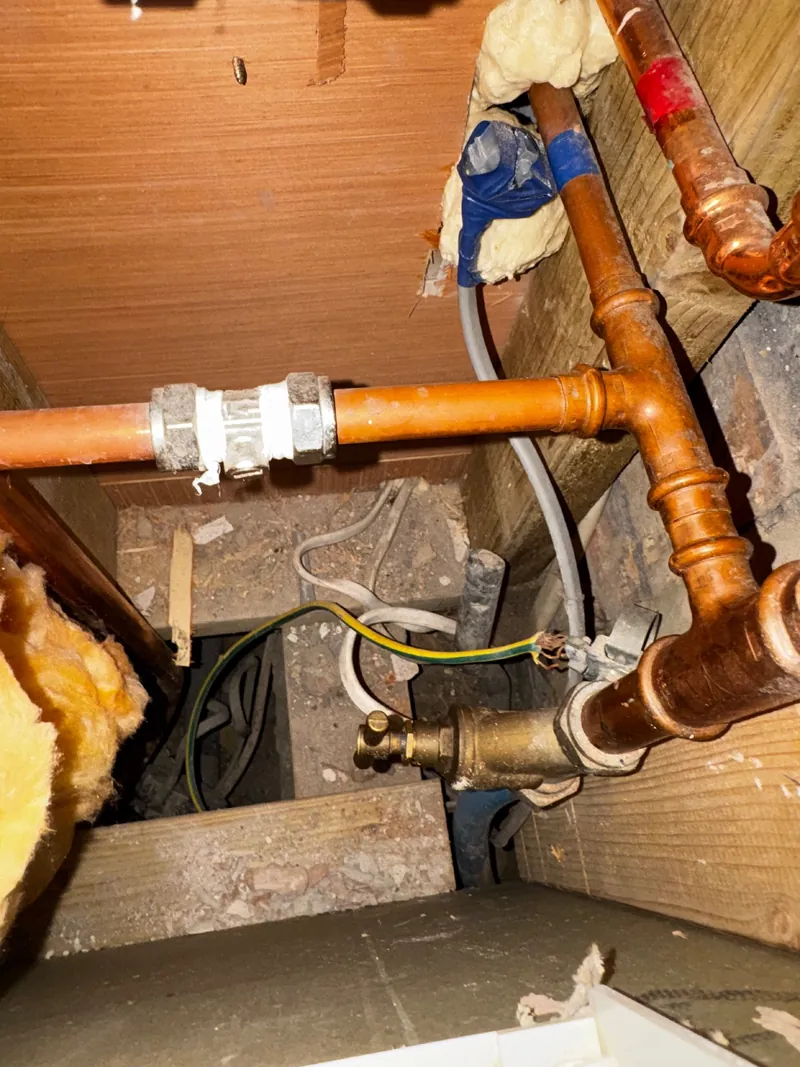
What an automatic shut-off valve actually is
An automatic shut-off valve is a stop tap that closes itself. A normal stop valve waits for a person. This one closes when a sensor, a flow measurement or a pressure reading says something is wrong, so a burst pipe stops running after minutes instead of hours.
The idea is sound, because the size of an escape of water is mostly a matter of how long it runs. Thames Water’s own burst pipe advice starts with the same step, turning off the stop tap, and only then moves on to heating, soaking up water and electrics. A valve that does step one while nobody is home is doing what you would do if you were there. Whether that is worth paying for depends on how likely you are to be away, how bad the damage would be and what the valve cannot see.
This page is practical and deliberately neutral. We name no brands and quote no performance figures for any product, because we have not tested them and no primary source we opened gives numbers we could stand behind. How these devices behave in general is our own plumbing experience, and we say so where it matters. If you want the wider routine first, start with prevent escape of water at home.
The main types, and how each decides to close
Products differ, and the marketing blurs them. In practice there are three ways a valve decides to shut. Most real installations use one or a mix.
| Type | How it decides | Where it tends to be strong | Where it tends to be weak |
|---|---|---|---|
| Flow-based valve on the supply | Watches how much water passes. If flow runs for longer than a set time, or above a set rate, it closes | Catches a burst anywhere downstream of the valve, including pipes in walls and under floors | A long legitimate use, such as filling a bath or watering a garden, can trip it. A leak smaller than the setting passes unnoticed |
| Sensor-triggered valve | Puddle or moisture sensors sit where leaks are likely. A wet sensor tells a motorised valve to close | Catches a leak at the exact spot you watch: under a sink, behind a washing machine, by a water tank | Sees nothing where there is no sensor. A battery or a wireless link can fail without anyone noticing |
| Pressure-based valve | Notices a pressure change or a failed pressure test, run by the device itself on a schedule | Can sometimes flag a slow leak by testing the pipework while the home is quiet | Setting it up on a home with a pressure-reducing valve, an accumulator or a booster needs care. It is the type most likely to need a plumber’s judgement |
Some products also connect to an app that sends an alert and lets you close or open the valve remotely. That extra layer helps if you are away, and adds a new dependency: it needs a working internet connection, a phone that receives the alert and someone who acts on it. An alert you do not read is a log, not a protection.
There is a smaller category worth separating out: valves that protect a single appliance, for example one that closes the supply to a washing machine hose if the hose fails. These are narrow but cheap to reason about, and they cover the hose, which is one of the commoner failures. Our page on washing machine hose leaks prevention looks at the hose itself.
When a valve is most likely to be worth it
The honest test is a simple trade. A valve buys you a faster stop. It costs money, a fitting on your pipework and some upkeep. It earns its place where a burst can run unseen for a long time, or where the damage per hour is high.
- A home that is empty for days or weeks at a time: a second home, a let between tenants, a house that you leave for a long trip. Admiral’s winter page, which we read on 25 November 2026, lists installing a water cut-off valve among steps for an unoccupied property, describing it as a device that automatically cuts off the supply if a leak or burst is detected. That is one insurer’s guidance, not a rule or a promise of any discount.
- A flat above another flat. A burst in your bathroom does not stay in your bathroom. Water that reaches the ceiling below becomes a neighbour’s claim and often a longer problem. Valves help most where the pipe you control is the one that serves the floor above someone else’s home.
- A basement or lower ground floor with finished rooms, where water pools and the damage is expensive.
- A home with a long unsupervised stretch most days, for example when everyone is out at work and a washing machine or dishwasher runs on a timer.
- Anyone who would struggle to reach the stop valve in a hurry. Older or less mobile occupants, or a stop valve behind a heavy cupboard, tilt the maths towards automation.
It is much less likely to be worth it in a home that someone occupies all day, where a person hears a spray, sees a stain or notices the meter, and where the stop valve is easy to reach and works. In that home, the cheaper habits in where is my stopcock in a house and stopcock and isolation valve maintenance do most of what a valve would, for almost nothing.
What an automatic valve will not catch
This is the part product pages tend to skip. In our experience the leaks that cost people most are not bursts. They are slow and hidden, and a shut-off valve is designed for the opposite kind.
- A slow leak below the trip setting. A weeping joint or a pinhole can lose water for months without ever reaching the flow or time limit a valve uses. Our page on pinhole leaks in copper pipes describes what that looks like. Thames Water says a leaking toilet wastes on average 200 to 400 litres a day and that about one household in 20 has one. That is a steady trickle, not a burst, and a flow valve may treat it as normal use.
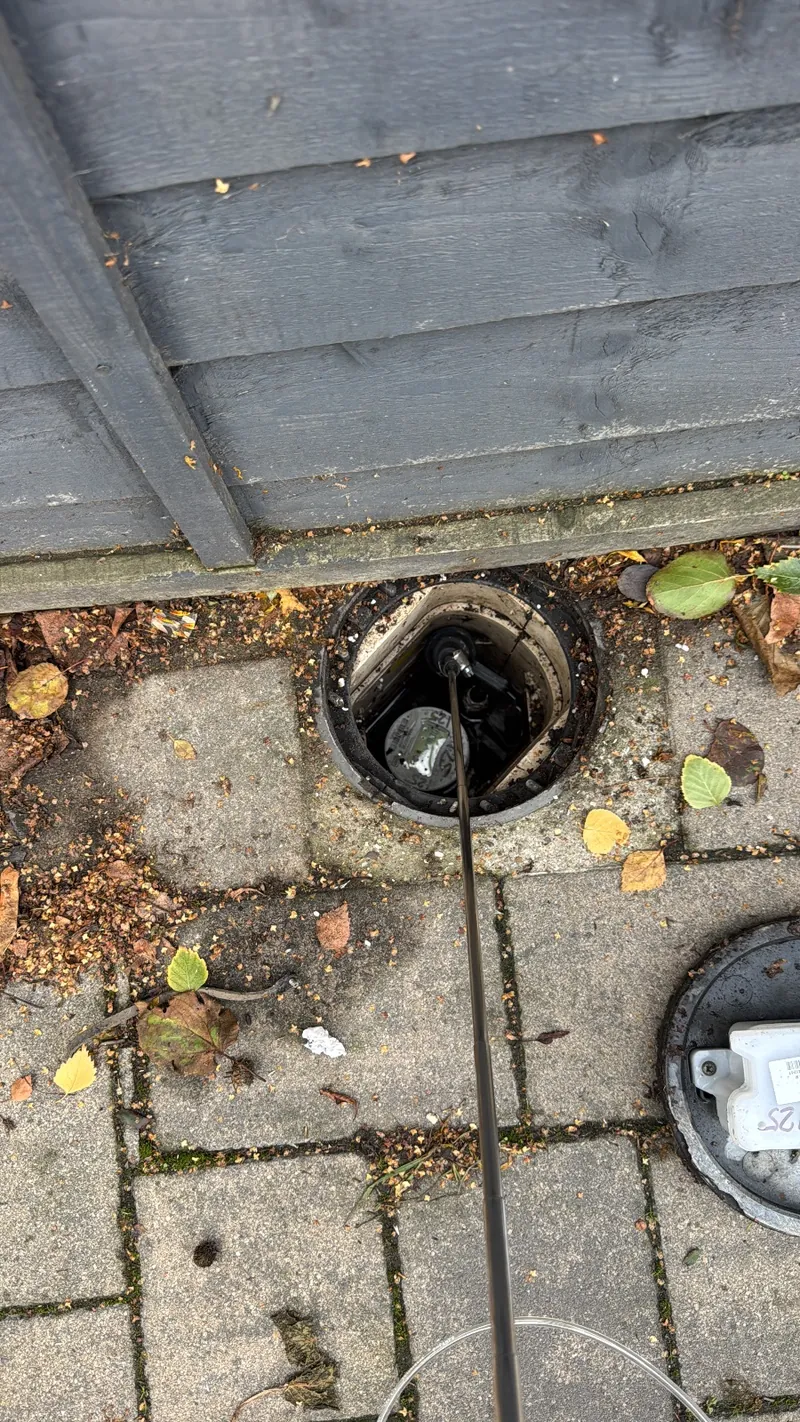
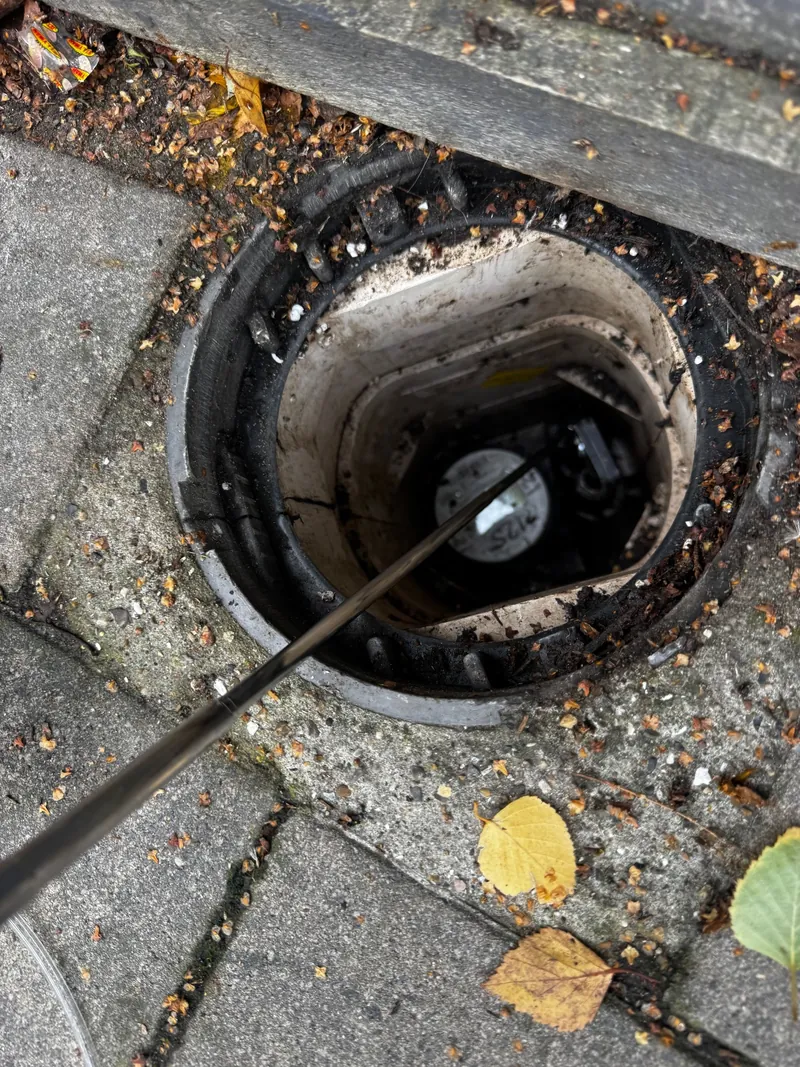
- A leak on the pipe before the valve. A valve fitted inside the house protects the pipework after it. It does nothing for the supply pipe running under the garden or drive. For that stretch you want signs of a leak underground and, if the meter is moving, a trace.
- A leak in a sealed heating circuit. In general, a central heating loop is a closed system that is filled from the mains occasionally. A valve on the cold supply does not stop a heating pipe from weeping, though it can stop the system topping itself up from the mains. Ask your engineer how your own system is filled.
- A fault in the waste side. A blocked or failed waste, an overflowing bath or a leaking shower tray does not look like a burst to a flow valve, and may not reach a sensor.
- A leak inside the valve’s own blind spot. A sensor under the sink says nothing about the pipe in the wall behind the bath.
A valve also adds ways to fail. A battery or power cut can leave it open or closed. A mechanism left untouched can seize, which is the same reason we tell people to exercise an ordinary stop valve. A false trip while you are away can leave a home without water, which matters if a fridge, a pump or a pet depends on it. These are general points from fitting and servicing pipework, not figures from a product test.
Your type of hot water and heating system changes the answer
Closing the mains cuts the supply to everything fed from it. That is what you want in a burst, and a problem for some systems. As a general rule, a combination boiler and a sealed heating circuit are fed directly from the mains. Older houses with a loft tank and a cylinder are fed from the tank, and a valve on the mains supply may not stop the tank draining into a failed pipe. Which parts of your home a valve would actually isolate is a question for the person who knows your pipework, ideally with a diagram or a note in writing.
Bring up the same points with a plumber before fitting. They are specific to your home, and we cannot answer them from a page.
- Which pipes would the valve isolate, and which stay live?
- Does the boiler or cylinder need the mains to run safely, and what happens if the valve closes?
- Is the stop valve in a position where it can be fitted and reached later?
- What does the device do when the power fails, or the battery runs out?
- How would you test it, and how often?
Who may fit it, and the rules that apply
A shut-off valve is a water fitting, so the Water Supply (Water Fittings) Regulations 1999 apply. The version we read on legislation.gov.uk is the text as made in 1999, and the revised wording was not checked, so treat our summary as a starting point. Regulation 3 bars fitting or using fittings in a way that wastes or misuses water or distorts metering. Regulation 4 says work should be done in a workmanlike way, which means to a relevant British Standard or an approved method. Regulation 5 lists the works that need notice to the water company in advance, and a like-for-like valve is not among the listed items in that text. Check with your water company if your case is unusual, for example if the valve goes on a supply that serves several homes.
Thames Water’s repair page says to ask for a certificate of water regulations compliance after plumbing work, and recommends using a WaterSafe approved plumber for visible leaks. We are independent of Thames Water and we are not on the WaterSafe register, so if that matters to you, check the register at watersafe.org.uk before you choose anyone. We would not put a valve on a supply pipe ourselves without telling you that plainly.
Two ownership points trip people up:
- The outside stop tap and meter are Thames Water’s equipment, usually under a cover near the boundary. Do not fit anything to them or alter them. A valve belongs on your own pipe inside the property, normally after the inside stop valve, not in the water company’s box. Our page on boundary box and stop tap: who owns it explains the split.
- In a flat, the pipes serving only your flat are normally yours to look after, but risers and shared pipes are not. GOV.UK says your lease sets out who handles repairs, so check it and ask your freeholder or managing agent before fitting anything that touches a shared pipe. See leak prevention for flats and managing agents.
If you rent, ask the landlord. Under section 11 of the Landlord and Tenant Act 1985 the landlord must keep the installations for water supply in working order in the tenancies it covers, which is another reason not to alter pipework without asking. Many landlords will agree to a valve, because it protects their asset. Get the answer in writing.
Insurance: ask, do not assume
People often buy a valve hoping it will cut a premium or protect a claim. We cannot say it will. We have not seen a primary insurer source that promises a discount for a valve, and some insurers set their own conditions for empty homes: keeping the heating on, visiting at set intervals or draining the system. A valve does not replace those conditions unless the policy says so.
So ask your insurer, in writing, three things before you buy:
- Does fitting a valve change the premium, the excess or any condition in the policy?
- If the home is unoccupied, does a valve change the unoccupancy conditions?
- Does the policy require the work to be done by a particular kind of installer, and does it want proof?
Keep the answer with the receipt and the plumber’s paperwork. For how policies treat a sudden burst, see escape of water insurance explained. A valve that trips, or fails to, is also worth recording in your claim notes, which escape of water claim checklist helps with.
What it costs
We do not quote a price for a valve or its fitting, because prices vary by product and by how awkward your pipework is, and we found no primary source with a reliable figure. What we can say is how to compare quotes. Ask for the model, what it senses, the power arrangements, what is included in the fitting and whether a plumber will explain testing. Add the running cost of batteries and checks. Then weigh the total against the repair bill and the disruption of a flood in your home, which is a figure you can estimate better than anyone else.
The cheap alternatives are real. Closing the inside stop valve when you leave for more than a weekend, closing the appliance isolation valves, replacing old flexible hoses and doing a yearly meter check are low cost and catch many of the same problems. A valve is the next step up, not a substitute for them.
A short way to decide
| Your situation | Lean towards | Why |
|---|---|---|
| Someone is home most days and knows the stop valve | Skip the valve for now. Fix the basics first | You would notice a burst fast, and the valve would add cost and upkeep |
| Often empty: second home, long trips, between lets | Consider a valve plus a plan for who checks it | The burst is the risk that runs longest unseen |
| Flat above a neighbour, or a finished basement | Consider a valve, after checking the lease and landlord | The damage and the knock-on claims are larger |
| Unexplained bill, damp patch or a moving meter | Find the leak first. A valve is not the answer | A slow hidden leak will pass through a valve unnoticed |
| Heating pressure keeps dropping | Have the heating circuit checked | A shut-off valve on the cold supply will not stop a heating leak |
If the symptoms in the last two rows sound familiar, you do not need a valve, you need a survey. The meter test in how to do a water meter leak test is the free first step. If the dial moves with everything off, or you have damp you cannot trace, our standard leak detection is £150/hr, typically £325 to £400 for a visit, with tracer gas and the written report included. No VAT charged. No find, no fee: if a leak is present and we do not find it, you pay nothing. Repairs are quoted in writing after detection, never before. All rates are on the pricing page, and you can book through report a leak.
There is more on keeping a home dry in the guides hub.
