
What a tracer gas test is
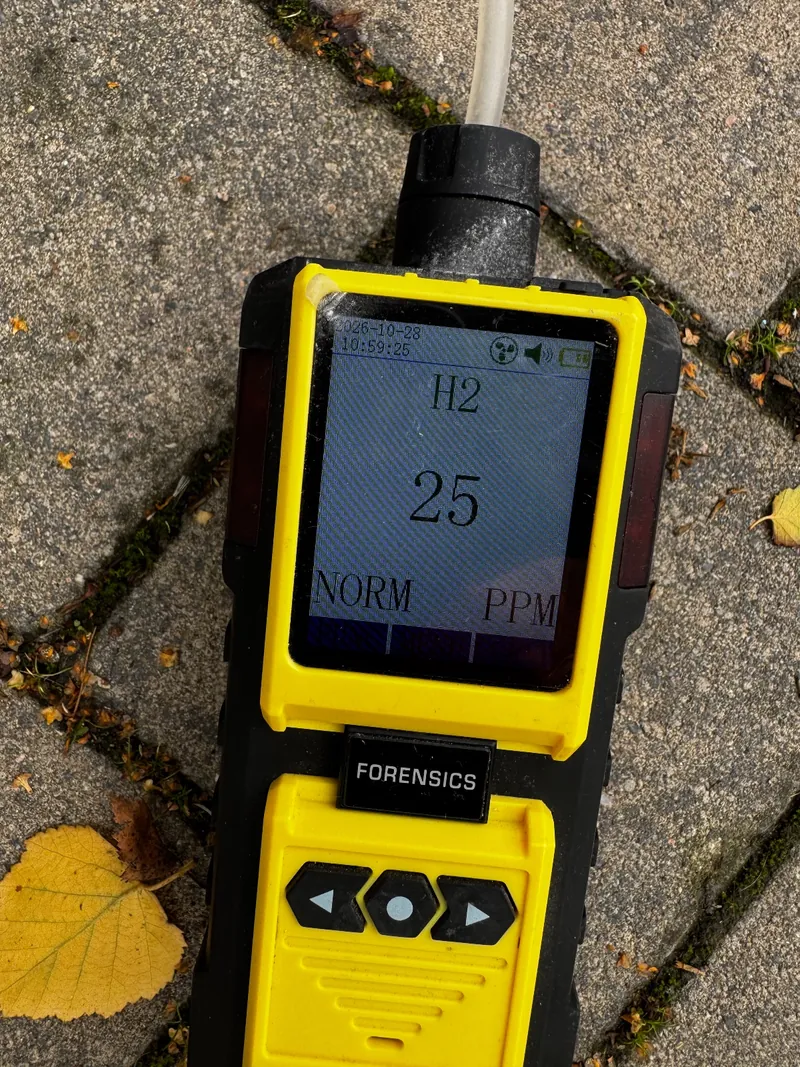
Tracer gas is a way of finding a leak by following something other than water. A pipe that is leaking is emptied of water, filled with a harmless gas mixture, and then a handheld detector is passed over the floor, wall or ground above it. Where gas escapes from the pipe and finds its way up to the surface, the detector reacts. Water does not have to be visibly wet for this to work, which is the reason it is used when there is no stain, no sound and no obvious damp.
The gas used for this kind of work is, as far as we understand it, a lightweight mixture that is not toxic and is safe to release in the small amounts involved. Because gas is much lighter than water and moves through small gaps easily, it often reaches the surface even when the leak itself is slow. That is a practitioner's description of how the method behaves, not a guarantee for any one property, and the gas and the detector our engineer brings are explained on the day before they are used.

It is one of several non-invasive methods we use. Our guide to non-invasive leak detection explains how it sits beside acoustic listening, thermal imaging and moisture mapping, and leak detection cost by method compares them.
When tracer gas is the right method
Tracer gas earns its place when other signs are weak. Typical situations include:
- A meter that moves with everything off, but no wet patch you can see.
- A pipe that runs under a solid floor, behind tiling or inside a boxed-in section where listening for water is difficult.
- A leak that is too slow or too quiet for acoustic equipment to pick up reliably.
- Heating or hot water pipework where the pressure drops over days but nothing shows.
- A supply pipe or garden run where the surface is paving or turf and the exact spot is unknown.
It is less useful where the pipe cannot be emptied, where the ground above is sealed very tightly, or where a strong draught or wind carries the gas away from the leak before the detector sees it. In those cases a second method is used alongside it, and the answer can take longer than an hour. That is normal, and we say so rather than stretching one method past what it can do.
If your first sign is a meter that will not stop, meter spinning leak check in one hour and the guide to how to do a water meter leak test show what to check before anyone arrives.
What can happen in the first hour
The first hour costs £100. On a typical tracer gas job it can go like this, though the order and the time each step takes vary with the pipework.
- We talk through what you have noticed and look at the likely pipe routes and the meter, so the test is aimed at a section rather than the whole house.
- We isolate the section to be tested and close it off from the rest of the system.
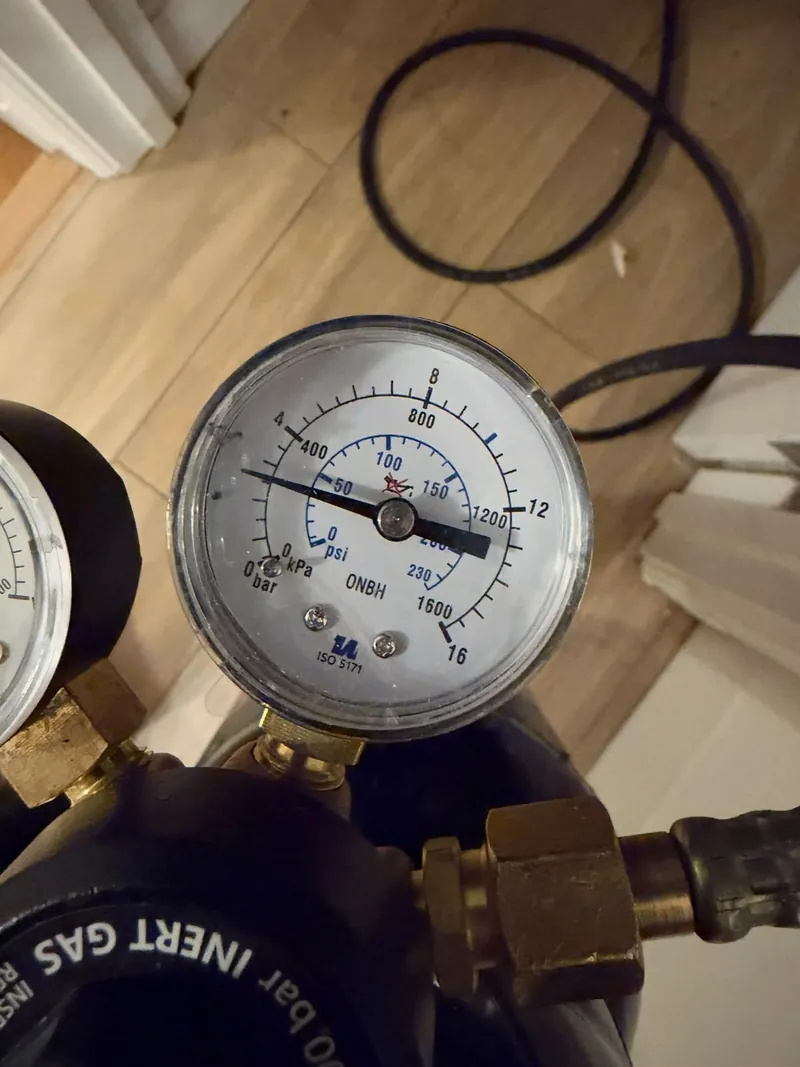
- We empty that section and fill it with the gas mixture. The photo below shows the sort of regulator gauge used on the gas supply.
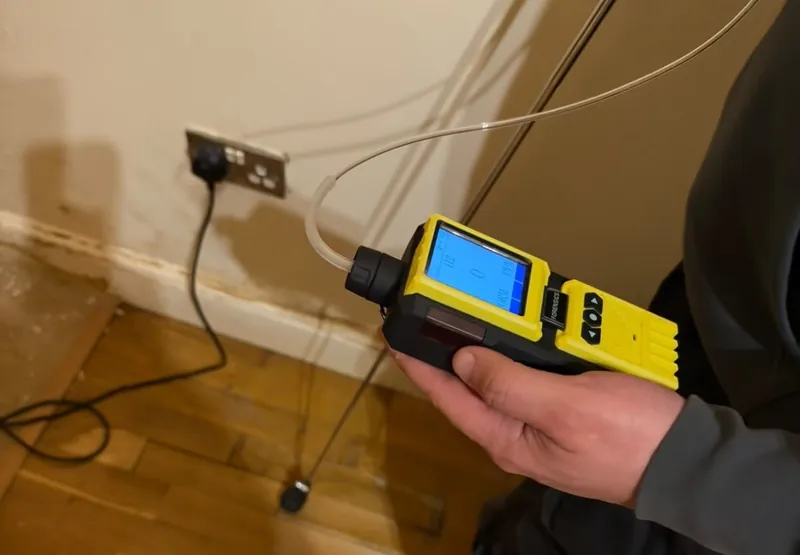
- We sweep the floor, skirting boards, sockets and wall bases with the detector, slowly, because the gas takes time to travel.
- We mark where readings are highest and cross-check with a second method where one reading is not enough.
At the end of the hour you may have a confirmed leak and a marked area. You may also have a clear statement that a section is sound, which narrows the search. The standard rate includes tracer gas, acoustic detection, thermal imaging, an endoscopic camera inspection, a trace and access report for your insurer and a written quote for the remedial works, so the findings go into a report and the repair is quoted in writing. The full visit is described in what happens on the day.
Sometimes the leak is also repaired in the same visit, for example where it is on an accessible joint. That is not the usual outcome, and repair is a separate quote that you agree to first.
How to read the result
A detector reading is a clue to a position, not a drawing of the pipe. The gas can travel along a void, a pipe sleeve or the edge of a screed, and surface along a different line from the leak. Good practice is to treat the strongest reading as the starting point, check the neighbouring readings, and confirm with another method before anyone lifts a floor or breaks a wall. That is a practitioner's approach, and the details change with the building.
| What we see | What it often means | What happens next |
|---|---|---|
| One strong spot, falling away on each side | A likely position for the leak | Confirm with a second method, then quote an access repair |
| A broad weak reading along a wall base | Gas travelling along a void | Search along the line to find where it enters the void |
| No reading anywhere on the test section | That section may be sound, or the gas may not be reaching the surface | Test another section or use a different method |
| Readings on two separate sections | More than one leak, or a shared joint | Isolate each section and test again |
It is also worth knowing that a test result applies to the section tested at that time. A section found sound today may feed something that fails next month. Our leak detection report sample shows how findings are written down.
What usually needs more than an hour
- A large house or a flat with long pipe runs, where the tested section has to be narrowed down first.
- Several leaks, where finding the first one does not stop the meter.
- A buried supply pipe, which needs route tracing as well as gas. Mains and supply pipe leak detection is a fixed £450, however long the job takes. See supply pipe leak trace and repair.
- A floor build-up that holds gas back, such as thick screed or bonded floor coverings.
- Pipework that cannot easily be isolated, so valves have to be fitted or found first.
Where a survey is likely to run past a couple of hours, We call you before the survey goes past 3 hours, so there is no surprise at the end. A typical 2.5 to 3 hour survey is £325 to £400. For how long jobs tend to take, see how long does leak detection take.
What it would cost under the pricing
Standard leak detection is £100 for the first hour, then £150 an hour, billed in half hours after the first hour, and everything included: tracer gas, acoustic detection, thermal imaging, an endoscopic camera inspection, a trace and access report for your insurer and a written quote for the remedial works. No VAT charged, and there is no parking charge. No find, no fee: if a leak is present and we do not find it, you pay nothing.
| Time on site | Total |
|---|---|
| 1 hour | £100 |
| 2 hours | £250 |
| 3 hours | £400 |
These totals are worked out from the rate. They are not taken from past jobs. The first hour has a minimum charge, so a job that finishes sooner is still charged at the first hour. Repairs are not in the survey price. They are quoted separately in writing once the leak is found, and nothing on this site gives a repair price. The pricing page has the full rate card.
What you can do before we come
- Find the inside stop valve and check it turns freely. Our guide to how to turn off your mains water shows how.
- Take a meter reading, wait 30 minutes with everything switched off and read again. Thames Water describes this as its test, and a moved reading points to a leak between the meter and the inside stop valve.
- Clear access to boilers, valves, under-sink cupboards and the floor along suspect pipe runs.
- Tell us about any recent work on the pipes, because new joints are a common place for leaks.
- Do not drill, dig or lift flooring to look for the leak first. It can damage the pipe and makes the search harder.
If the water is flooding the property, turn off the water at the inside stop valve and use the mains water leak what to do first hour guide. Book through report a leak or call 020 3961 5444. See the wider offer on leak detection for £100 for the first hour, other jobs on leak jobs that can be solved in one hour, and the guides for everything else.
