

Why a price by method is only half an answer
People search for the cost of a method because that is how many price lists are written: thermal imaging at one figure, tracer gas at another, a camera inspection at a third. It is a reasonable place to start, but a leak survey is not one method. It is a sequence. A surveyor usually starts with the cheapest, least invasive checks, such as the meter and a moisture reading, and brings in more specialised equipment only if the first answers leave the source unclear. That is a practitioner description of how surveys commonly run, and the order changes with the symptom and the building.
It means a method price is rarely the price of your job. If you were charged for every technique on a long list, the bill would be the sum of lines, and you would not know in advance how many lines the job needs. If the firm bundles the methods into an hourly rate or one fixed price, you pay for time or scope, not technique. Both are normal. The difference is who carries the risk of a job that needs more methods than expected.
This page explains what each method is for, how firms commonly charge for it, what two national cost guides say, and how each method sits in our own pricing. For the market view across firms, see leak detection prices in London compared. For our rates in one table, see the pricing page.
The methods at a glance
| Method | What it is for | How firms commonly charge for it |
|---|---|---|
| Moisture mapping | Showing where water has travelled in walls, floors and ceilings | Often part of a survey, sometimes a stand-alone damp diagnosis at its own rate |
| Thermal imaging | Spotting temperature differences from hidden water or warm pipework | Part of an hourly rate, or a separate line |
| Acoustic detection | Listening for the sound of water escaping from a pipe under pressure | Part of an hourly rate, a line item, or part of a fixed pipe trace |
| Tracer gas | Finding small leaks in pipes you cannot see or hear | Included at some firms and a separate charge at others |
| Pressure testing | Showing which section of pipework is losing pressure | Part of the time on site, or a separate line when done on its own |
| Camera inspection | Looking inside voids and pipework with a small camera | Part of an hourly rate, or a separate line |
| Pipe route tracing | Finding where a buried pipe runs before listening along it | Part of a fixed mains price at some firms, or by the hour |
| Written report | Passing findings to a landlord, agent or insurer | Included at some firms and charged on top at others |

The “commonly charged” column is a summary of how firms often present prices, based on our reading of cost guides and our own experience. Individual firms differ, which is why the last section of this page gives the questions to ask.
What the published guides say, method by method
We opened two national cost guides on 25 November 2026: a tradesperson directory’s guide (page marked updated May 2026) and a quotes comparison site’s guide (page marked updated 22 October 2026). Both are third-party ranges for the whole UK. They change, and neither says whether its figures include VAT, so check the pages before relying on any number. Amounts are in words.
| Method | Directory cost guide | Quotes comparison guide |
|---|---|---|
| Thermal imaging | 150 to 1,000 pounds | 150 to 500 pounds |
| Acoustic | 1,000 to 1,500 pounds | 150 to 400 pounds |
| Tracer gas | 250 to 2,000 pounds | 250 to 600 pounds |
| Pressure testing | Not given | 100 to 300 pounds when carried out separately |
| Endoscope or borescope inspection | Not given | 100 to 250 pounds |
| Moisture meter testing | Not given | Described as often included with a survey |
| Underground pipe detection | Not given | 300 to 800 pounds, with excavation and pipe repair charged separately |
| Water dye | Says prices vary and to ask a specialist for a quote | Not given |
The two guides agree on tracer gas at the bottom of the range and disagree sharply on acoustic detection, where one gives 1,000 to 1,500 pounds and the other 150 to 400 pounds. The pages do not say why. A reasonable guess, offered as a practitioner view and not as a finding, is that “acoustic” covers very different amounts of work: a quick listen at a fitting, or a surveyed run of buried pipe with a written trace. If you see a method price that looks too high or too low, ask what it covers before you decide.
Moisture mapping and damp diagnosis
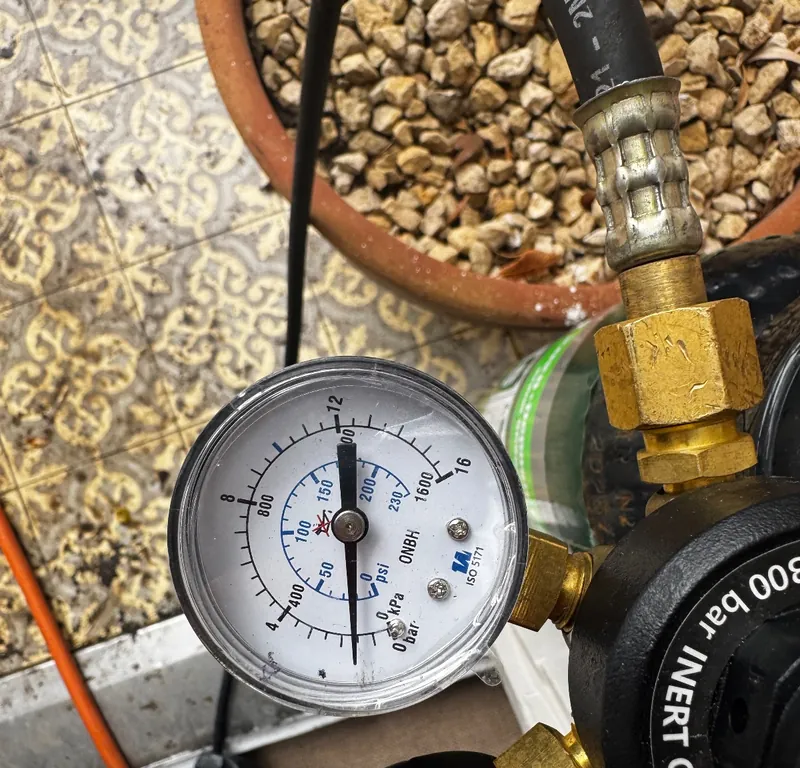
A moisture meter reads how wet a surface is, and mapping means taking readings across a wall, floor or ceiling to see the shape of the damp. It does not find a leak by itself. It shows where water is and, from the pattern, where it may be coming from. A tide mark that spreads from one point reads differently from a broad damp patch caused by condensation, though telling them apart takes judgement and sometimes a second method.
How firms charge: many treat it as a first step inside a survey, and the comparison guide above describes it as often included. Others sell a damp diagnosis as its own visit. In our pricing, moisture mapping done as part of a standard survey sits inside the hourly rate, and a stand-alone moisture and damp diagnosis has its own rate, from £175/hr. Our page on moisture mapping and damp diagnosis explains what the visit involves.
Thermal imaging
A thermal camera shows temperature differences on a surface. Water behind a wall can be cooler than the wall around it, and a leaking hot pipe can be warmer. It is non-invasive and quick to scan with. Its limits, in practice, are that it works best when there is a measurable temperature difference, that a cool pipe in a cool wall can show very little, and that the image needs interpreting by someone who knows what else can cause the same pattern. We would treat a thermal image as a pointer to the next check, not a verdict.
How firms charge: as a line item or inside an hourly rate. In our standard price it is included, with no separate charge. See non-invasive leak detection for what it can and cannot show.
Acoustic detection and ground microphones
Water escaping from a pressurised pipe can make a sound. Acoustic detection uses sensitive microphones or listening devices on the pipe, at valves and fittings, or on the ground above a buried pipe, to find the point where the sound is loudest. For a buried supply pipe, two sensors on either side of a suspected leak and a correlator can narrow the position by comparing when the sound reaches each one. How well it works depends on the pipe material, the pressure, the soil and the background noise. In our experience, plastic pipe tends to carry sound less well than metal, and a quiet night helps, but those are general tendencies and not guarantees.
How firms charge: acoustic work is often the main component of a mains or supply pipe survey, so it is frequently bundled into a fixed price or an hourly survey rather than listed alone. The wide gap between the guides above suggests that a stand-alone “acoustic” figure covers very different scopes. In our pricing, acoustic detection is included in the standard hourly rate, and acoustic and ground-microphone detection are part of the fixed mains and supply pipe price, a fixed £450, however long the job takes. Excavation and the repair itself are quoted separately.
Tracer gas
For a leak that is too small to hear or too well hidden to see, a harmless tracer gas can be put into the pipework. The gas escapes through the same opening as the water and is detected at the surface with a sensitive sniffer. It suits slow leaks under floors, slabs and paving, and heating pipework that cannot be inspected any other way. It needs the pipe to be isolated and filled, so it takes preparation, and it is slower where there is thick screed or sealed flooring because the gas takes longer to reach the surface. Those are practitioner observations.
How firms charge: this is where practice differs most. Some firms include the gas, others charge a separate fee for the gas or its bottle. The directory guide gives tracer gas as 250 to 2,000 pounds and the comparison guide as 250 to 600 pounds, so the widest part of the market range is in the gas line. In our standard price tracer gas is included, with no separate charge. Ask any firm whether gas is an extra before you compare totals.
Pressure testing and isolation
A pressure test closes off a section of pipework and watches whether the pressure falls. If it falls, there is a leak in that section. Repeating the test on shorter sections narrows it down. It is a way of deciding where not to look, which saves time later. It does not give a position by itself.
How firms charge: the comparison guide gives 100 to 300 pounds when pressure testing is carried out separately. When it is part of a survey it is normally part of the time on site. In our pricing it is part of the hourly rate. Our page on the meter leak test shows a simple version you can try yourself before booking.
Camera inspection
An endoscopic camera on a flexible lead can look into a void, under a bath or along a duct without opening the structure. It is the way to confirm what an acoustic or thermal reading suggests, for example that a joint is wet or a pipe has a split. It cannot go where there is no route in, and it shows a small area at a time.
How firms charge: as a line item at some firms. The comparison guide gives 100 to 250 pounds for endoscope or borescope inspection. In our standard price an endoscopic camera inspection is included. Drain camera surveys are a different service, and nothing here is a price for them.
Pipe route tracing
Before you can listen along a buried supply pipe you need to know where it runs. A pipe locator picks up a signal along the pipe or from a probe fed through it, and shows the route above ground. In older London properties the route may not match a drawing or where the stopcock suggests. Our guide on where the water supply pipe runs explains what a route tells you.
How firms charge: sometimes by the hour and sometimes inside a fixed mains price. In ours it is part of the fixed price for mains and supply pipe detection, together with the acoustic and ground-microphone work, the trace and access report and a written quote for the remedial works. See supply pipe leak trace and repair for how that job runs.
How these methods sit in our pricing
We do not price by method. Standard leak detection is £100 for the first hour, then £150 an hour, billed in half hours after the first hour, with tracer gas, acoustic detection, thermal imaging, an endoscopic camera inspection, a trace and access report for your insurer and a written quote for the remedial works all included. We call you before the survey goes past 3 hours, so a longer job is your decision. A typical 2.5 to 3 hour survey comes to £325 to £400. Mains and supply pipe detection is a fixed £450, however long the job takes. No VAT charged. There is no parking charge and no separate charge for tracer gas.
| Method | How it is charged here |
|---|---|
| Thermal imaging | Included in the standard hourly price |
| Moisture mapping | Inside the standard survey; stand-alone damp diagnosis at its own rate |
| Acoustic detection | Included in the standard price, and in the fixed mains price |
| Tracer gas | Included in the standard price, no separate charge |
| Pressure testing | Part of the time on site |
| Camera inspection | Included in the standard price |
| Pipe route tracing | Part of the fixed mains and supply pipe price |
| Written report | Included |
Repairs are not part of any of this. They are quoted separately, in writing, after the leak is found, and we do not keep a repair price list. No find, no fee: if a leak is present and we do not find it, you pay nothing. How that applies to your job is confirmed before anyone travels.
Questions to ask any firm about methods and cost
- Which methods will you use on my job, and in what order?
- Are those methods part of one hourly rate or fixed price, or is each a separate line?
- Is tracer gas included, or is there a charge for the gas or the bottle?
- Does the price include a written report with photos?
- Is there a minimum time or a call-out fee?
- What happens to the price if the first method does not find the leak?
- What do I pay if nothing is found, and where is that written?
The longer list is in questions to ask a leak detection company. If the quote you hold does not answer them, it is not yet a price you can compare. For the difference between paying by the hour, by fixed price and on results, see hourly rate, fixed price or no find, no fee. When you are ready, report a leak, or browse the guides hub.
How this comparison was made
Every figure in a comparison is dated and names its source. How we price our own work, and where the other numbers come from, is set out in how we price and source.
