
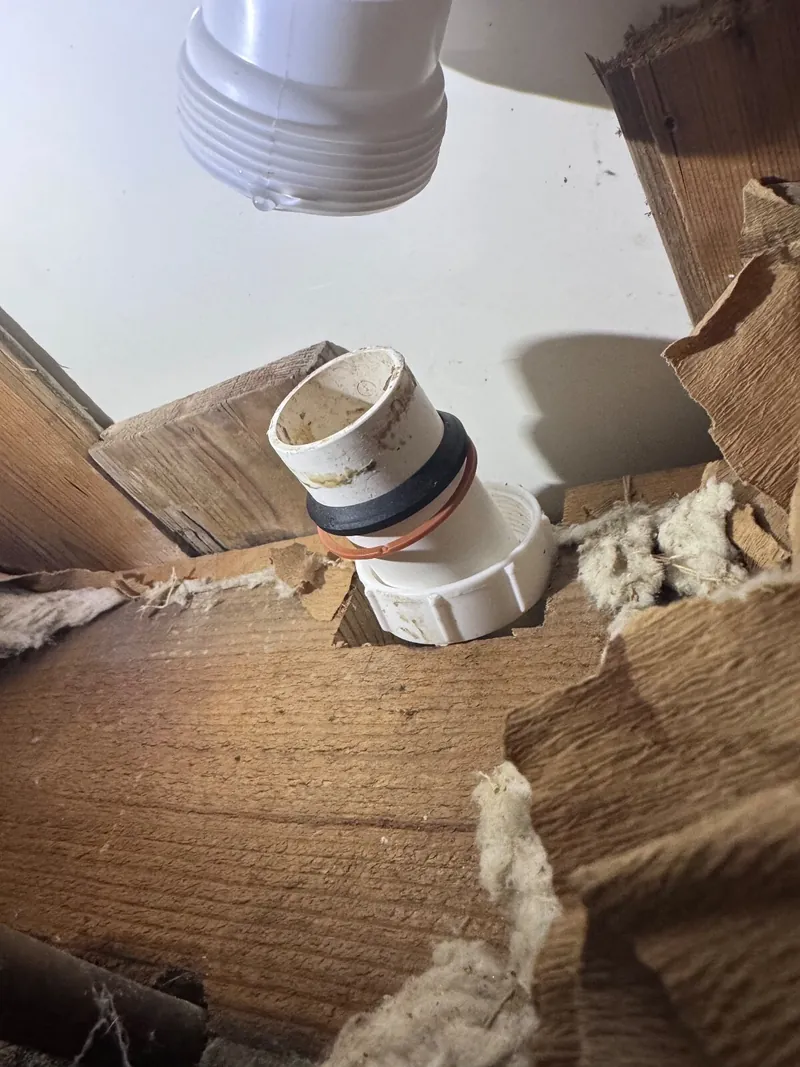
What draining down is, and when it makes sense
Draining down means emptying the water out of the pipes so that nothing is left to freeze. It is the strongest protection against frost damage, because a pipe with no water in it cannot split. It is also a bigger job than lagging, and it moves the risk to the day you refill.
People drain down for a few reasons: a home that will be empty for weeks in winter, a building that is unheated while work is done, a holiday let or second home closed for the season, and a plumbing repair or alteration that needs the system empty. For a single repair a plumber will isolate and drain only the part they need, which is quicker and safer than emptying the whole house.
For an ordinary weekend away, draining down is usually more trouble than it is worth, and how to lag pipes in the UK plus a low heating setting is the common choice. For a long absence, read leaving your home empty in winter, which sets out the options by length of absence, and check your insurance policy before you decide.
What the sources say, and what they do not
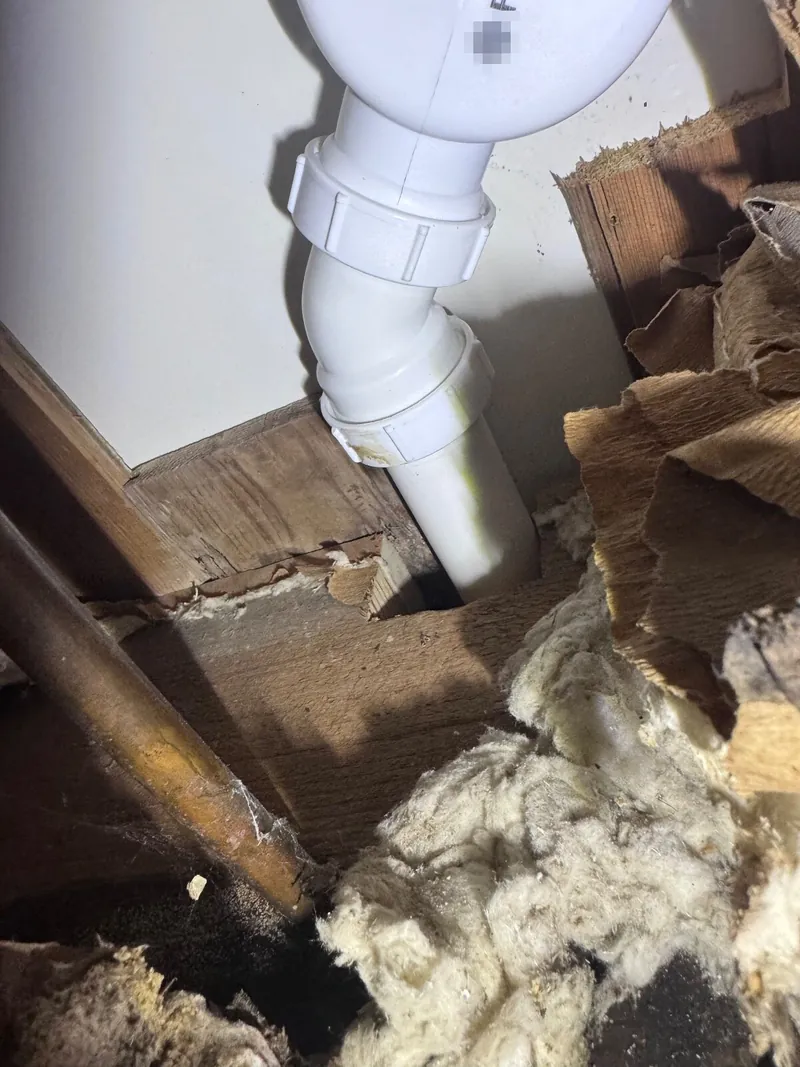
We read these sources on 24 and 25 November 2026. They differ.
- Admiral’s freeze page says that if you leave a property unoccupied you should turn off the water supply at the mains and drain the system, and that for a long winter absence you should drain your systems first. It also suggests leaving the boiler on a low or frost-protection setting if it has one, and lagging accessible pipes and tanks.
- The Financial Ombudsman Service, in a page dated 26 May 2023, describes policy terms that insurers may apply to empty homes: keeping the heating on above a set temperature, visits at set intervals, and draining the heating system and water tanks during certain periods, usually November to March.
- Thames Water’s frozen and burst pipe page describes turning off the stop valve and opening taps. It does not give advice on draining down for a long absence. The Thames Water winter advice and the Consumer Council for Water winter advice we read do not cover going away either.
The first two do not say the same thing, and neither says how to do it. An insurer might ask you to keep the heating on and also to drain the system, and those cannot both be done in the same way. If your policy mentions either, ask the insurer in writing what it means in your home. The practical steps below come from plumbing practice, not from an official standard, and they are our own judgement to be confirmed by a plumber or heating engineer for your system.
First, know which system you have
The right method depends on how the water is stored and heated. Look at what you have before you touch a valve.
| Your setup | What to know | Who should do the drain-down |
|---|---|---|
| Combi boiler, no hot water cylinder, no loft tank | Cold water comes straight from the mains and the boiler heats it as it flows. Fewer places to hold water, but the boiler, the heating circuit and the condensate pipe still need thought | You can close the stop valve and open taps. Ask an engineer about the boiler and the heating circuit |
| Vented cylinder with a loft tank | A cold water tank in the loft holds water, and a hot water cylinder is fed from it. Closing the stop valve does not empty the tank | Doable by a careful owner for the cold water side. A plumber for the cylinder if there is no drain cock |
| Unvented (pressurised) hot water cylinder | A sealed cylinder with safety valves and discharge pipework. Do not drain it or touch its valves yourself | A qualified engineer |
| Sealed heating system (radiators filled from the mains through a filling loop) | Water in the radiators is a separate circuit. Draining it means refilling, bleeding and topping up pressure, and treatment chemicals in the water may be lost | A heating engineer |
| Flat with a shared supply or a block system | Your valve may isolate only your flat. Shared risers, tanks and pumps belong to the freeholder or managing agent | Ask the managing agent before you start |
If you cannot work out which row you are in, stop and ask. An engineer can tell in a minute, and a mistake with a sealed system or an unvented cylinder costs far more than the visit. If the building has lead pipework, see how to tell if you have a lead water pipe before doing anything that moves the pipe.
Before you start
- Tell your insurer if the home will be empty for a long period, and read what the policy says about heating, visits and draining. Do this before you leave, not after a claim.
- Find your inside stop valve, usually under the kitchen sink, and check it closes. Thames Water says to turn it clockwise and not to force it. How to turn off your mains water covers the valve and what to do if it is stuck, and stopcock and isolation valve maintenance covers keeping it working.
- If you have a water meter, take a dated photo of it. That gives you a baseline when you come back. Where the meter sits and how to read it is in how to read a water meter.
- Check you are not draining a system that something relies on, such as a medical device, a shared supply or a neighbour’s flat below.
- Warn the household. Everyone should know the water is off and when it will come back.
- Gather towels, a bucket, a hose for a drain cock if you have one, and a torch.
Draining the cold and hot water
This is the general order for a typical house. The sequence reflects common plumbing practice, and your home may need changes.
- Turn off the central heating at the programmer, and switch off any immersion heater at its isolator. An immersion element running with no water around it can burn out.
- Close the inside stop valve by turning it clockwise until it stops. Do not force it.
- Open the cold tap at the highest point in the house first, usually a bathroom basin or bath tap upstairs, so that air can enter the system and the water can leave. This is our own practice, and it helps the pipes empty instead of holding a column of water.
- Open the other cold taps, working down, then the kitchen tap. Leave them open.
- Open the hot taps in the same order, so that the pipes from the cylinder empty. If there is a combi boiler there is no stored hot water, but the same rule about switching off the heating applies.
- Flush every toilet and hold the handle until the cistern empties. Mop out what is left in the bottom if you will leave the home for weeks, because a cistern with water in it can still freeze. Check whether a plumber would rather leave a little water in the toilet pan trap, because that water holds back sewer smells.
- If you have a drain cock at the lowest point of the pipework, or a drain-down valve fitted for the purpose, connect a hose, run it to a drain or outside, open it and let the system empty. Not every house has one, and finding it is the point of asking a plumber.
- If you have a loft cold water tank, close the valve between the tank and the house if one exists, then open the taps below until it runs dry. The tank has its own float valve, so check what feeds it before assuming it is empty.
- Leave all taps open while the house is empty, so the system stays at atmospheric pressure and any trapped water has a way out.
Appliances, outside taps and the places people forget
- Washing machine and dishwasher. Hoses and pumps hold water. Follow the manual’s instructions for draining, and close the isolation valves on their supplies. Our guide on washing machine hose leaks and prevention is useful here, and a hose that has been dry for weeks is a good moment to look at it.
- Outside tap. Close its isolation valve inside the house if there is one, then open the outside tap and leave it open. See outside tap: frozen or leaking.
- Garage, outhouse or garden supply. Water to a utility space often branches off the main run. Treat it as a separate part of the system. Water leak in a garage or outbuilding supply covers the supply side.
- Condensate pipe. A frozen condensate pipe can stop a boiler. Worcester Bosch suggests insulating the outside run and fitting a drain cover. This is a boiler job, not a water-drain job.
- Shower, bath and basin traps. Water in a trap stops smells. Some people add a little antifreeze to traps in a very cold space. We would not do it without asking a plumber, because the wrong product can harm pipes and the drains, and we do not endorse a particular product.
- Water softener, water filter, expansion vessel and pumps. Each holds water and has its own instructions.
The heating system is a different job
Draining the taps does not drain the radiators. Many insurers ask you to keep the heating on at a minimum, and the Financial Ombudsman Service gives draining the heating system as another condition some policies use. A heating system left full and unheated is the one at risk of freezing. A heating system drained down brings its own problems: air in the system, rust, loss of inhibitor and a refill that must be done properly.
In our experience the safe approach for most homes is one of two: leave the heating on a low or frost setting with someone checking the house, or hire a heating engineer to drain, treat and refill the system. A half-way job, with the water off and the heating still firing, is the common cause of a locked-out boiler and a cold house. That is practitioner opinion, not a rule.
Many boilers have a frost protection mode that runs the boiler when the temperature drops. Admiral’s page suggests using it if you have it. Check the manual. A frost setting needs gas, power and a working boiler, so it is not a substitute for a visit. If you close the stop valve, check whether your boiler needs mains water to work. Some systems cannot be left with the supply off, which is a question for your engineer.
Refilling and checking for leaks
Most leaks after a drain-down show up in the first hour of a refill, when a joint that was dry under no pressure meets the mains again. Go slowly.
- Close all the taps and any drain cocks, and make sure the toilets’ flush valves are shut.
- If you have a loft tank, check its float valve closes and it will fill properly.
- Open the inside stop valve slowly. Leave one tap near the stop valve open at first, so air can clear.
- Open each tap in turn, starting with the lowest. Let each run until the water is steady, then close it. Air makes taps spit, which is normal.
- Watch every visible pipe, joint and valve for five minutes. Look under sinks and at the cylinder connections. Run a dry cloth along each section. Thames Water’s thaw advice uses the same dry-cloth check, and says to keep the water off if a leak shows.
- Check the ceilings below any bathroom and the walls near the pipes. A drip may take a while to appear.
- Do the meter test: with everything off, note the reading, wait 30 minutes as Thames Water’s identifying leaks page describes, and read again. If it moved, the leak is between the meter and the inside stop valve. How to do a water meter leak test has the steps.
- If you had the heating drained, ask your engineer to refill, bleed and check the pressure.
- Look again at bedtime and the next morning, and a few days later.
If the meter moves and you cannot see why, treat it as a hidden leak until proved otherwise. We trace leaks without opening up the house first, using thermal imaging, moisture mapping and tracer gas where needed. See what happens on the day of a leak detection visit for how it works.
When to call a plumber, and when to call us
Call a plumber or heating engineer if you have an unvented cylinder, a sealed heating system, a combi boiler you are unsure of, a shared supply, a valve that will not turn, or any lead pipework. A plumber can also fit a drain-down valve at the lowest point so the job is easier next winter. If water appears in a place you did not expect after the refill, close the stop valve first, then ring.
We are an independent leak detection firm that also plumbs. Our job is to find leaks, not to price repairs in advance. Our rate for standard leak detection is £150/hr, typically £325 to £400 for a visit, with tracer gas and the written report included in the price. No VAT charged. Any repair is quoted in writing after the leak is found. See the pricing page for every rate, and report a leak when you want us to look.
If a refill reveals water damage, shut the stop valve, take photos before you move anything, and tell your insurer promptly. NFU Mutual says to contact your insurer as soon as possible and keep receipts. For the rest of the topic, start at the guides hub.
