
Who we are, and what this page is not
Water coming into a home from a burst main is frightening and expensive, and the advice online is a mixture of news stories and claims-firm marketing. We went to the primary pages: Thames Water's own help pages, the text of the Water Industry Act 1991 on legislation.gov.uk, Thames Water's Customer Guarantee Scheme document and CCW, the consumer body for water. Where they are silent we say so rather than guess. Every date in the text is the day we read the page, and the pages carry no "last updated" stamp, so read them again on the day you act.
First question: which pipe did the water come from?
"Burst main" is used loosely. Everything after the first hour depends on which pipe failed, so settle it early, even if the answer is "not sure yet".
| Where the water came from | Whose pipe, in general | Where to start |
|---|---|---|
| The public main under the road or pavement, or the short pipe from it to your boundary (the communication pipe) | Thames Water's, according to its pipe responsibility page and leakage code of practice | Report it to Thames Water, then follow the claims route on its incident page (below) |
| The supply pipe from your boundary into the house | Generally the property owner's, per the same Thames Water pages | Stop the water, get the leak found and repaired, tell your insurer. See who owns the water supply pipe |
| Pipes, tanks and fittings inside the building | The owner's, or the landlord's in many tenancies | Stop the water at the inside stop valve and start an insurance claim. See the escape of water claim checklist |
The meter or stopcock position does not decide pipe ownership. Thames Water describes the outside stop tap and the meter as its own equipment, usually near the boundary, but a pipe is not "the water company's" just because it sits on the street side of your meter. Our page mains water leak: who is responsible and who pays walks through the boundary in more detail.
If water is bursting out of the road or pavement and into your property, the street main or its connection is the likely source. If water arrives as a wet floor, a wet wall or a bubbling patch in the garden with no sign of anything in the street, it may be your own supply pipe or internal plumbing. Nobody can tell from the surface alone, which is why a trace matters if the source is not obvious. In our experience hidden water travels along pipes, joists and screed before it shows, so the wet patch is rarely where the failure is.
Right now: safety, then stopping the water
Safety comes before the claim. Our page on what to do in the first hour of a mains water leak has the full order. The short version for a flood:
- If water is near sockets, the consumer unit or an appliance, do not stand in it. If you cannot reach the consumer unit dry, leave and call the emergency services or your electricity distributor from outside.
- Close the inside stop valve, usually under the kitchen sink, by turning it clockwise without forcing it. Thames Water gives the same advice and says the outside valve is for emergencies such as a supply pipe leak between the two. If the burst is on the street side, closing your inside valve will not stop the street leak, but it can stop more water entering the house if the supply is still on.
- Do not force a seized valve. Thames Water says to call a plumber if neither valve works. Our emergency and out of hours rate is from £220/hr, and you can report a leak or call 020 3961 5444.
- Move people, pets and anything valuable to a dry room. Lift soft furnishings and papers off the floor if it is safe.
- Photograph and film the water, the source if you can see it, the affected rooms and the meter box before you clear anything. Video with a spoken date and time is worth a lot later.
The "do not clear up before you have been seen" caution is general claims practice rather than something we have read on a Thames Water page, so ask your own insurer what it wants kept.
Telling Thames Water, and what its incident page says

Thames Water's page "After an incident happens", read on 25 November 2026, covers supply interruptions from burst mains, water quality after an incident, and internal flooding from clean water. For property damage from a mains water flood it says to contact the customer contact centre, where a claims team explains the process. Its contact numbers differ from page to page, so we print none. Use the report a problem page and the contact details on the incident page itself.
What the page describes, in its words as we read them:
- For clean water internal flooding it says Thames Water sends contractors who will visit within two hours of your call.
- For mains water flooding damage, a loss adjuster and the claims team discuss next steps with you. The page says that from 1 April 2026 a new firm handles claims for new incidents, and that some existing claims move across gradually.
- For major internal flooding the page says loss adjusters assess the damage, explain what to expect, arrange emergency work such as pumping out and drying equipment, and arrange alternative accommodation if you need to move out.
- Out of hours callers are described as getting a callback on the next working day.
That is a description of a process, not a promise about your claim. The page does not say how the claim is decided, how long a decision takes or what evidence is needed, and it does not say how the process fits with your own home insurance. Ask for those answers in writing when you make the call.
- Note the date, time and the name of whoever you speak to, and ask for a reference number.
- Follow up by email or the online form, so there is a written record of what you reported and when.
- Ask who the loss adjuster is, and whether Thames Water wants to inspect before any clearing or repair work starts.
- Keep every invoice for emergency work, hotel stays, taxis and storage from day one.
If the water has stopped but the road is still flooding or the main is still running, report the leak itself on Thames Water's report a problem page, separate from your damage claim. Thames Water says it prioritises repairs by the amount of water lost, the effect on customers' supply, complexity and location, and does not publish a fixed repair time on its repair process page.
The legal rule: section 209 of the Water Industry Act 1991
Alongside whatever process a company runs, there is a statute. Section 209 of the Water Industry Act 1991, in the revised version on legislation.gov.uk that the site says was up to date to 25 November 2026, deals with civil liability for escapes of water. Subsection (1) says that where an escape of water, however caused, from a pipe vested in a water undertaker causes loss or damage, the undertaker is liable for that loss or damage, subject to the exceptions in the section.
Three points a reader can take from the text, without reading it as a verdict on any case:
- "However caused" means the section is not limited to cases where the company was careless. The section reads as a form of liability that does not depend on proving fault, though the exceptions below still apply.
- It applies to a pipe vested in the undertaker. The pipes a water company looks after, according to Thames Water, are its mains and the communication pipe. Your own supply pipe is generally yours, so a burst there is outside the usual reach of this section, and section 209(2) separately says there is no liability where the escape was due wholly to the fault of the person who suffered the loss or of their agent or contractor.
- Subsection (3) removes liability for certain losses suffered by listed bodies such as other statutory undertakers, highway authorities and the Environment Agency. It is not aimed at householders.
The section does not set a form, a deadline, an amount or a procedure, and it does not say how a claim is valued. The limitation rules for civil claims are a separate question. Those points are for a solicitor or a free advice service, not for a plumber or a web page. If your loss is large, get independent legal advice before you sign anything that ends the claim.
Compensation for the incident is not the same as paying for the damage
Two different things get called "compensation" after a burst main, and mixing them up leads to confusion.
| Service payment | Damage claim | |
|---|---|---|
| What it is | A fixed sum from Thames Water's Customer Guarantee Scheme when it misses a set service standard, such as restoring supply in time | A claim for the cost of repairing or replacing what the water damaged |
| Where it is set out | Thames Water's Customer Guarantee Scheme for household customers | Its claims route on the incident page, your own insurance, and the law, including section 209 |
| Who decides | The scheme says disputes can be referred to Ofwat | Thames Water's claims team, your insurer or, if it comes to it, a court |
The scheme document does not list a payment for clean water from a burst main entering your home. It lists payments for flooding from sewers (a different thing), for supply interruptions, for low pressure and for service failures such as missed appointments. Our separate page, Thames Water compensation and guaranteed standards, goes through each standard, how to claim and the time limits. One point from it matters here: the scheme document says a payment made under the scheme does not count as an admission of any other liability, and that accepting it does not affect any other liability Thames Water has to you. Read the wording of any settlement in the same spirit before you accept it.
If your supply was cut because of the burst, Thames Water's page says that if you are eligible it will automatically credit your account and you do not need to make a claim. The scheme document gives the time limits and amounts, and they are covered on the compensation page.
Your own insurance, in parallel
A claim on the water company and a claim on your own policy are not either/or, and waiting for one can delay the other. Thames Water itself advises checking your home insurance before arranging a repair, since some policies cover leaks. Tell your buildings insurer, and your contents insurer if they differ, as soon as it is practical, give the same facts you gave Thames Water, and ask what they want preserved.
- Does home insurance cover water leaks? sets out what policies commonly cover and where they differ.
- Escape of water claim checklist is the document and evidence list to start from.
- What a loss adjuster does after a water leak explains who will turn up and why.
- Escape of water excess covers the excess, which is on your policy schedule rather than a standard figure.
Some insurers want to agree costs before work starts. Ageas, for one, says on its tracing pages to get its agreement first and that costs are not repaid if the claim is declined. Whether yours behaves the same way is in your policy, not here. Whether your insurer accepts anything we write is its decision.
What to keep, from the first hour
- Dated photographs and video of the source (if visible), the water, each affected room and the meter box.
- The meter reading, with a photograph of the meter face, and the serial number so it can be matched to your bill.
- A written timeline: when you first noticed water, when you closed the valve, who you called, the time and the reference given.
- Copies of everything sent and received, including emails, letters and text messages.
- Receipts for emergency work, accommodation, extra living costs and replacement items.
- An inventory of damaged items with age, approximate cost and photographs of model labels where possible.
- Names of neighbours who saw it, and whether neighbours had the same problem. If the street was affected, that matters to the cause.
If you do not know where the water came from, a written leak detection report with photographs can describe the location and the cause. We provide one with every survey, and you can send it to your insurer or to Thames Water if it is relevant, but whether either accepts it is their decision. Look at our sample leak detection report to see what ours contains.
The bill afterwards
If the burst was on your side of the boundary and you have a meter, the meter counts everything that passes it. The Thames Water leakage code says a metered customer is liable for all water recorded by the meter, including water lost to a supply pipe leak. For a leak on your own pipes, Thames Water says it may cover the cost of the lost water through a leak allowance if the repair is made within four weeks of being made aware and you claim within three months of the repair date, on its page read on 25 November 2026. That allowance is for the customer-side leak, not a burst on the street. Our leak allowance evidence checklist is the document list for it.
If you have no meter, check what to expect on unmetered water bills. If the bill rises sharply after an incident and you are not sure why, dispute a water bill that is too high gives the order of steps.
When the burst turns out to be on your side
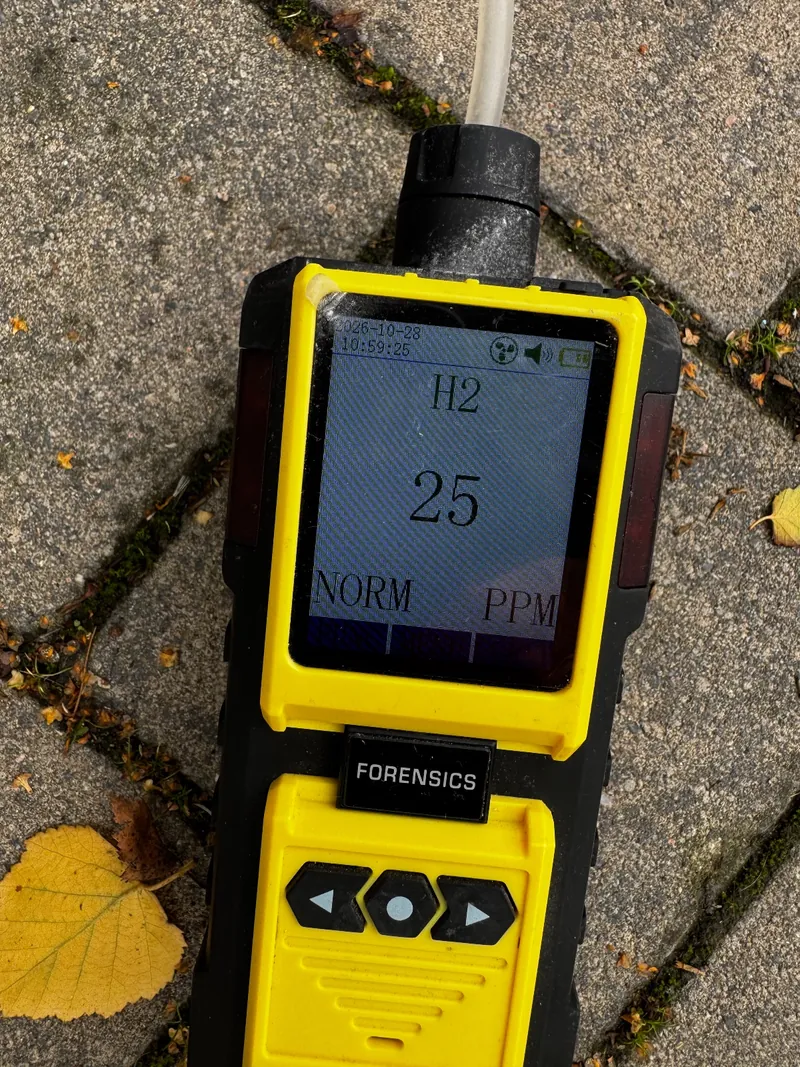
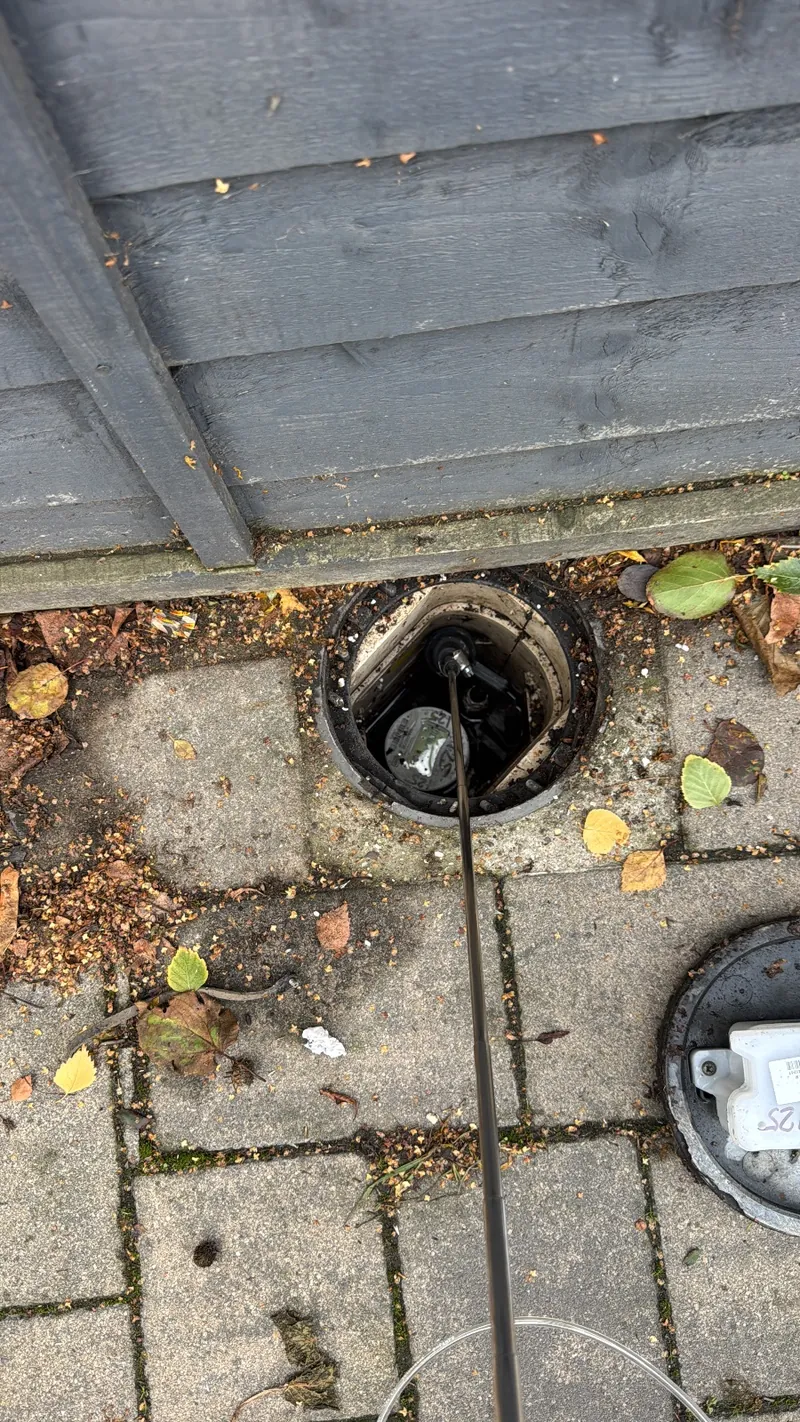
Sometimes the first guess is wrong. The "burst main" is a supply pipe, a pipe in the wall or a failed fitting. Then the repair is yours to arrange, with the four-week clock from Thames Water's pages running from the day it is confirmed. Our job is to find where the water is escaping so that a repair is dug or opened in the right place. A standard mains and supply pipe trace is a fixed £450, however long the job takes, and tracer gas is included in the rate. No VAT charged. Repairs are not priced from a list: once the leak is found we quote the repair in writing and you decide.
Thames Water recommends a WaterSafe-listed contractor for hidden or outside leaks. We are not on the WaterSafe register and claim no accreditation, so weigh that when you choose. The pricing page lists every rate, and our guides cover what happens next. If the leak is in a supply pipe, supply pipe leak trace and repair explains the work.
If you want a trace booked, report a leak with your postcode and what you can see.
