
The problem
A flat in Wandsworth had a leak that appeared on its own schedule. It showed when the toilet was flushed, and the neighbour in the flat below said water had been coming through on and off for a while. There was damp in the walls and under the flooring of the upper flat as well.
Nothing about this is unusual for a converted building or a purpose-built block. Water finds its way through a floor and turns up somewhere else. The difficulty is that "a leak" can mean four or five different things, and each has a different owner and a different bill. Ours was to work out which one this was.
What we checked
We started where the symptom started: the toilet. Flushing it and watching the connection behind the wall is cheap and quick, and it tells you straight away whether the waste side is involved.
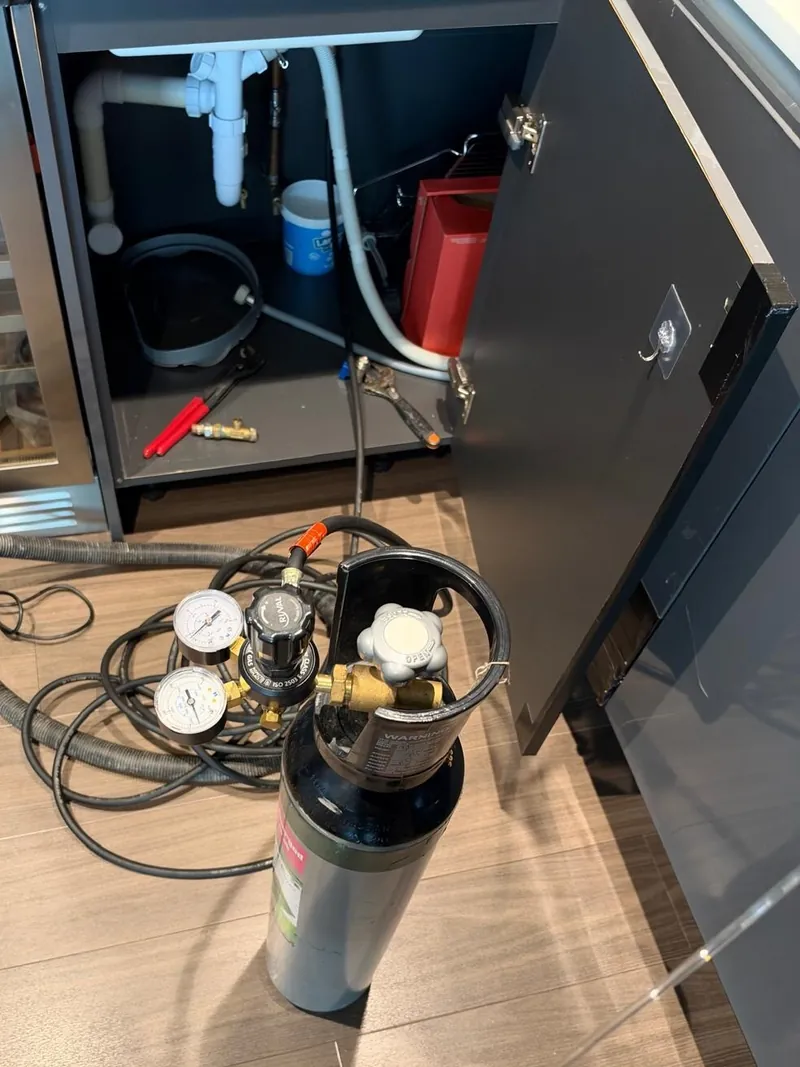
Once we had a likely cause, we did not stop. A confirmed leak in one place does not prove that it explains all the damp. So we went on to test the pressurised pipework as well, because supply leaks are the ones that run all day and do the most harm.
- A visual check of the toilet and the connection behind the wall while the toilet was flushed.
- A tracer gas test on both the hot and cold water supplies, to look for any concealed leak under floors or inside walls.
- A 30 minute pressure test on each supply, noting the pressure at the start and at the end.
- An access opening in the party wall, at the customer's request, in the spot with the worst moisture.
- A reading of the pressure on the underfloor heating manifold, which we spotted on the way past.
If you want to know how tracer gas works and when it is worth using, we explain the method on the non-invasive leak detection page.
What we found
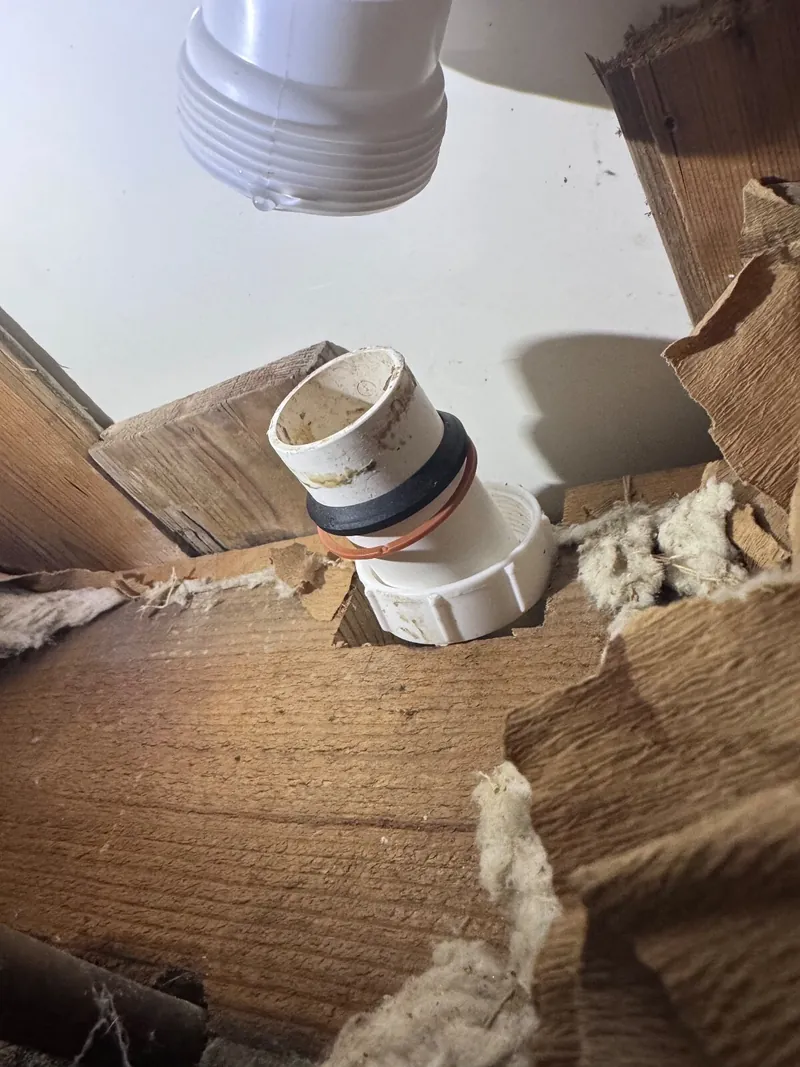
The toilet was dripping. Water was visibly coming from the joint between the pan connector, the angled fitting behind the pan, and the soil pipe. The soil pipe itself was bowing, so the connector was not entering it straight, and each flush pushed a little water out at the joint.
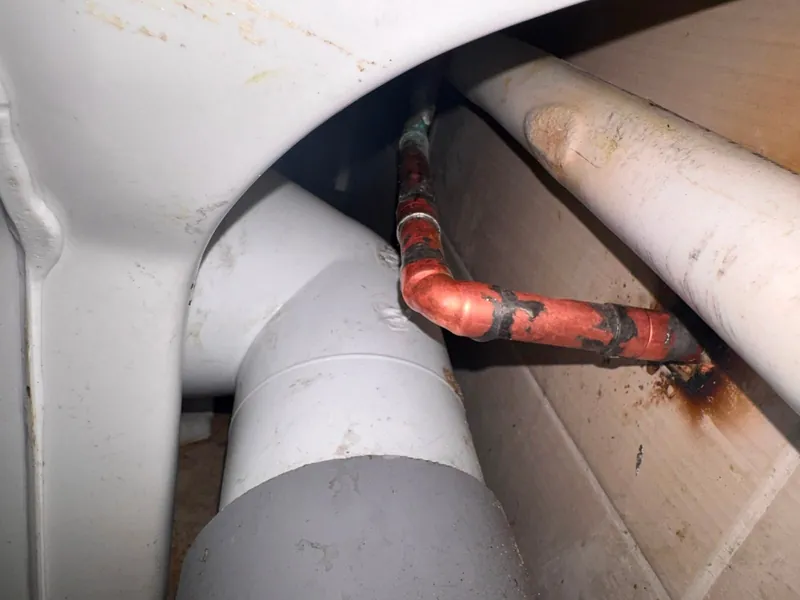
The supplies came back clean. The tracer gas test found nothing on either the hot or cold side. The cold supply started the 30 minute pressure test at 3.2 bar and finished at 3.2 bar. The hot supply started at 3.0 bar and finished at 3.0 bar. Pressurised pipework that holds its pressure that well is not leaking in any way a test of this length can see.
The wall was less tidy. When the access opening was made, the insulation in the cavity was soaking wet, and the plasterboard on the neighbouring side showed clear moisture too. That points at the possibility of water coming from the adjoining property. We could not confirm it on the day, and the report said so.
On the way past, we also noticed the pressure on the underfloor heating manifold was under 1 bar. That was not part of the job, so we told the customer, and suggested they pass it to the building management team to investigate.
What we did on the visit
The repair was a matter of alignment, not of replacing anything big. The soil pipe was raised and stabilised so that it sat straight, and the pan connector now went into it properly. The defective connection was repaired on the visit.
Everything else was evidence. The record lists what was tested and what each test showed, including the results that were negative, because a negative result is information. For a landlord, a managing agent or a claims handler, "the supplies held pressure" is as valuable as "the toilet was leaking".
The job record does not give a duration for the visit, so we do not claim one. The sequence is the point: symptom first, then a cause, then a test of every other route water could have taken.
What a visit like this costs under our pricing
We are not reprinting what this customer paid, and nothing here is a quote for your job. This is how our current pricing treats a visit of this kind.
Standard leak detection is £100 for the first hour, then £150 an hour, with extra time billed in half hours at £75 after the first hour. The first hour is the minimum charge. Two hours comes to £250 and three hours to £400. A typical survey is £325 to £400. Everything included: tracer gas, acoustic, thermal imaging, camera inspection, insurer report and a written repair quote, no parking charge
- tracer gas, acoustic detection, thermal imaging, an endoscopic camera inspection, a trace and access report for your insurer and a written quote for the remedial works
- We call you before the survey goes past 3 hours
- No VAT charged
- No find, no fee: if a leak is present and we do not find it, you pay nothing
A repair like the soil pipe fix here is quoted in writing and kept separate from the survey. See the pricing page for how the two fit together.
What to take from this
- A leak that appears only when a toilet is flushed is almost always a waste problem, not a supply problem. A pressure test can prove that.
- Find one leak, then keep testing. Damp in a wall can have more than one source.
- Ask for negative results in the report. They are your evidence that other routes were checked.
- If neighbours are involved, an honest report that says "could not confirm" is more useful than a confident guess. Our page on who is responsible for a water leak explains why.
- If you are a leaseholder or landlord, see the landlord and leaseholder insurance claim guide before you arrange anything yourself.
If a visit sounds like what you need, report the leak. The guides hub covers the rest of the process.
