

The problem
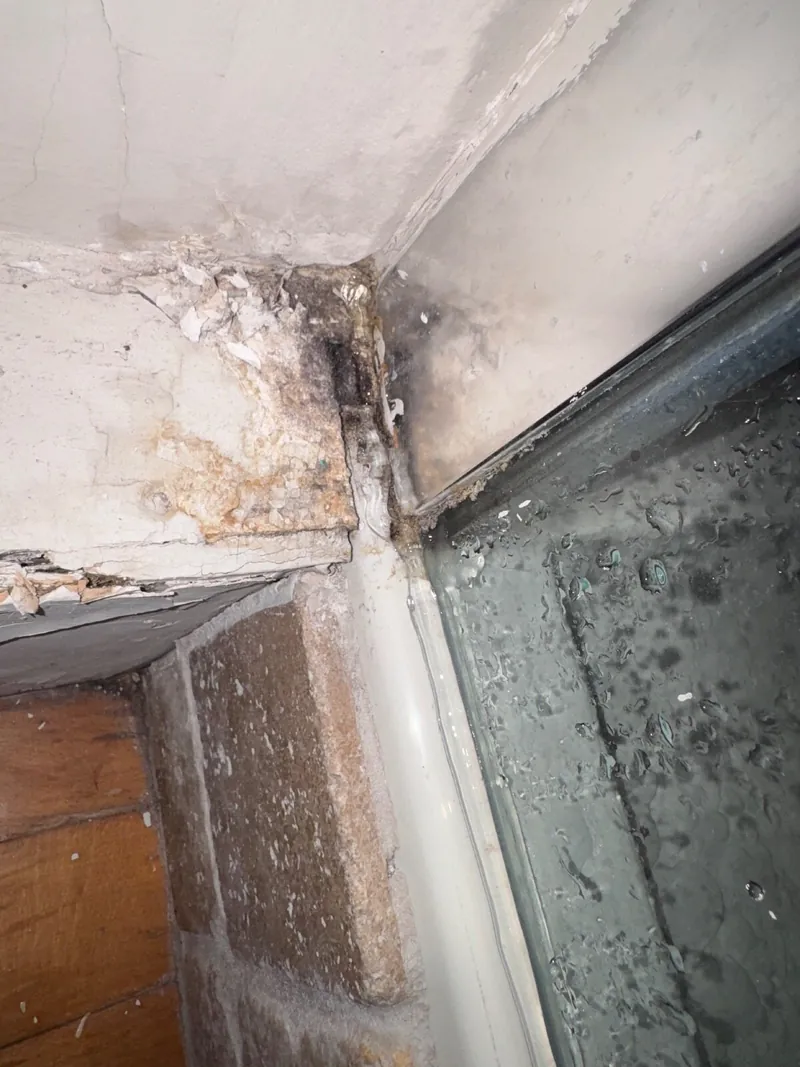
A flat in Chelsea had two worries. Behind the bed, a patch of the bedroom wall had gone black and damp. In the shower, mould was spreading, and the grout and sealant looked tired. It would be easy to assume one leak was behind both.
That assumption is natural, and it is expensive when it is wrong. If you decide the damp wall is a pipe leak, you pay for someone to open the wall. If there is no pipe in that wall, you have a hole in the plaster and the damp is still there. We were asked to find out which of those you would be paying for.
What we checked
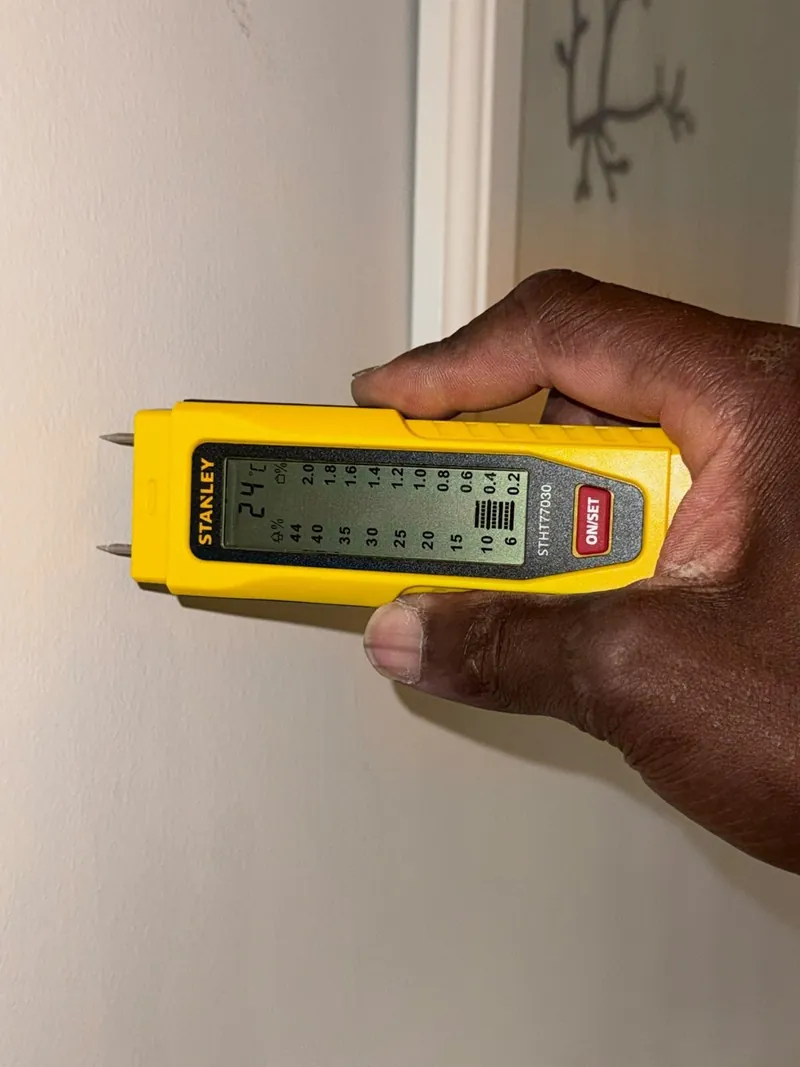
We began with the wall and the moisture meter. Black staining tells you moisture has been present for a while, but it does not tell you where the water comes from. A moisture meter lets you map the wet area and compare it with the dry wall around it, so you can see the shape of the problem before you cut anything.
- A visual inspection of the stained wall and the surrounding area, with comparative moisture readings across it.
- A look for any plumbing in or directly behind the wall.
- The shower run continuously for about 10 minutes, with the enclosure watched for water getting out.
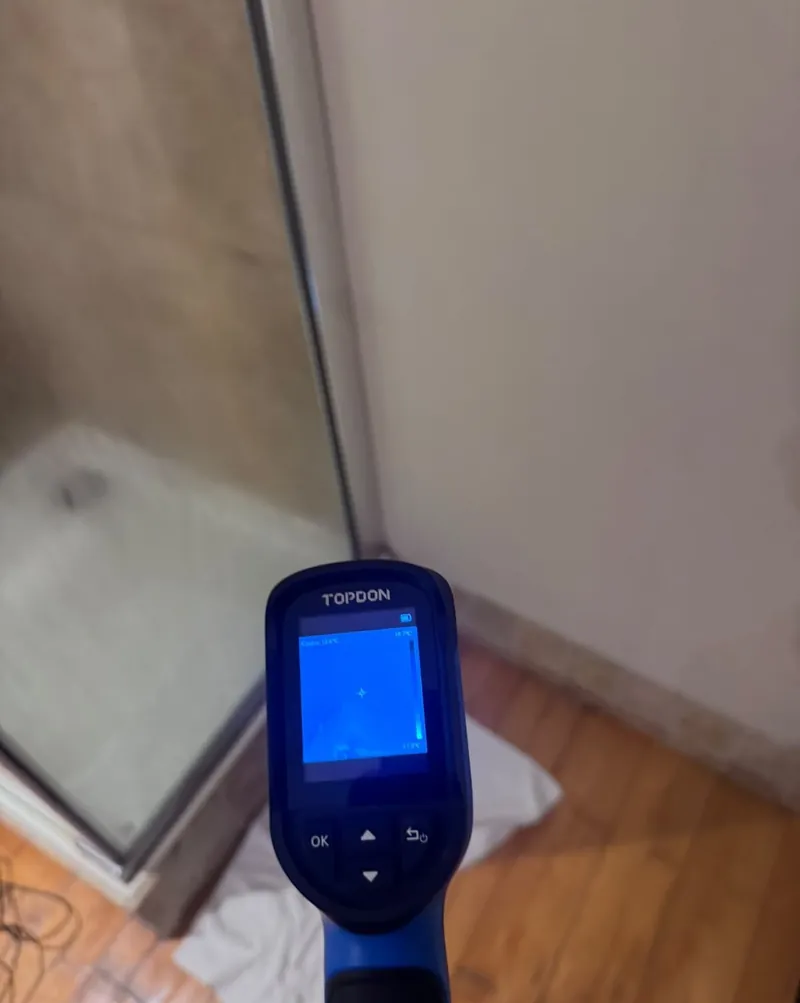
- An endoscopic camera inspection beneath and behind the shower enclosure, and of the shower waste pipe.
- Pressure tests on both the hot and the cold water systems.
For how moisture readings are used, and why they only describe the wall and not the cause, see our page on moisture mapping and damp diagnosis.
What we found
The wall was wet. The moisture readings around the stained area were very high, so the wall was holding a significant amount of water. But there was no plumbing visible in that section of wall, and nothing behind it that could account for it. Both the hot and the cold pressure tests showed no drop.
So an internal plumbing leak could not be established as the cause. That is not the same as saying nothing is wrong. It means the water probably comes from somewhere other than the pipes. The report listed the usual outside candidates: water getting through brickwork, worn pointing, cracks or failed joints, or water tracking down from higher up in the building, such as a roof or flashing.
The shower was a different story. With the shower running, a small amount of water got through areas where the grout was badly deteriorated and had gaps. The camera showed that water could pass through the defective grout and sealing. The shower waste pipe showed no visible dripping during the test.
What we did on the visit
We applied mastic sealant to the visible cracks and defective areas around the shower enclosure. The report called it temporary, and it was: its job was to reduce water getting in until the enclosure can be repaired properly. The proper job is to remove the old grout and sealant, prepare the joints and reseal them.
For the bedroom wall, the recommendation was an external inspection of the brickwork matching that wall, covering pointing, mortar joints, cracks and external finishes, plus a look at the roof and flashings and at anything above the wall that could let water track down. That inspection is a different trade, and the report said so.
The record gives no total duration for the visit, so we do not give one. What it does give is a useful rule: stop when the evidence stops. We did not open the wall, because nothing suggested a pipe inside it.
What a visit like this costs under our pricing
We are not reprinting what the customer paid, and nothing here is a quote for your property. This is how our current pricing treats a visit of this kind.
Standard leak detection is £100 for the first hour, then £150 an hour, with time after the first hour billed in half hours at £75. The first hour is the minimum charge. Two hours is £250 and three hours is £400. A typical survey is £325 to £400. Everything included: tracer gas, acoustic, thermal imaging, camera inspection, insurer report and a written repair quote, no parking charge
- tracer gas, acoustic detection, thermal imaging, an endoscopic camera inspection, a trace and access report for your insurer and a written quote for the remedial works
- We call you before the survey goes past 3 hours
- No VAT charged
- No find, no fee: if a leak is present and we do not find it, you pay nothing
Resealing the shower properly is repair work, quoted in writing. Any outside work on the wall is for the right contractor to quote. See the pricing page.
What to take from this
- A wet wall is not the same as a leaking pipe. Find out whether there is a pipe in it before anyone cuts in.
- A clean pressure test is a result. It saves you from opening a wall for nothing.
- A report that says "not a plumbing leak, probably external" is doing its job, even if it is not the answer people wanted.
- Failing shower seals are a real source of water in their own right, and they are easy to overlook while you are chasing a bigger suspect.
- If you rent or manage a flat, the landlord and leaseholder insurance claim guide explains who to tell about building-side problems.
To book a check, report the leak. More background is in the guides hub and in our leak detection survey page.
